
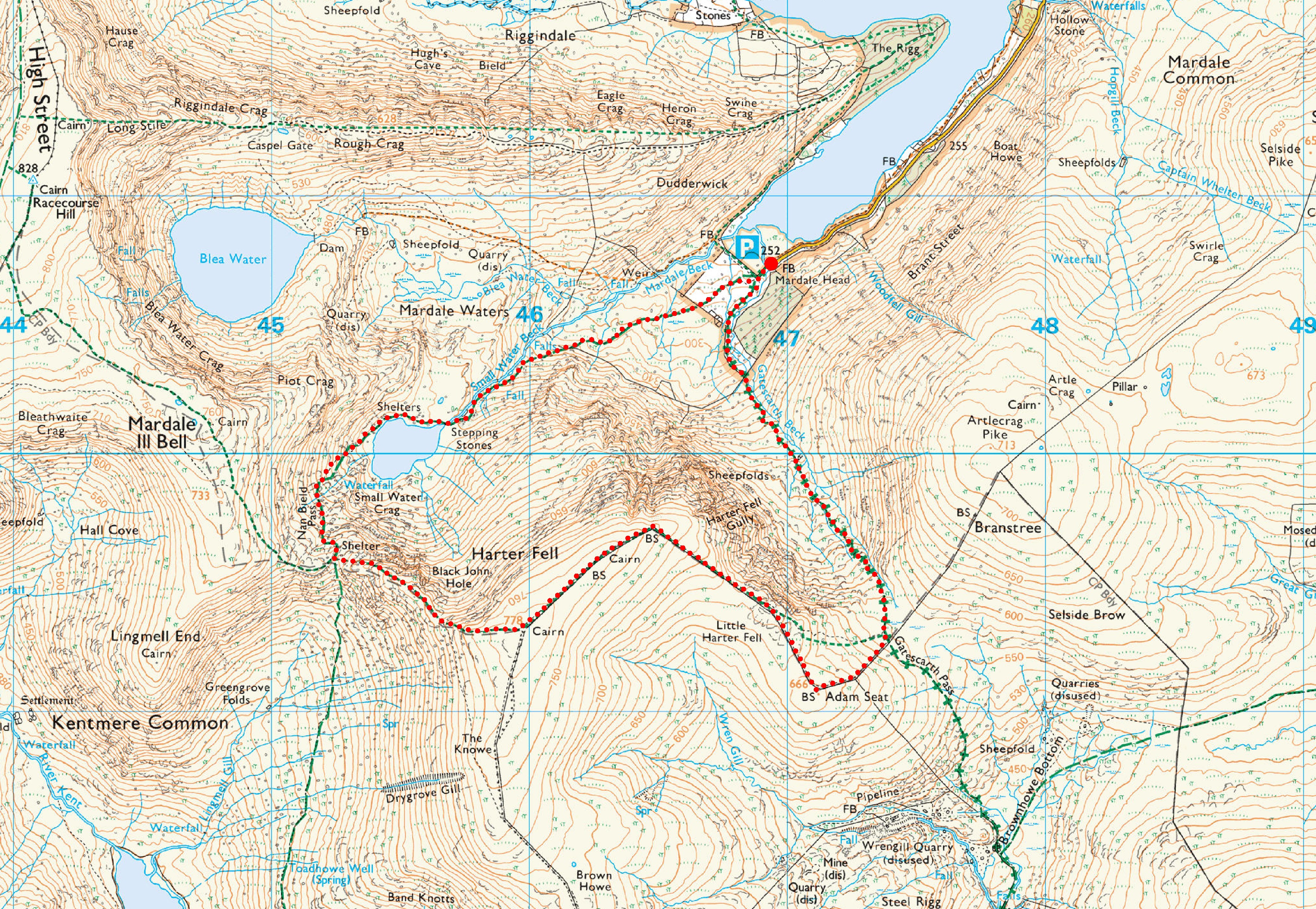
This route is a great example of a simple, direct and rewarding climb of a Lakeland fell. It is an ideal walk for a short day when daylight is limited or when the weather is extreme. For example, on this occasion we had plenty of summer daylight hours, but the weather conditions were very hot and humid, and much of the route was walked at a slow pace. Because of these conditions, the plan was to descend and return to the car by midday, so as to avoid any prolonged exposure to the afternoon summer sun.
A five-mile walk with a Lakeland tarn, a Wainwright and an extra Birkett; it is fell walking at its simplest.
Richard
“This is an excellent expedition, richly rewarding in intimate scenes of Harter Fell’s grand northern cliffs and in the views of Haweswater from its summit, yet short in distance and needing much less effort in execution than its formidable appearance suggests.” Harter Fell 8
— Alfred Wainwright
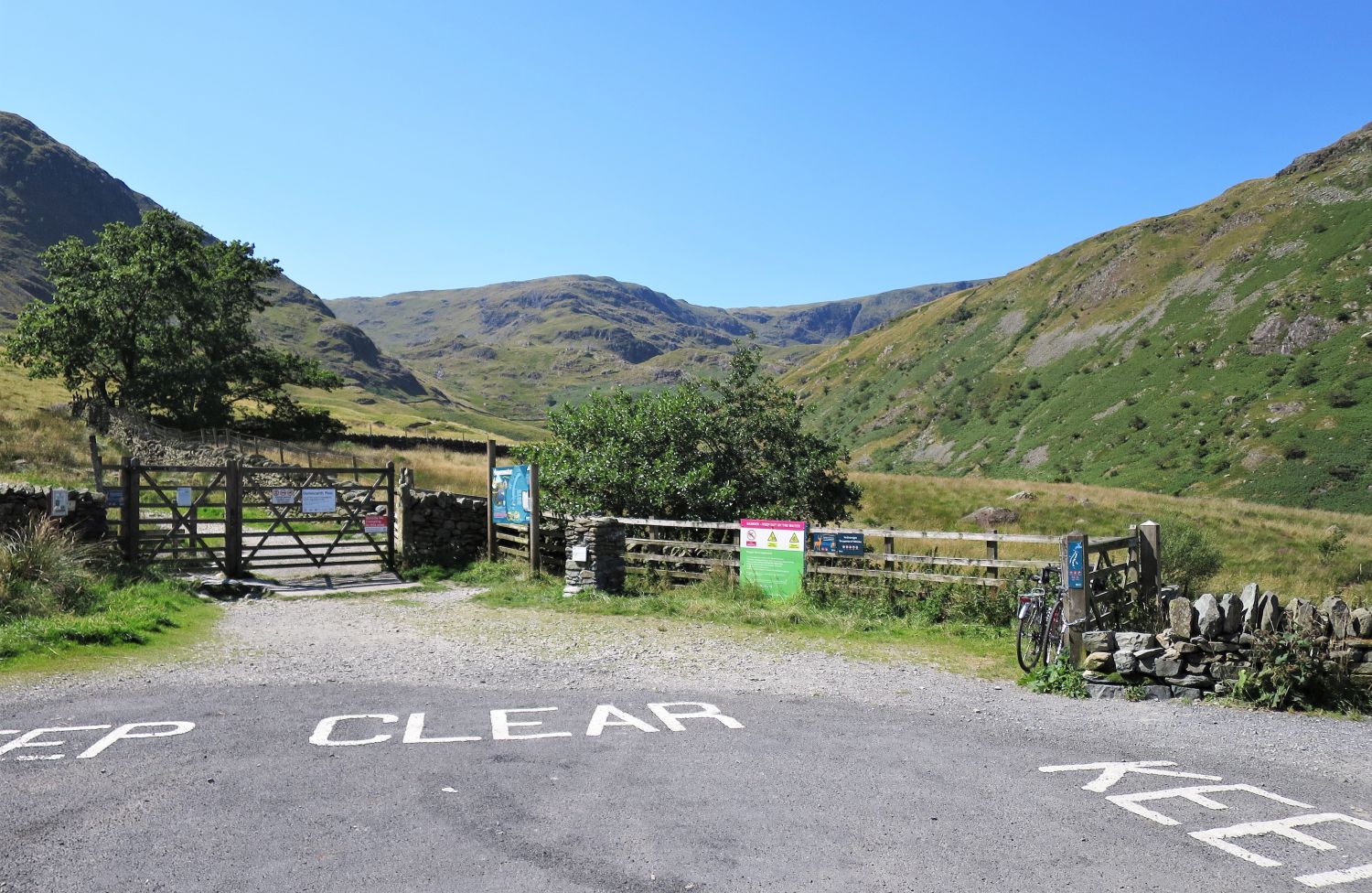
It is recommended to arrive early to secure a parking spot at Mardale Head, especially in the summer season.
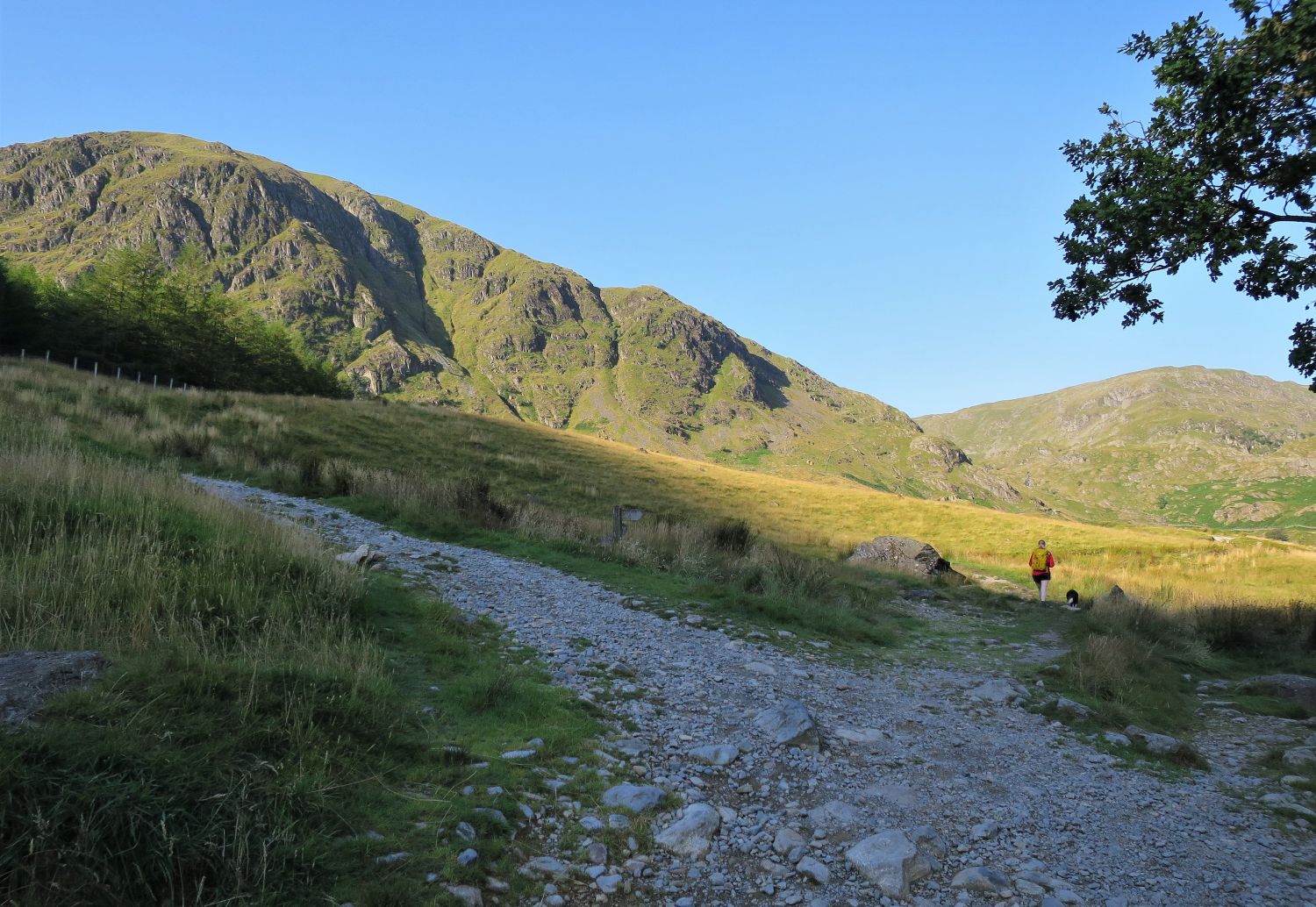
Just a few yards from the car park, the path divides into three: to the left, the path heads into the valley of Gate Scarth and beyond to the pass of the same name; to our right, the path leads to Blea Water or alternatively to the northern shore path of Haweswater Reservoir; and straight on, this is our route to Nan Bield and then onto Harter Fell via its western ridge.
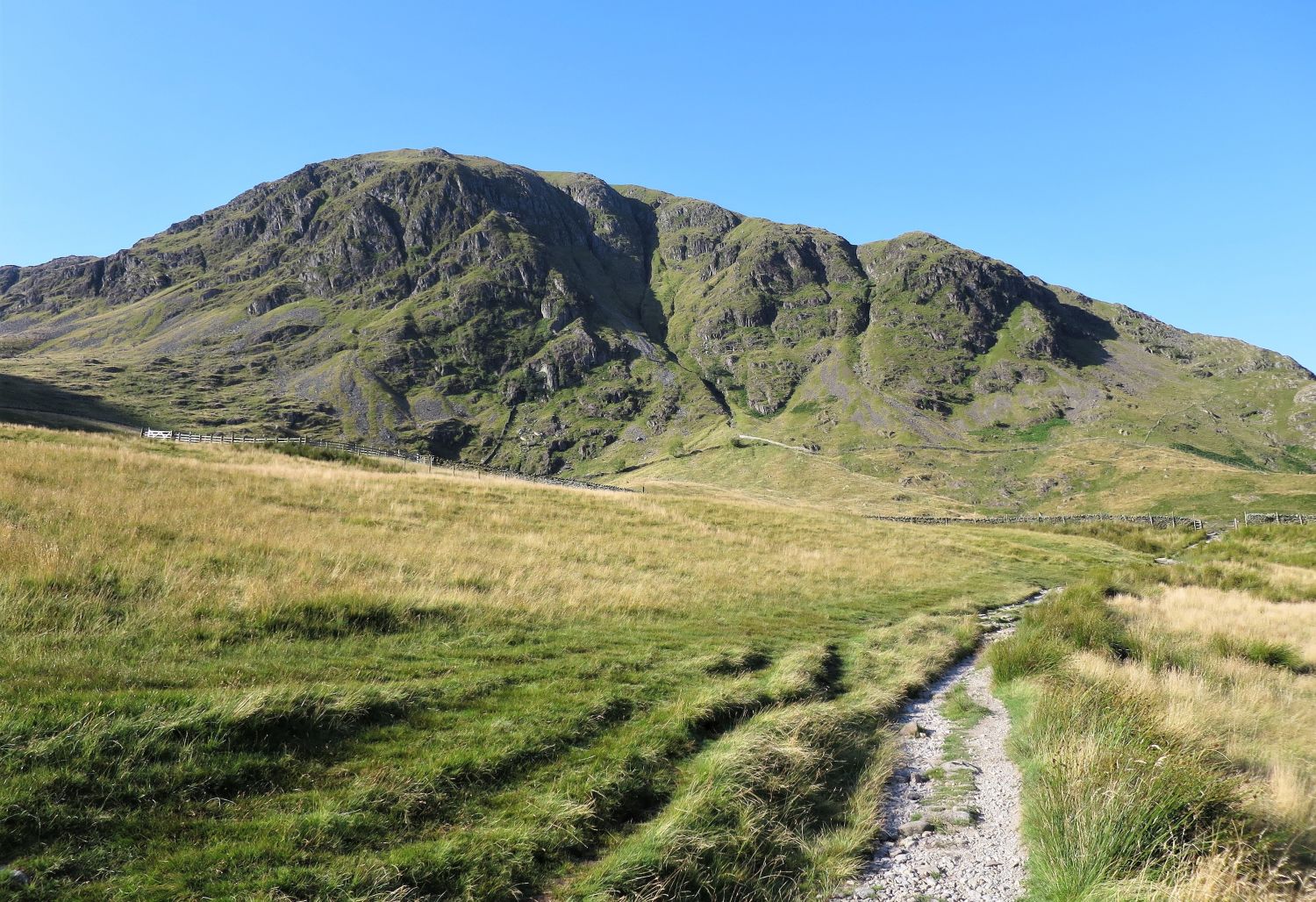
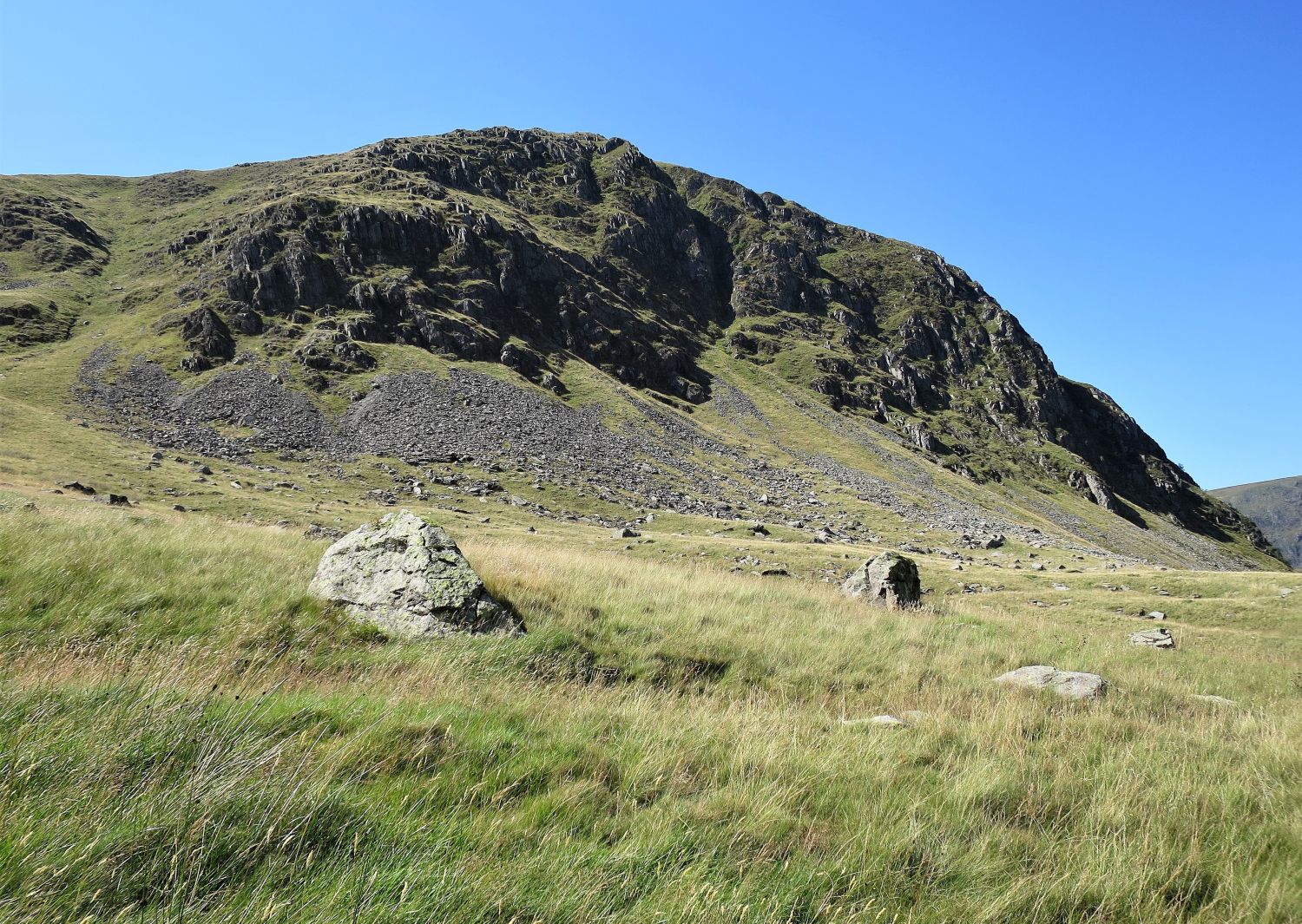
“….having very gradually attained its maximum height on Harter Fell, the ground suddenly collapses in a tremendous wall of crags, falling swiftly to the head of Mardale amongst wild and romantic surroundings – one of the noblest mountain scenes in the district.” Harter Fell 2
— Alfred Wainwright
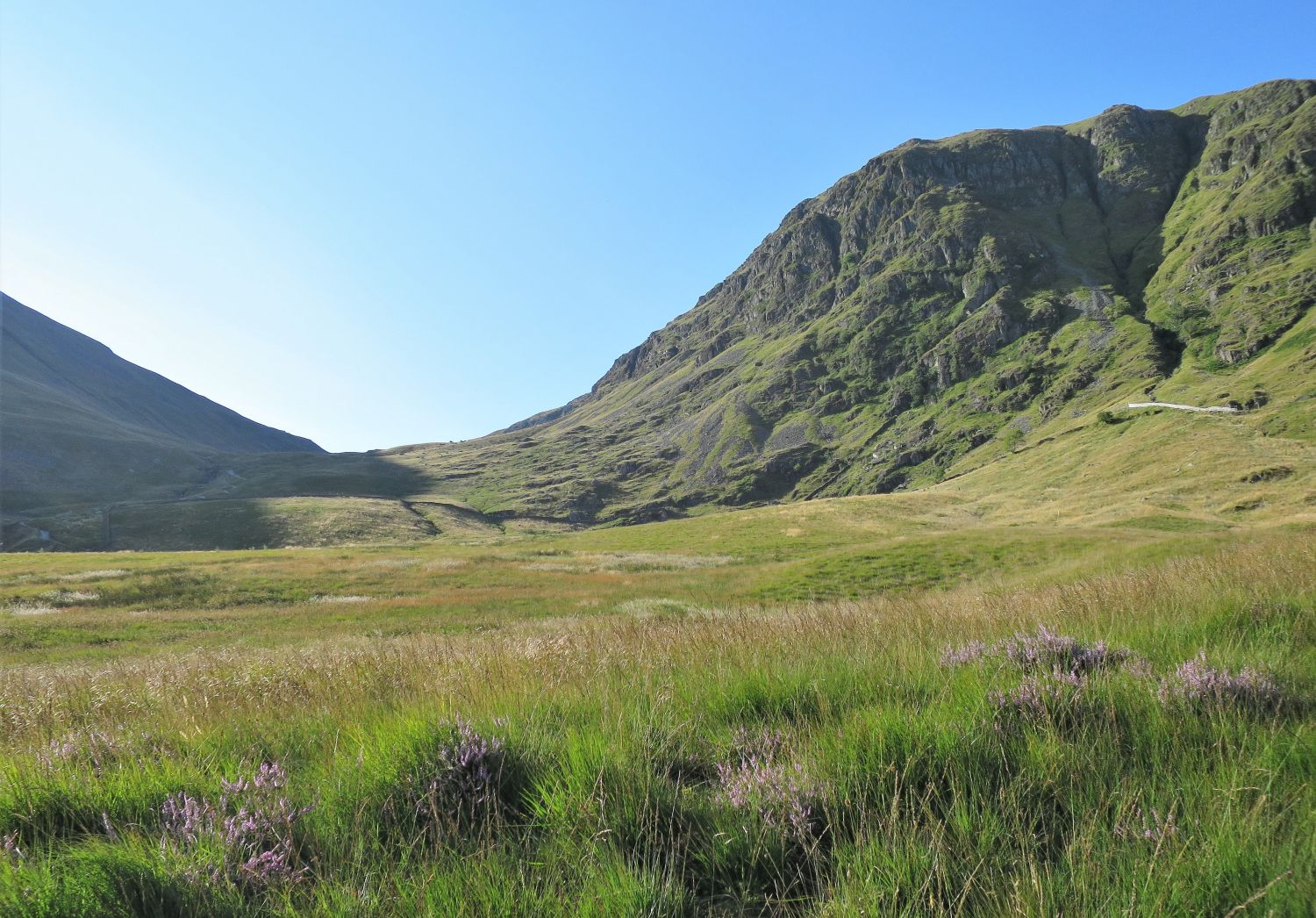
Gatescarth Pass will be our descent route back to Mardale Head, having climbed Harter Fell in an anti-clockwise direction. Wainwright, however, recommended the “round journey” by ascending Gatescarth Pass and returning by Nan Bield and Small Water. Personally, I prefer to climb the fell via its western ridge from Nan Bield, which provides a more rewarding ascent.
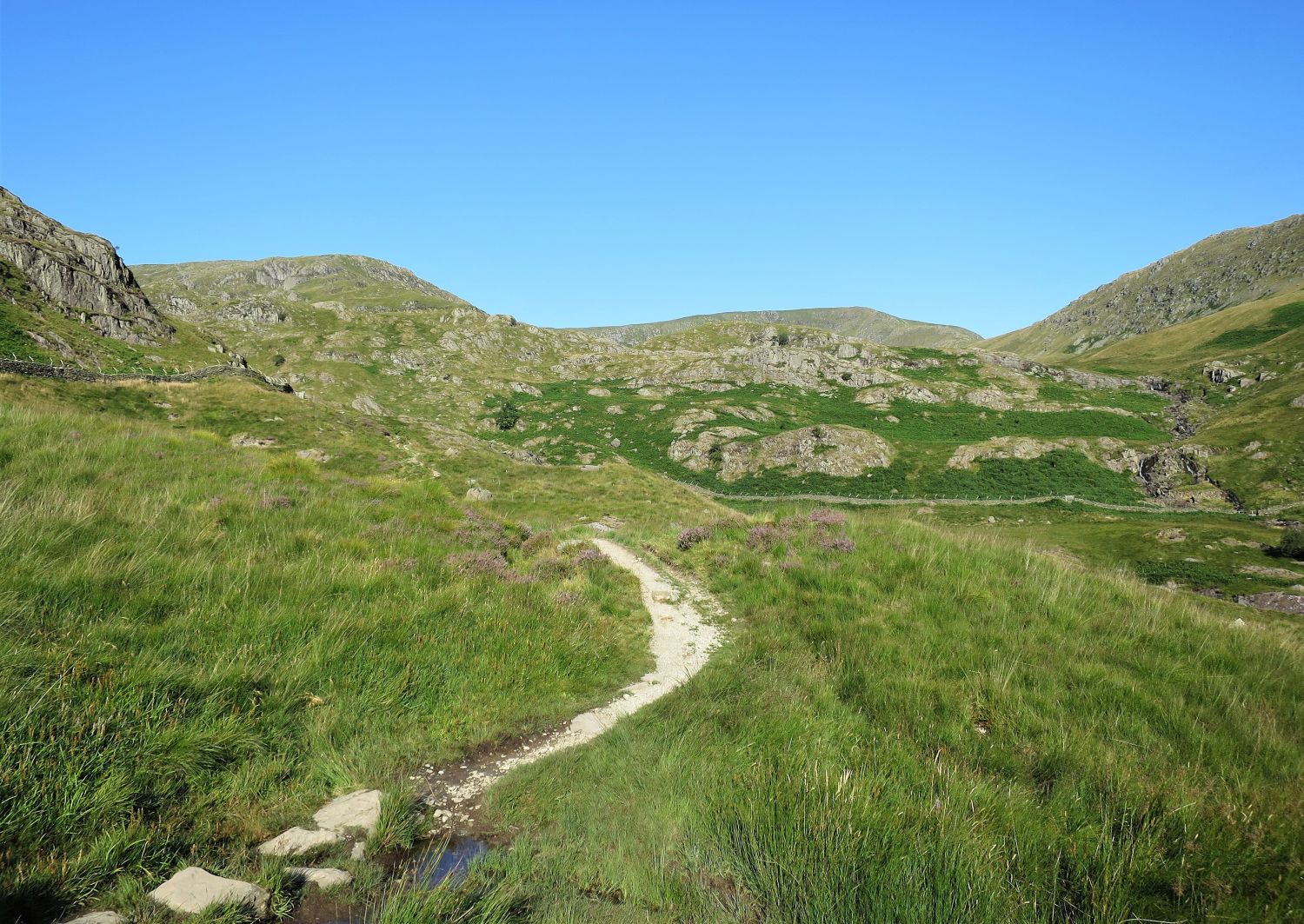
Over on the right are the cascades of Blea Water Beck.
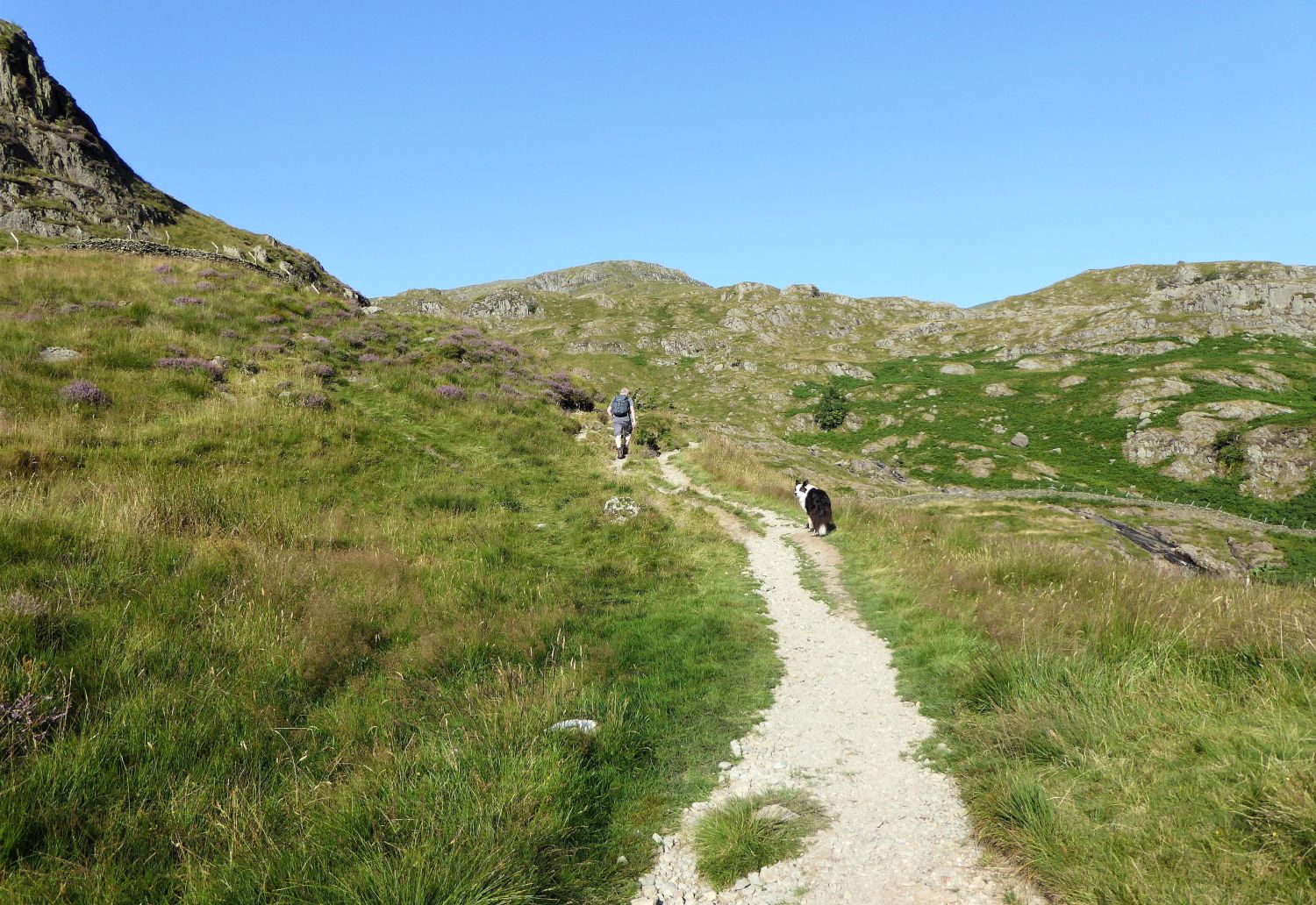
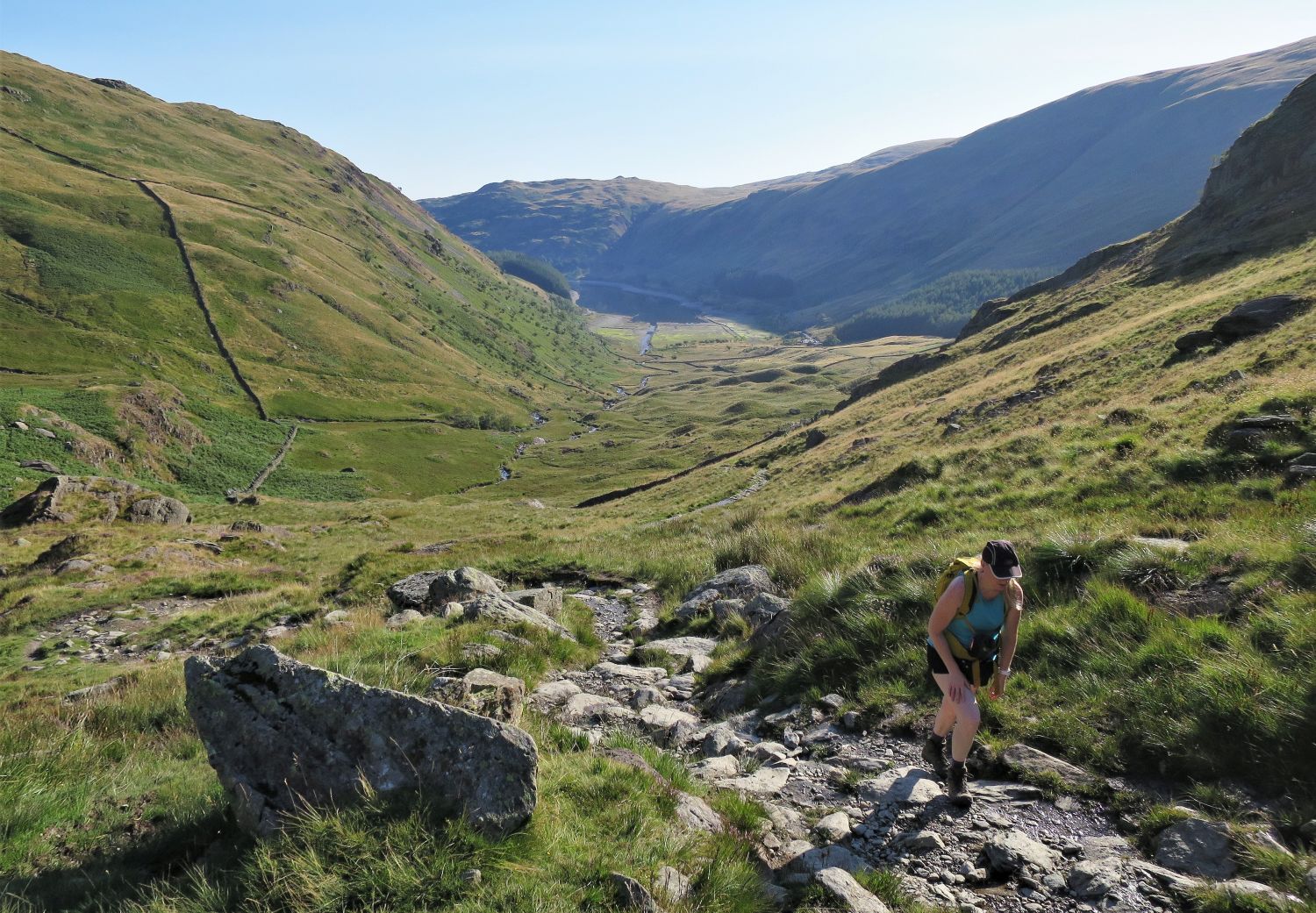
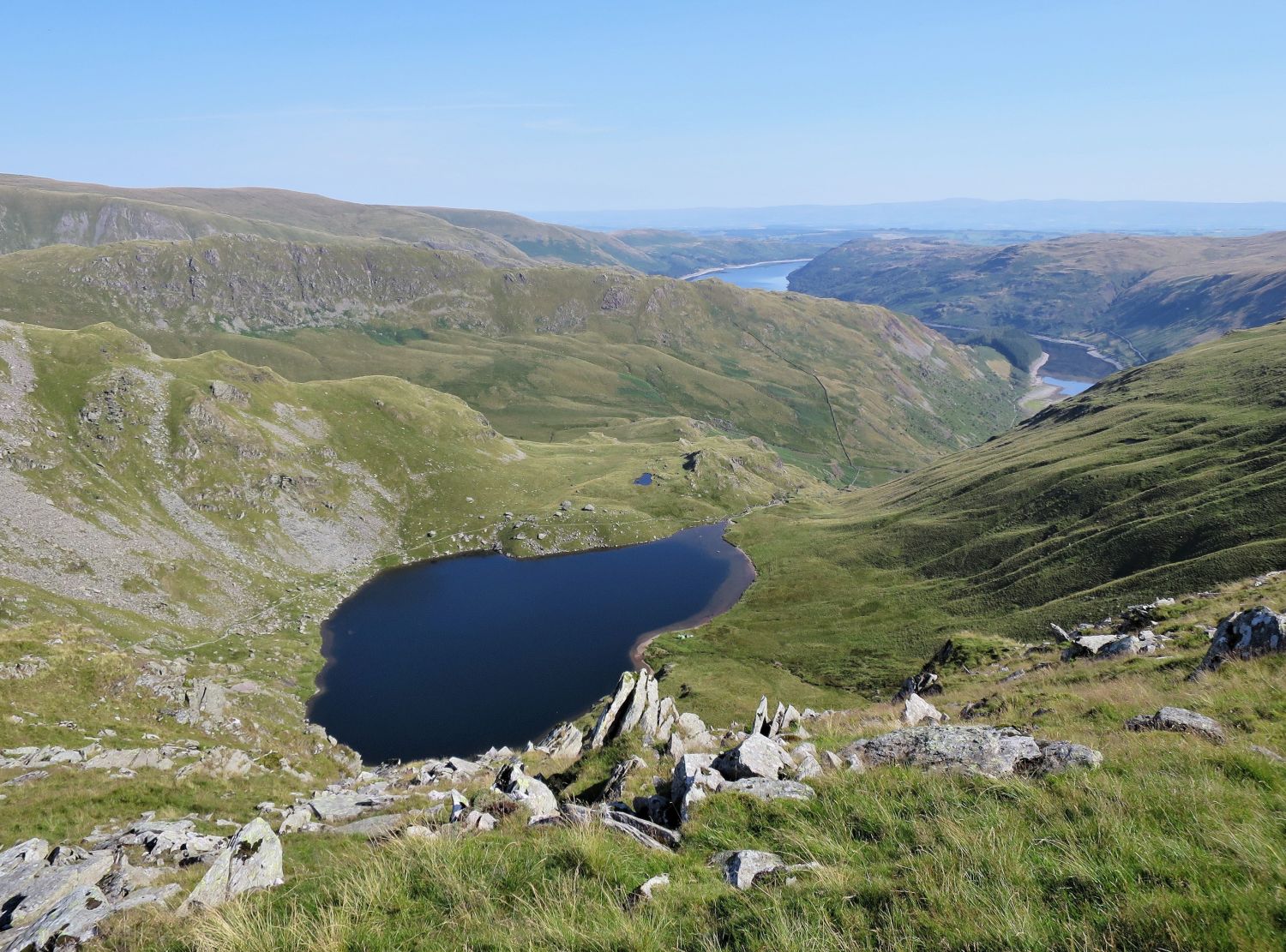
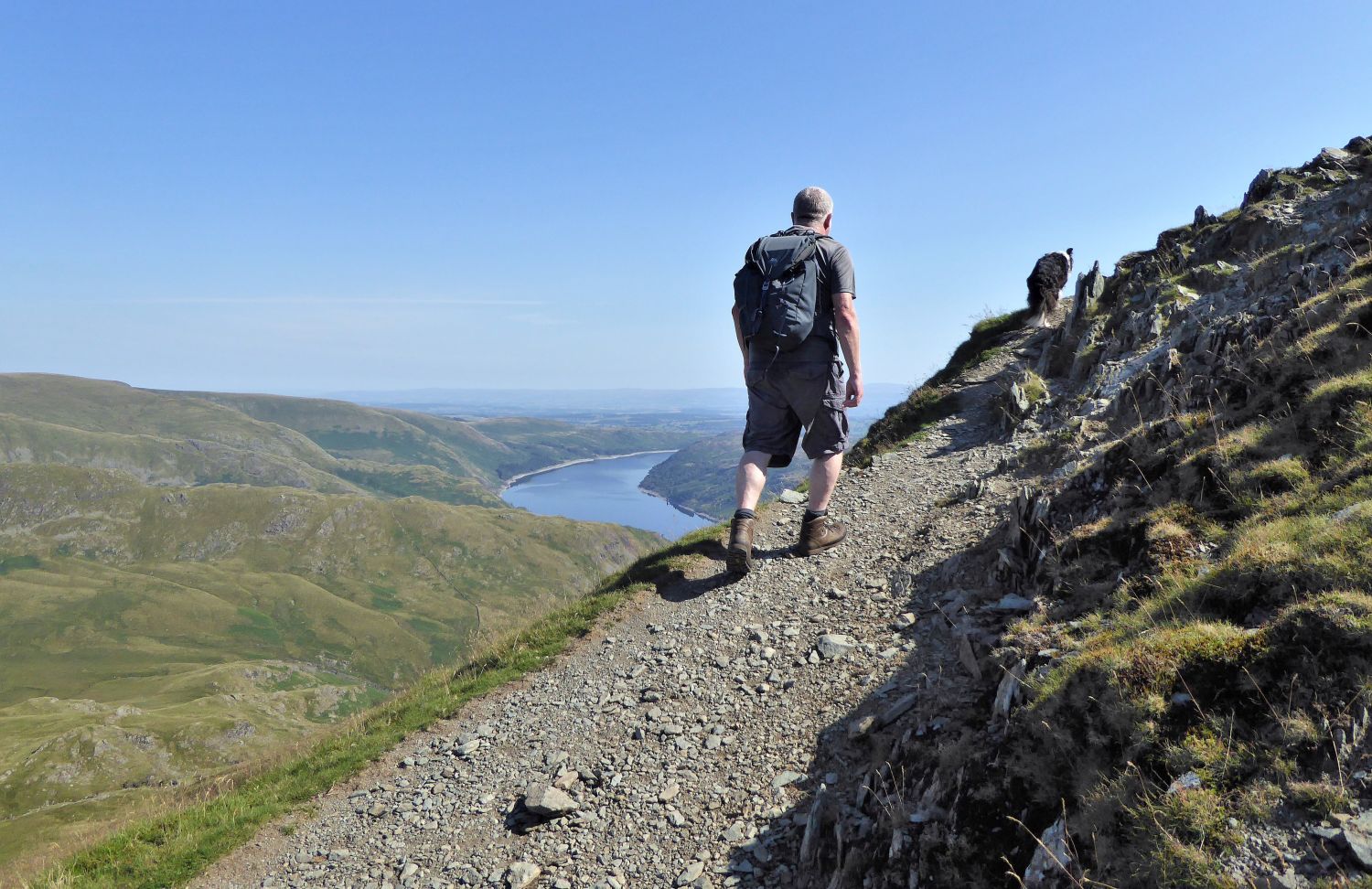
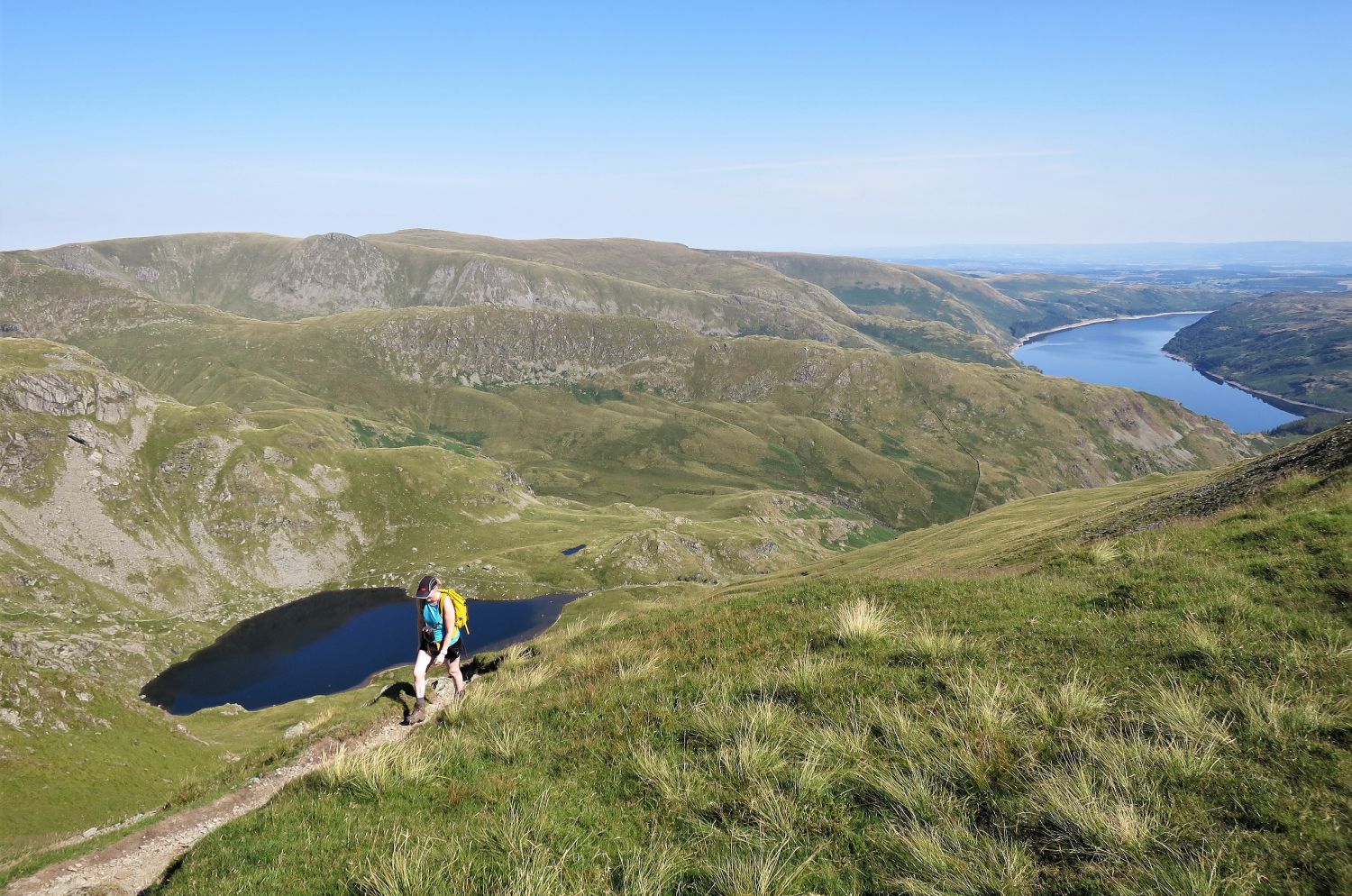
Once Small Water Beck is reached, the path becomes steeper in a series of rocky zig-zags. On a very hot day, progress can be slow, so there’s no excuse for not turning around and admiring the view.
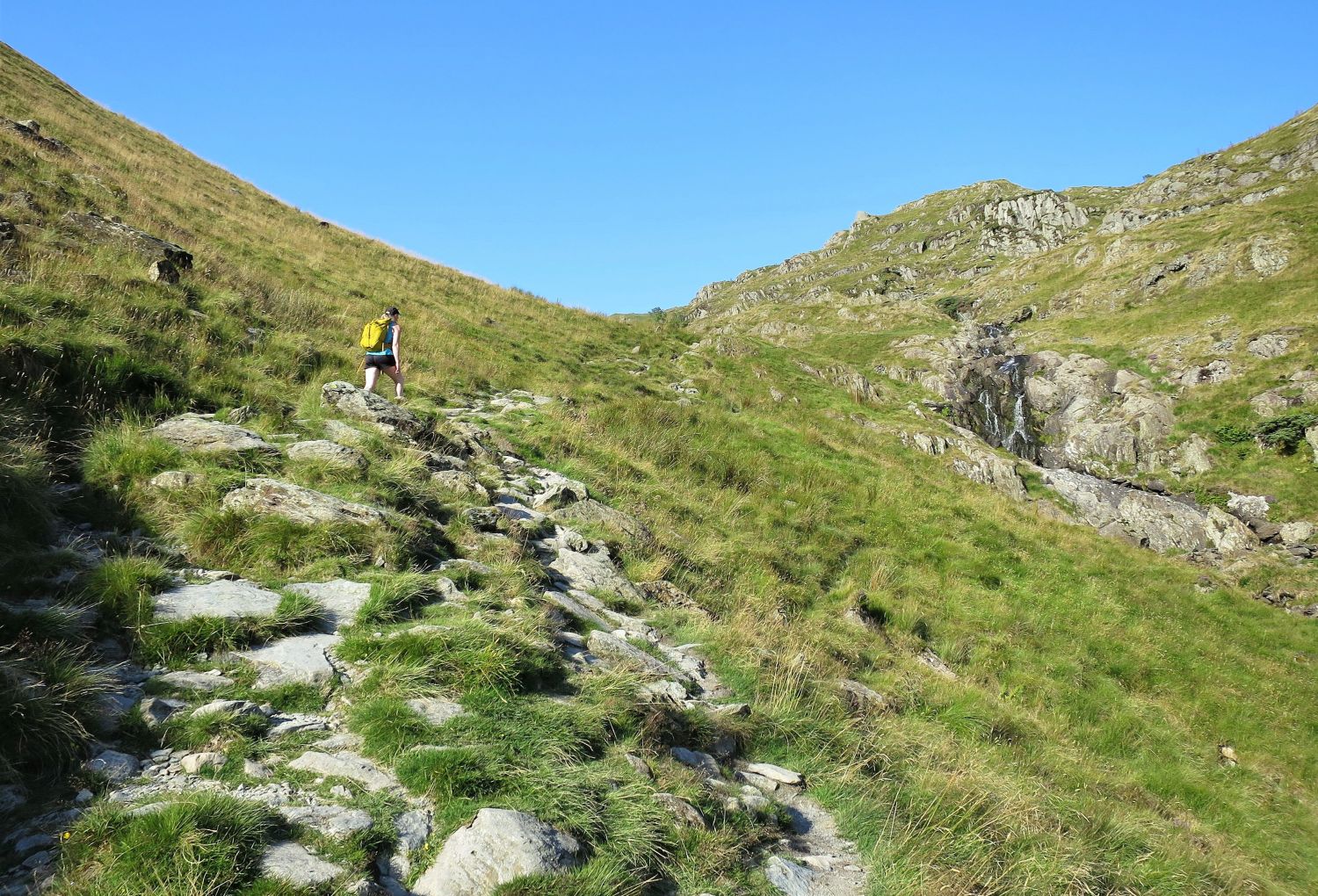
Just a splash and a tickle of a waterfall after a long spell of dry weather.
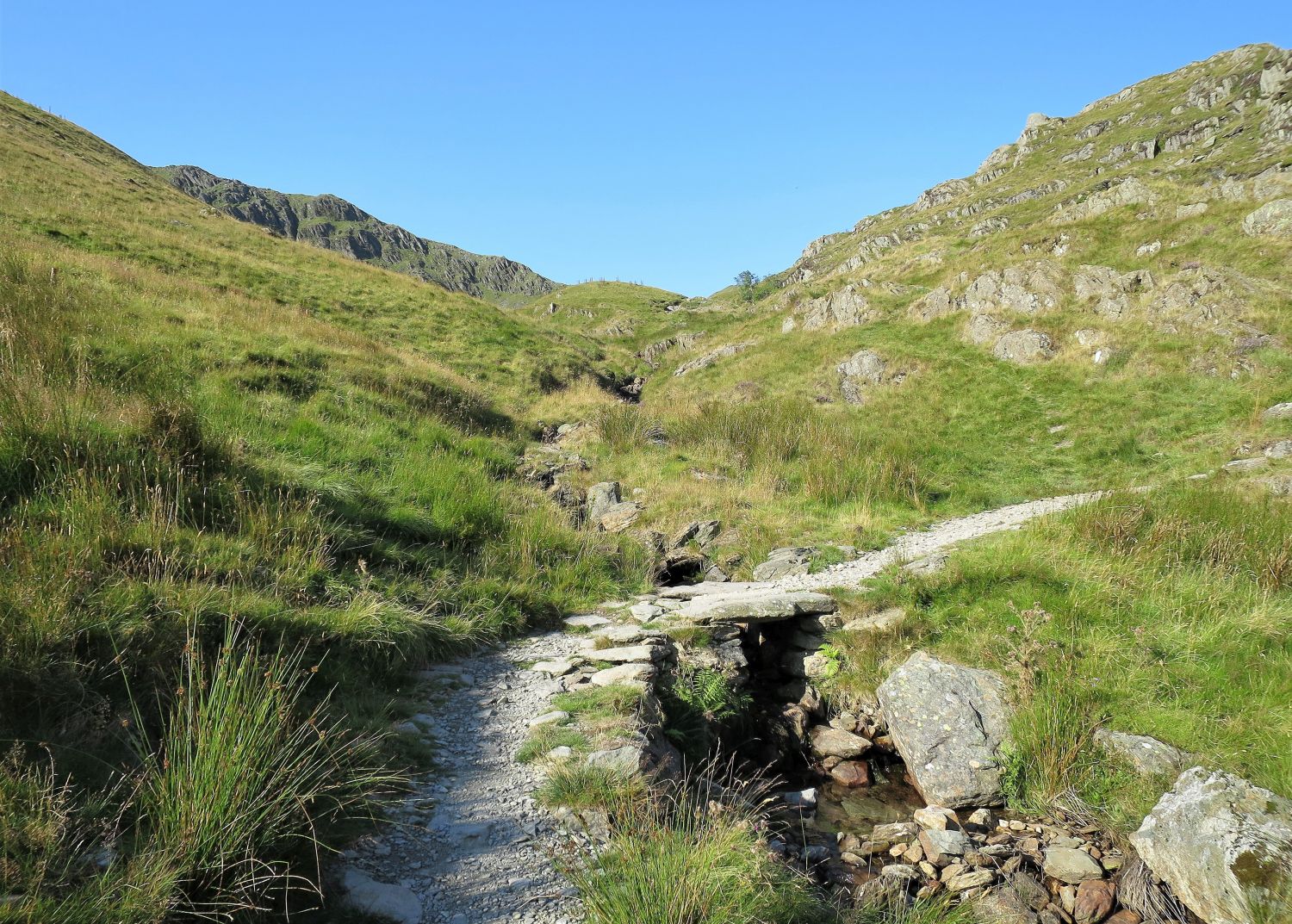
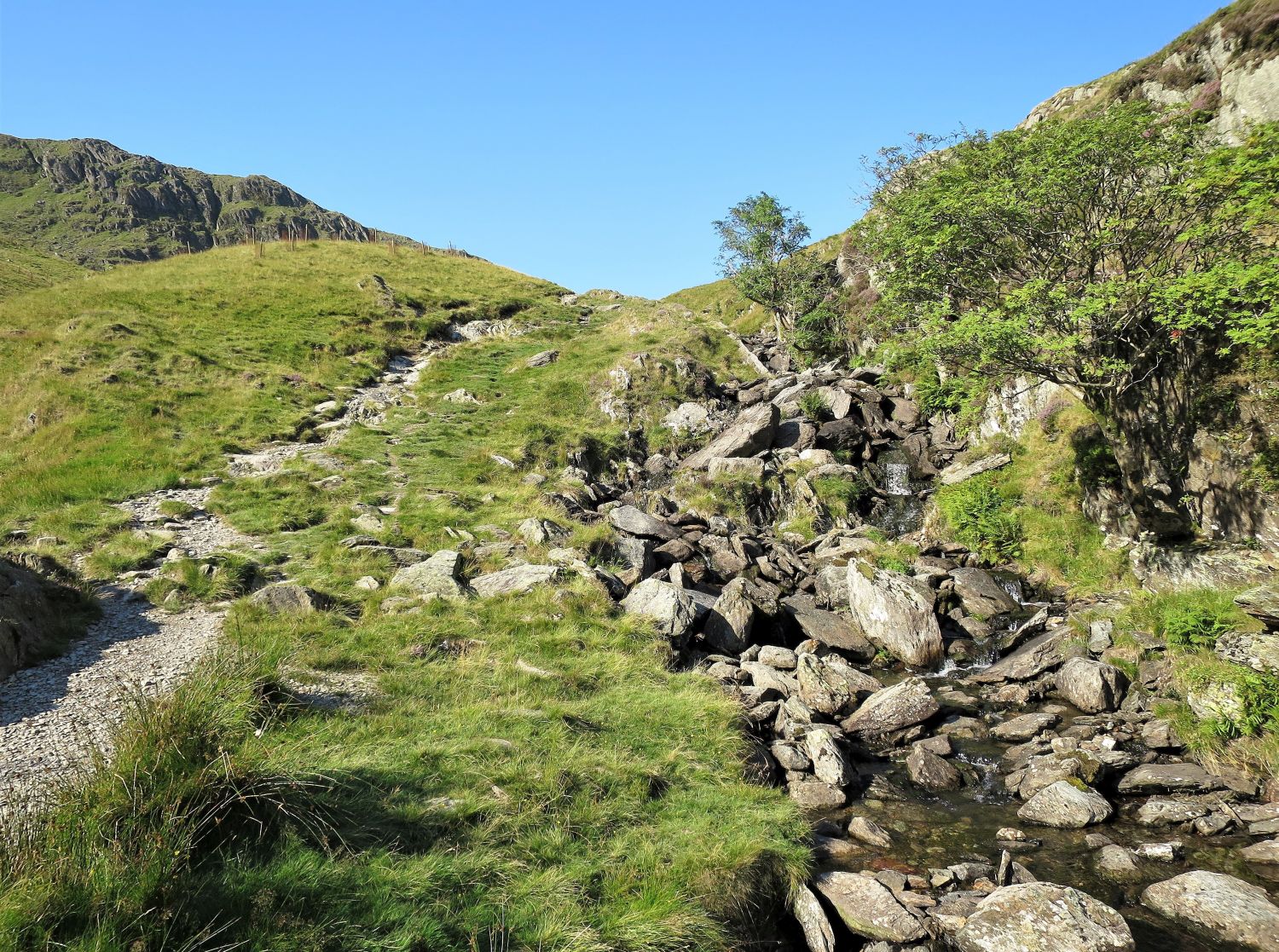
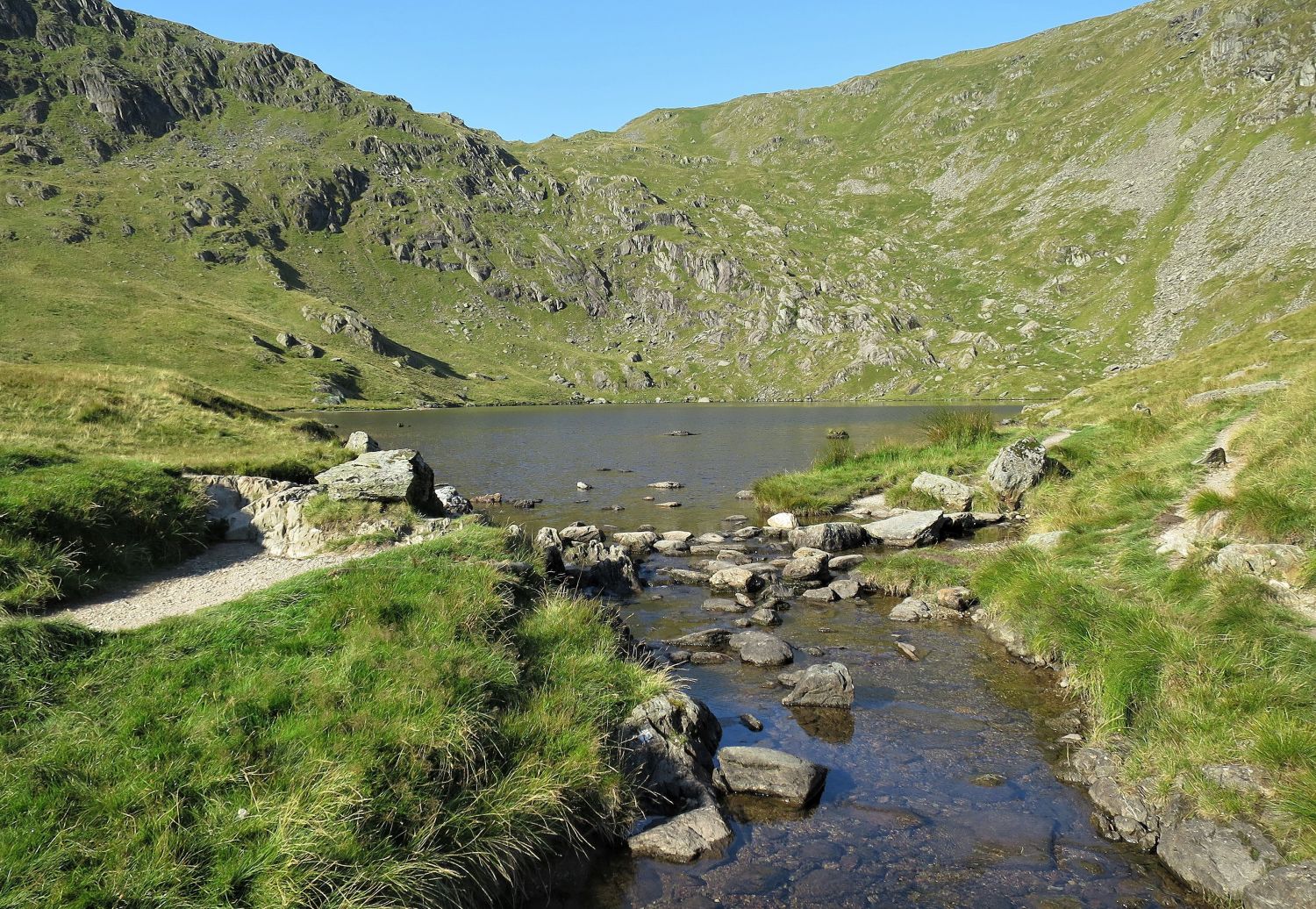
The Far Eastern Fells
Harter Fell 14
“Small Water”
“….the rugged surroundings on this side are greatly enhanced in impressiveness by the two splendid tarns of Blea Water (below High Street) and Small Water (below Harter Fell), each of them occupying a volcanic crater and deeply inurned amongst crags. These tarns, with their streams, are collectively known as Mardale Waters, and greatly contribute to the fine scenic quality of this typical Lakeland landscape.” Mardale Ill Bell 2
— Alfred Wainwright
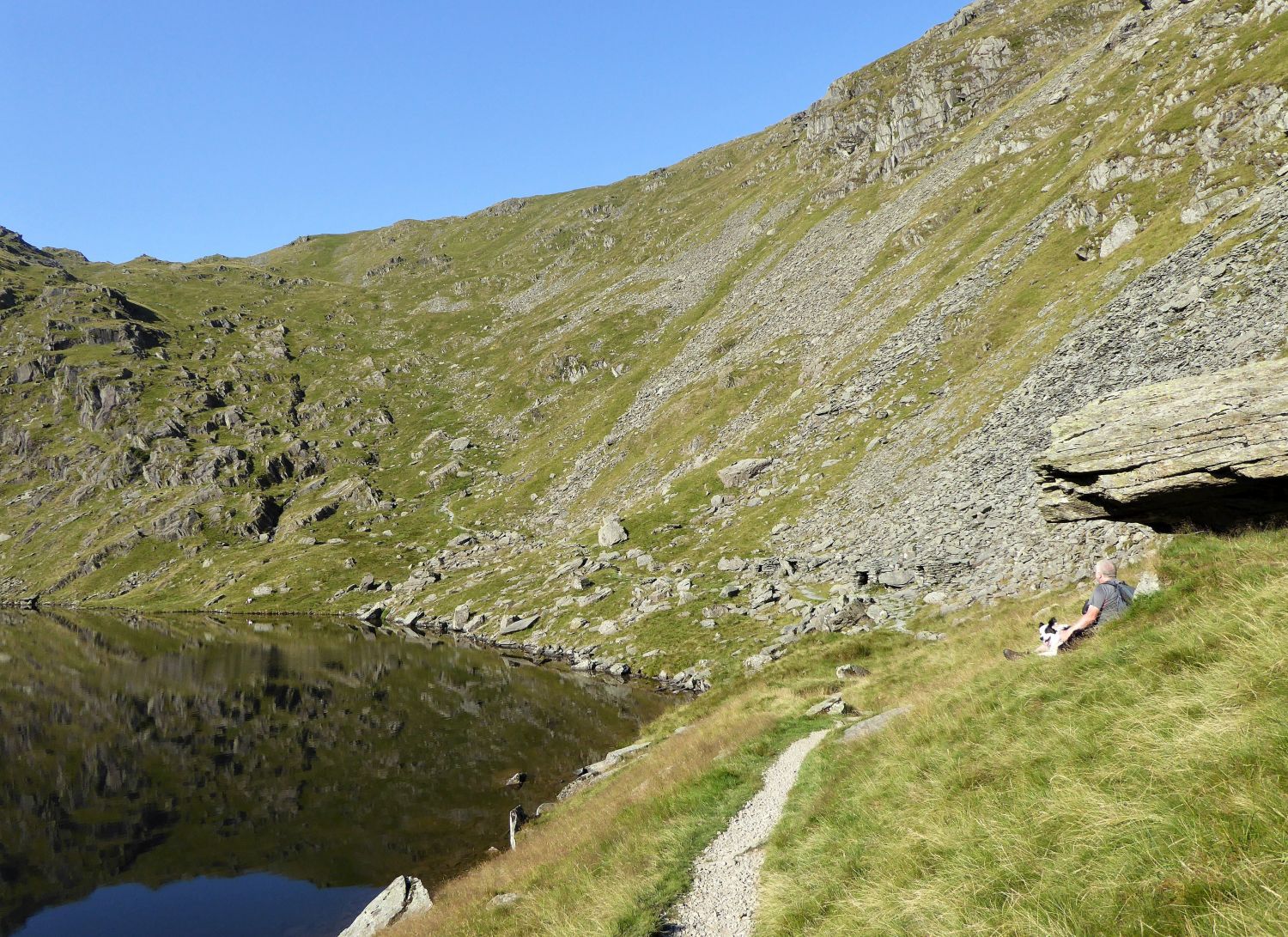
From here, the walk is very rewarding; the approach to Nan Bield via a rock staircase is splendid, and the views looking back are memorable.
The Far Eastern Fells
Mardale Ill Bell 7
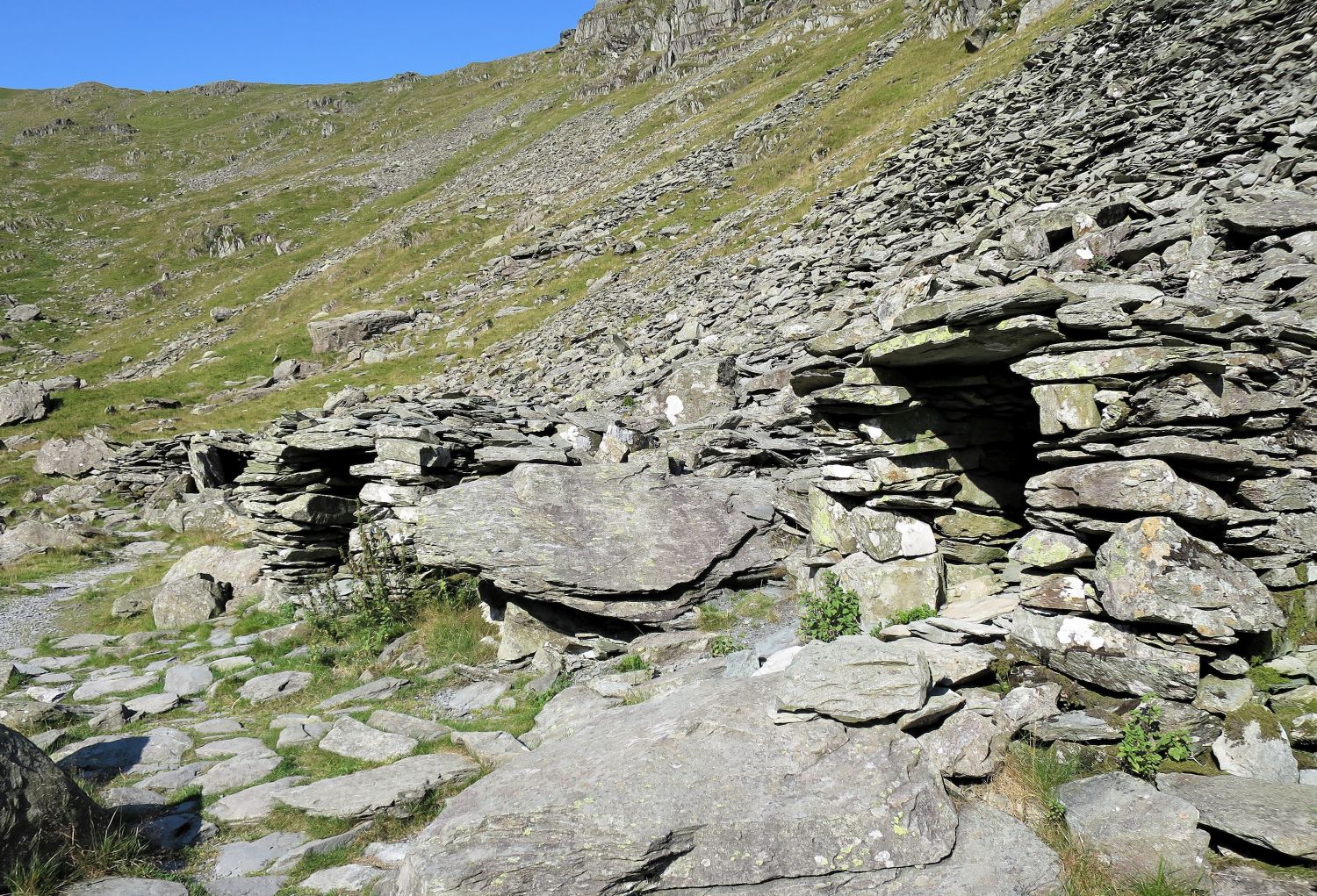
“The stone shelters at Small Water”
“Testimony to the former importance of Nan Bield Pass as a route for travellers and trade are the three shelters alongside the track where it crosses the bouldery shore of Small Water – erected for wayfarers overtaken by bad weather or darkness. These shelters are roughly but soundly built and roofed, but they are low and can be entered only by crawling. Once the body is insinuated snugly in their spider-infested recesses, however, the weather may be defied.” Mardale Ill Bell 8
— Alfred Wainwright
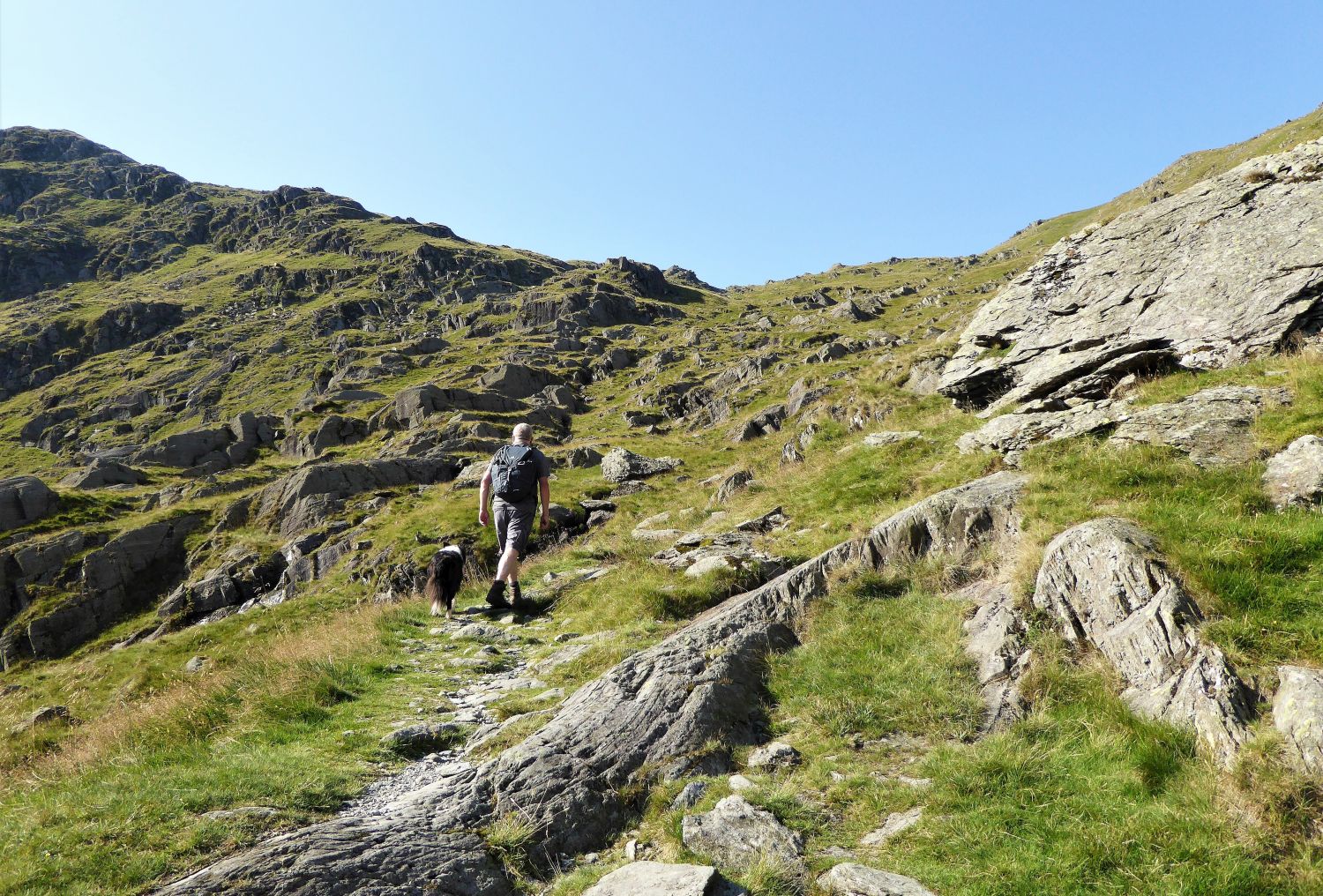
More sunscreen, more fluids and more steps….
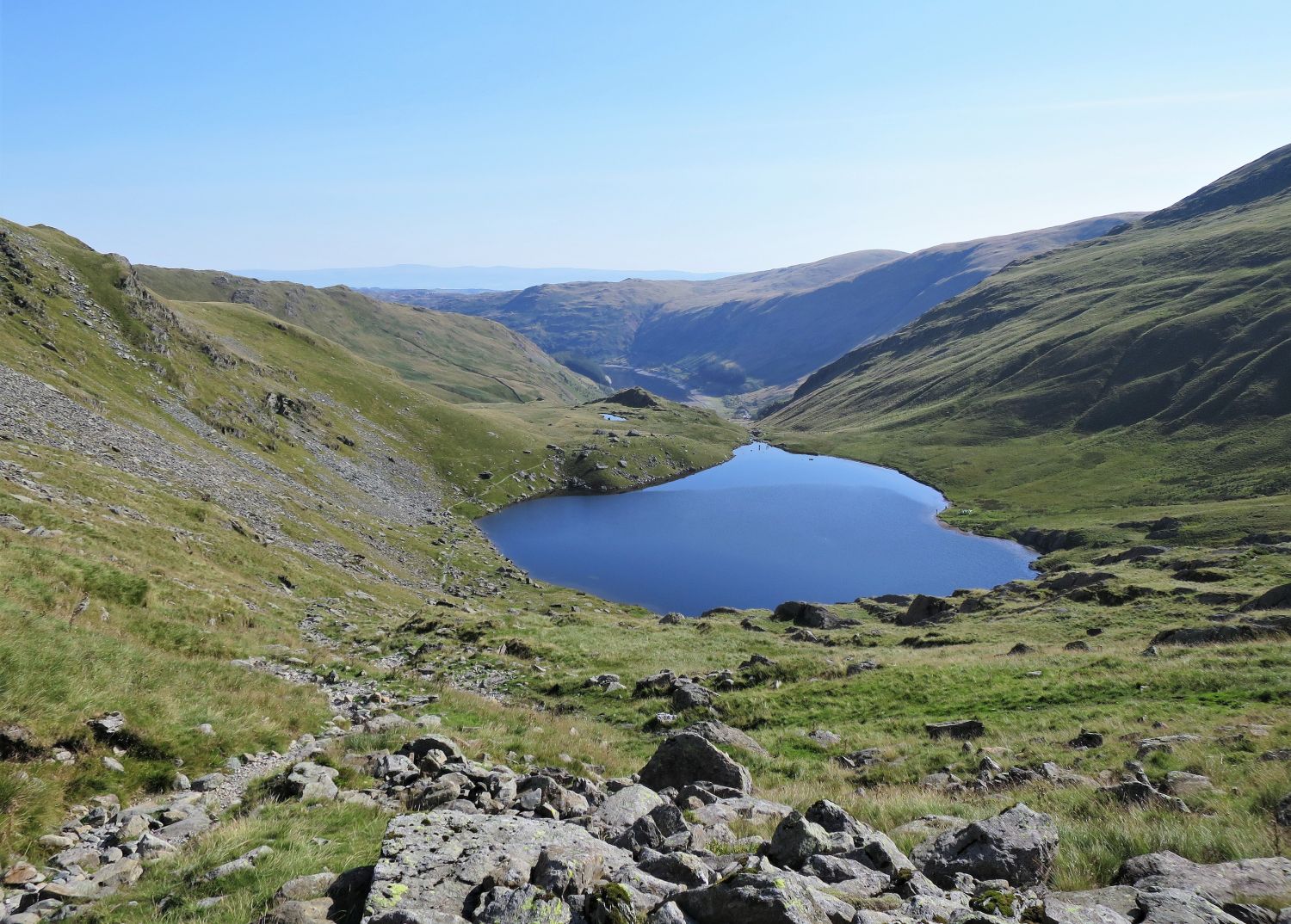
….however, the route is a delight, and the view is very rewarding. Remarkably, you can still see the car park at Mardale Head, even though the route has followed many twists and turns.
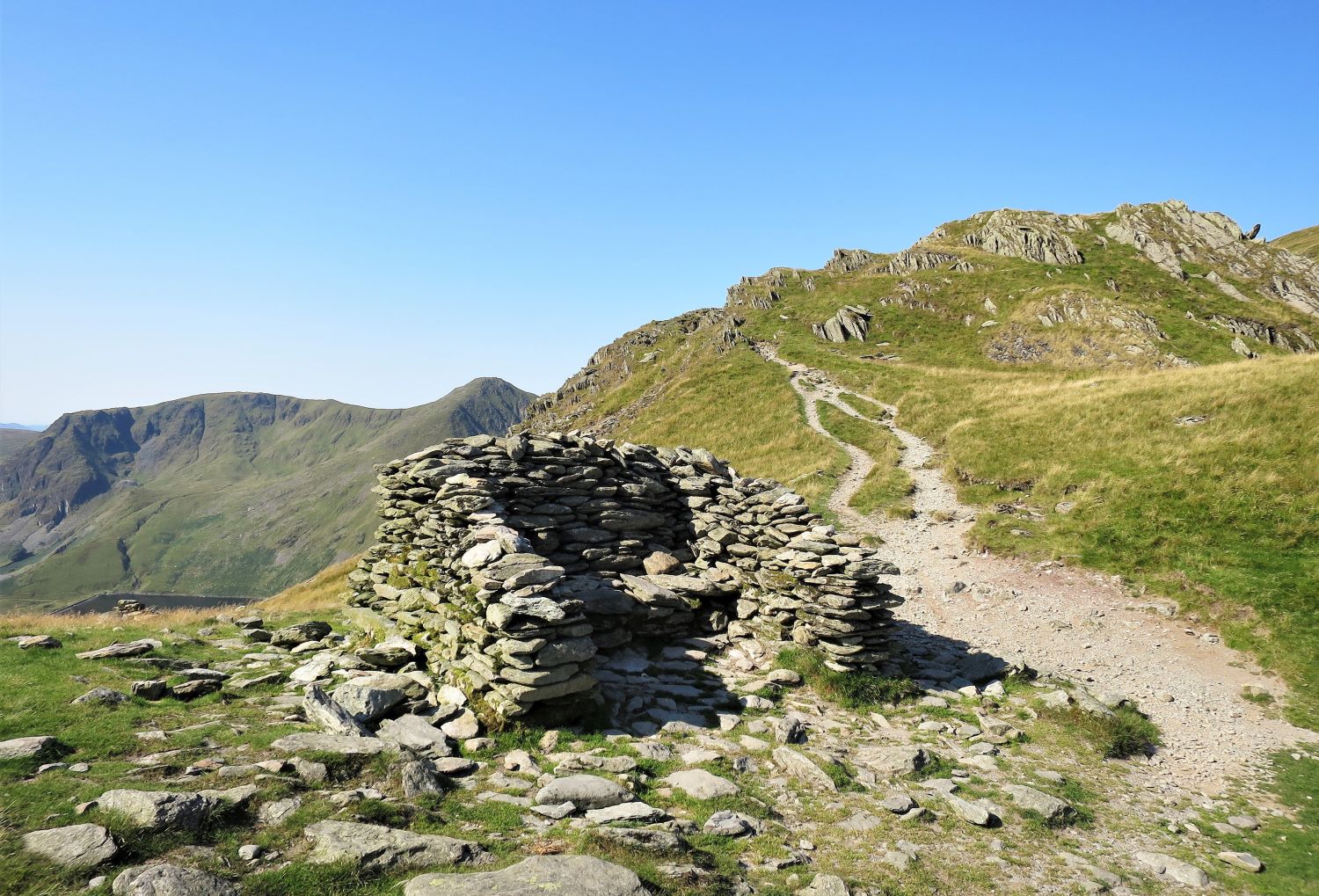
Nan Bield Pass has to be one of the finest passes in Lakeland. When stood at its summit and looking north and then south, its historic importance becomes obvious; this ancient route was vital for trading, not only between the valleys of Kentmere and Mardale, but also between the towns of Kendal and Penrith.
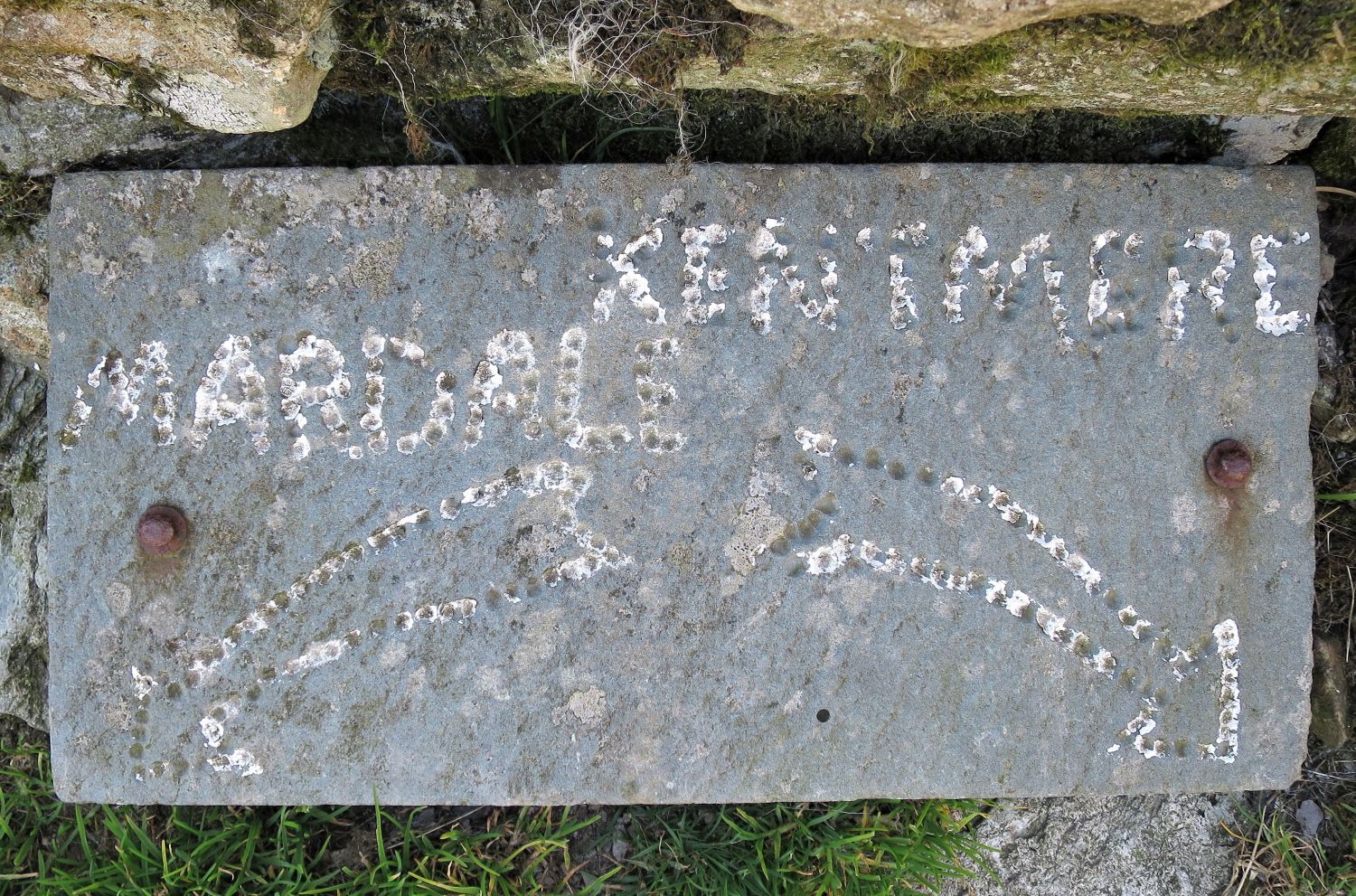
Imagine the benefit of this simple waymarker in thick mist.
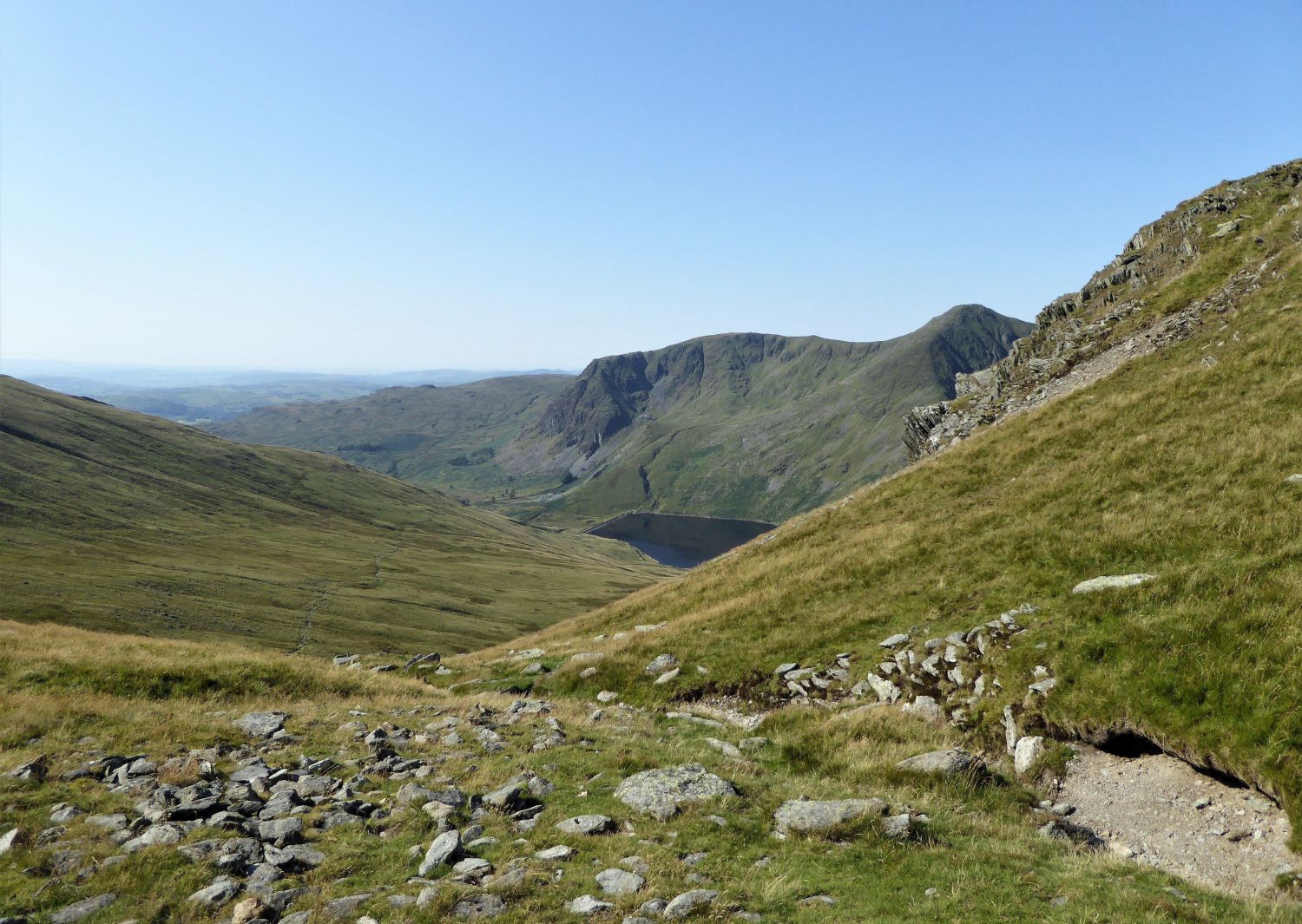
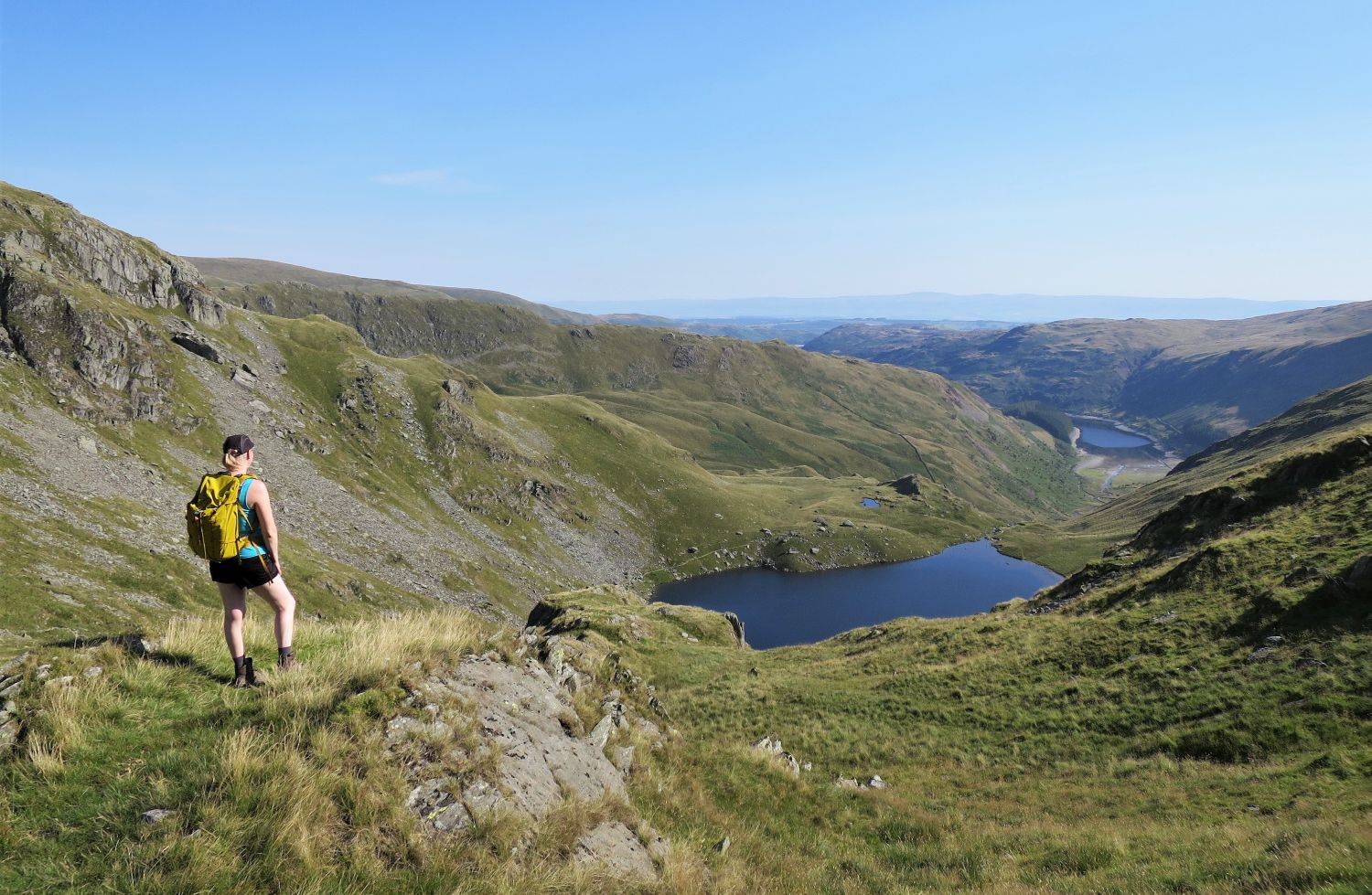
A nice place to contemplate and add more sun cream before our final climb to Harter Fell.
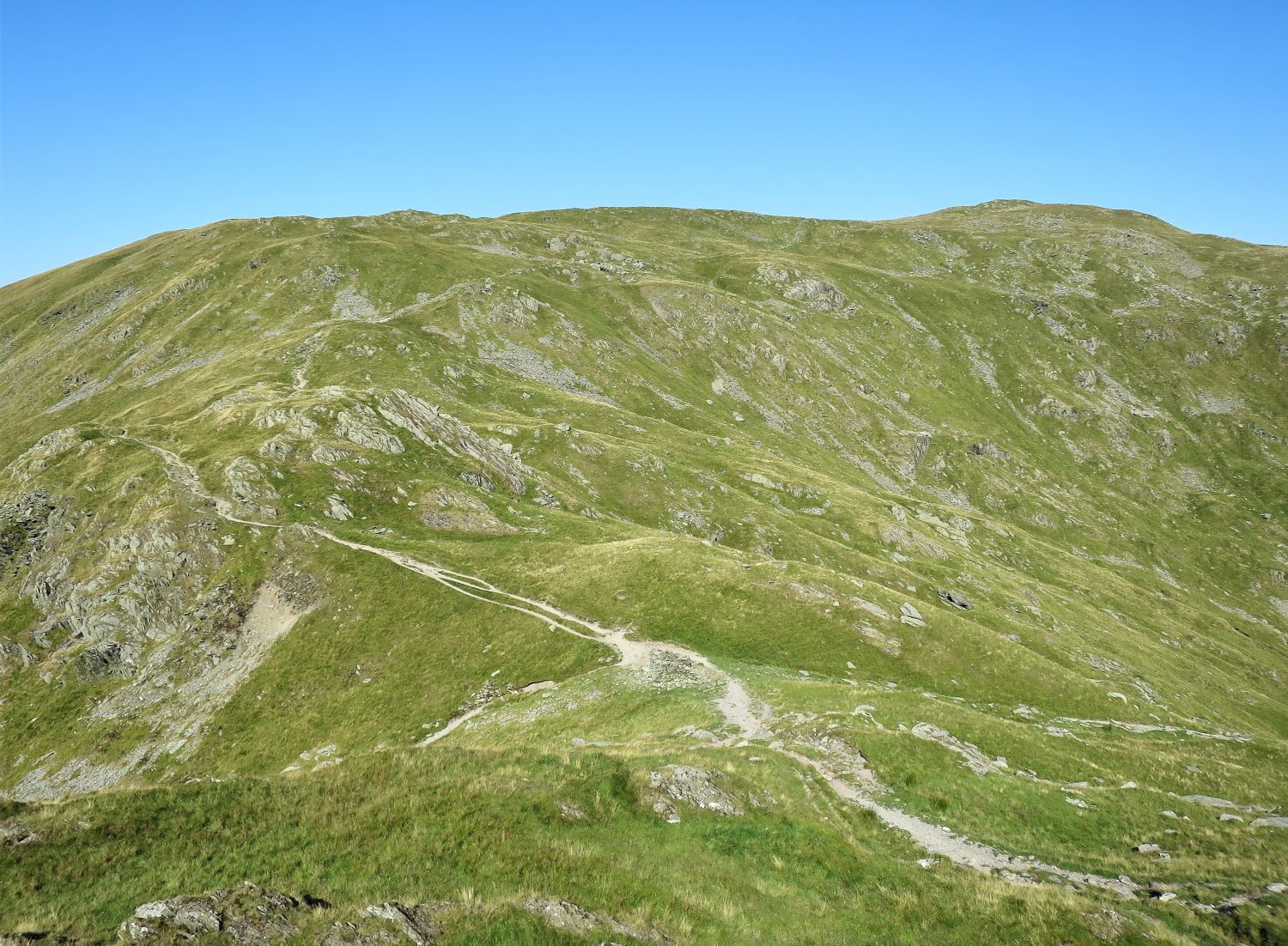
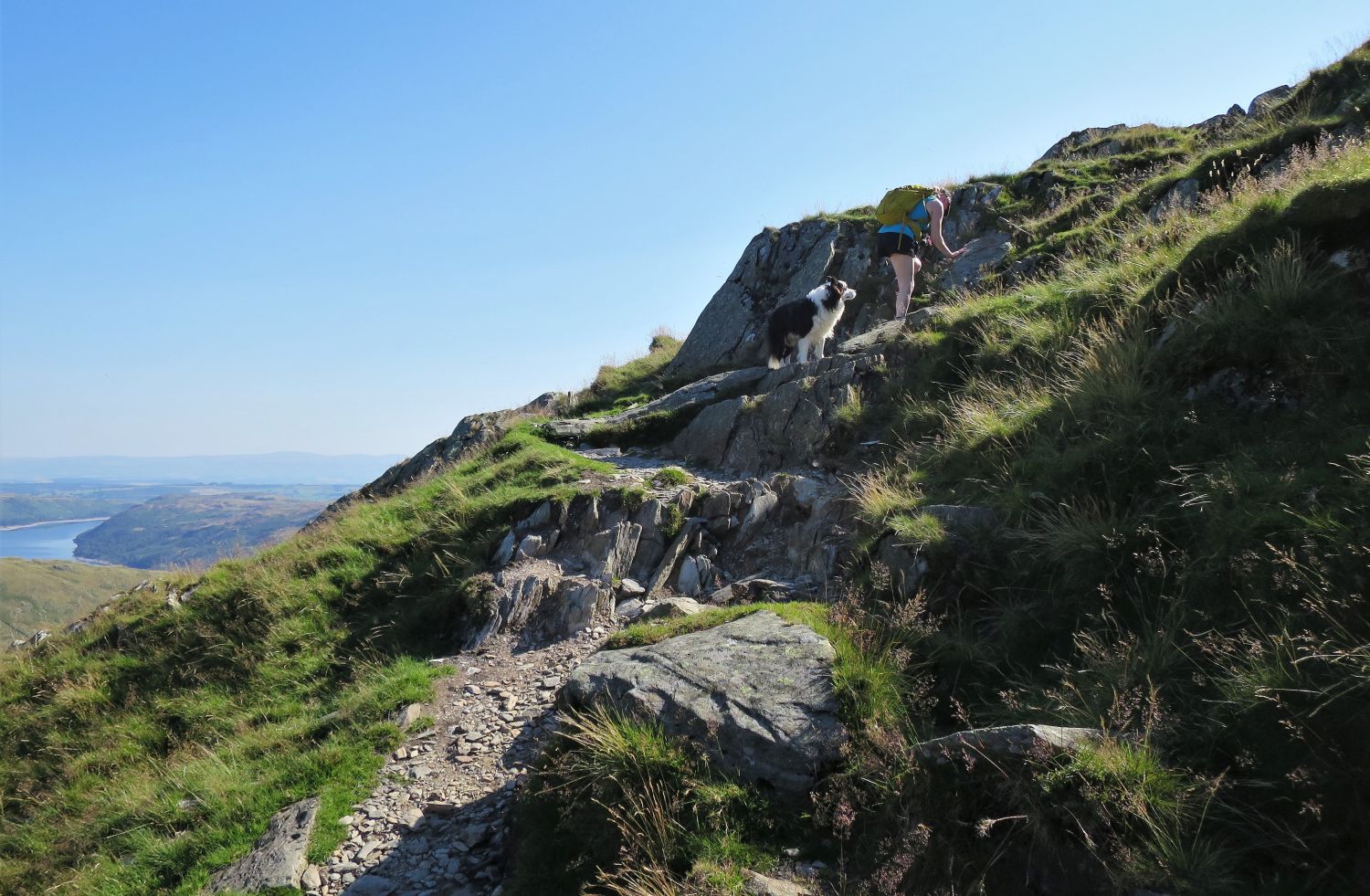
Initially, the climb from Nan Bield is a series of rock sections which require a little bit of simple scrambling. It is a joy in dry conditions.
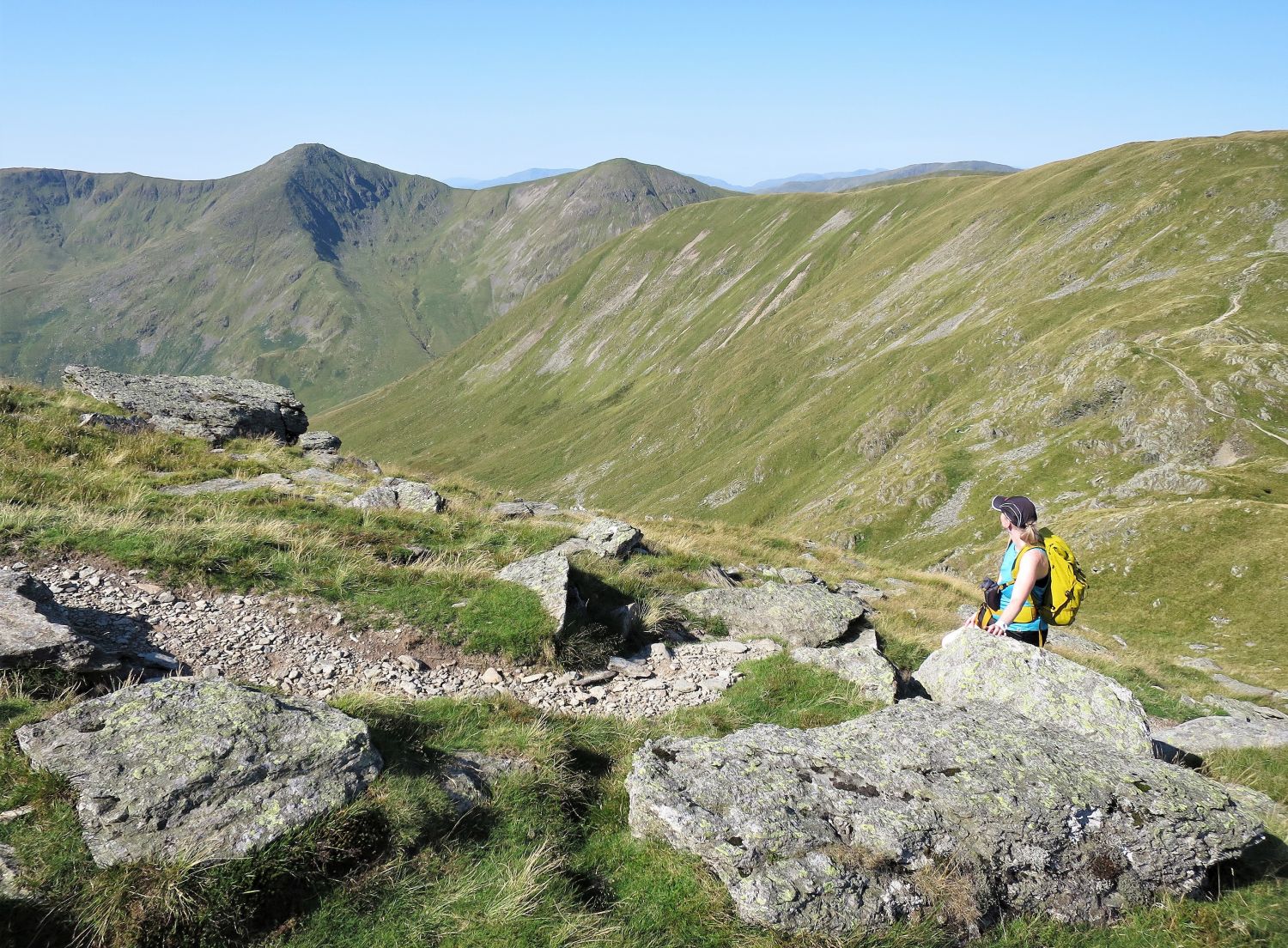
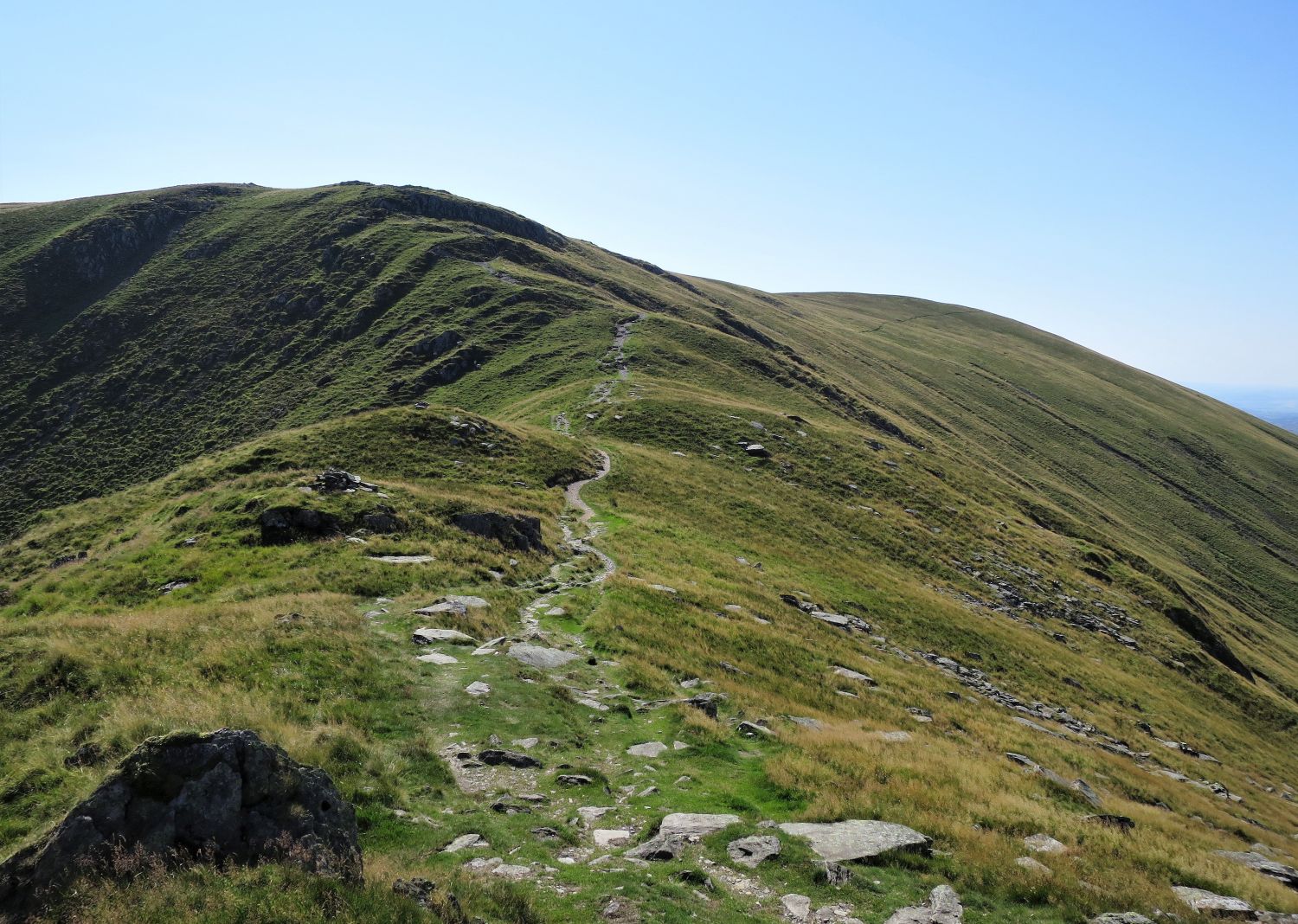
The ascent suddenly becomes much gentler, and then it’s another steep but simple climb to the summit plateau.
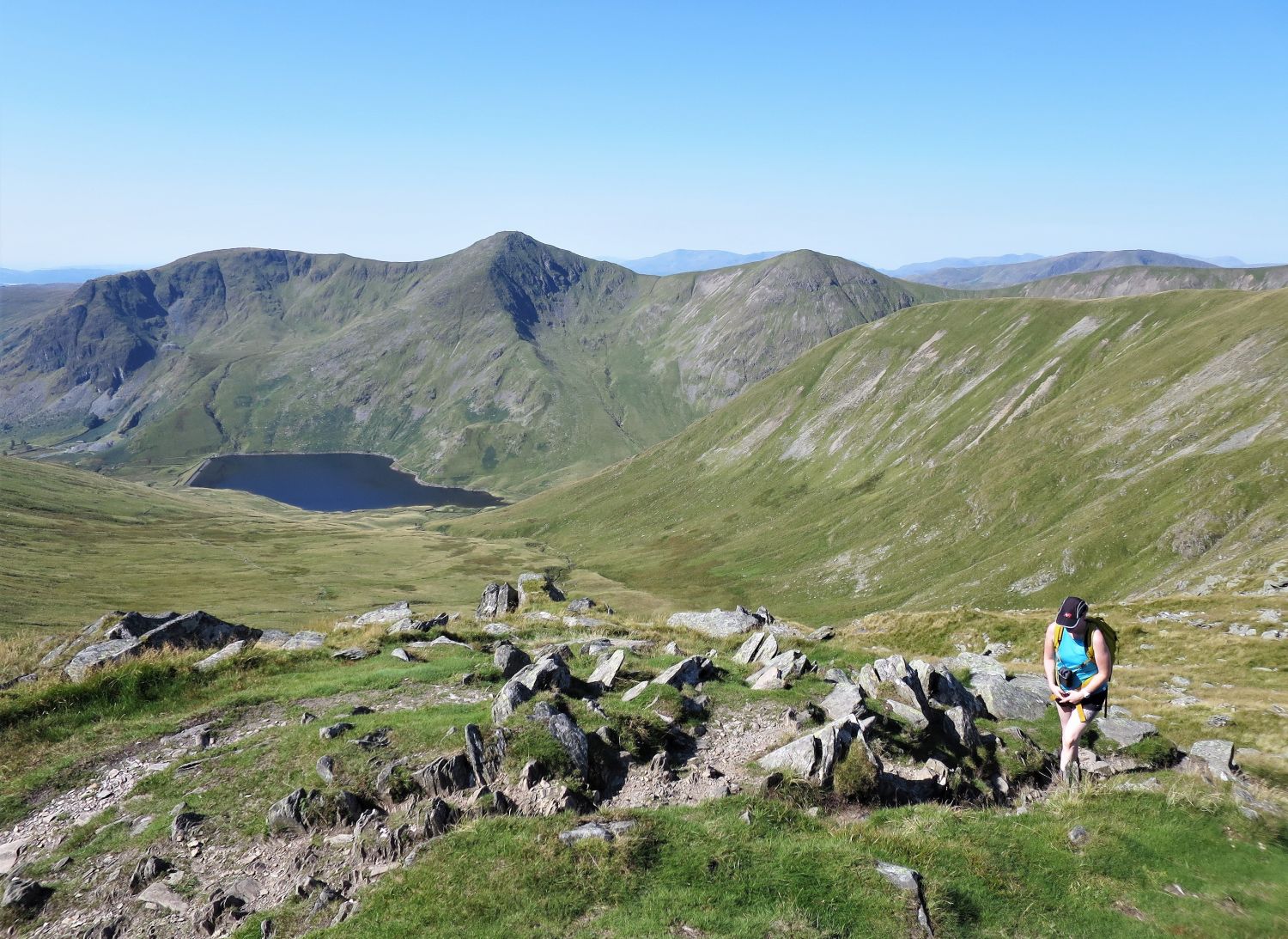
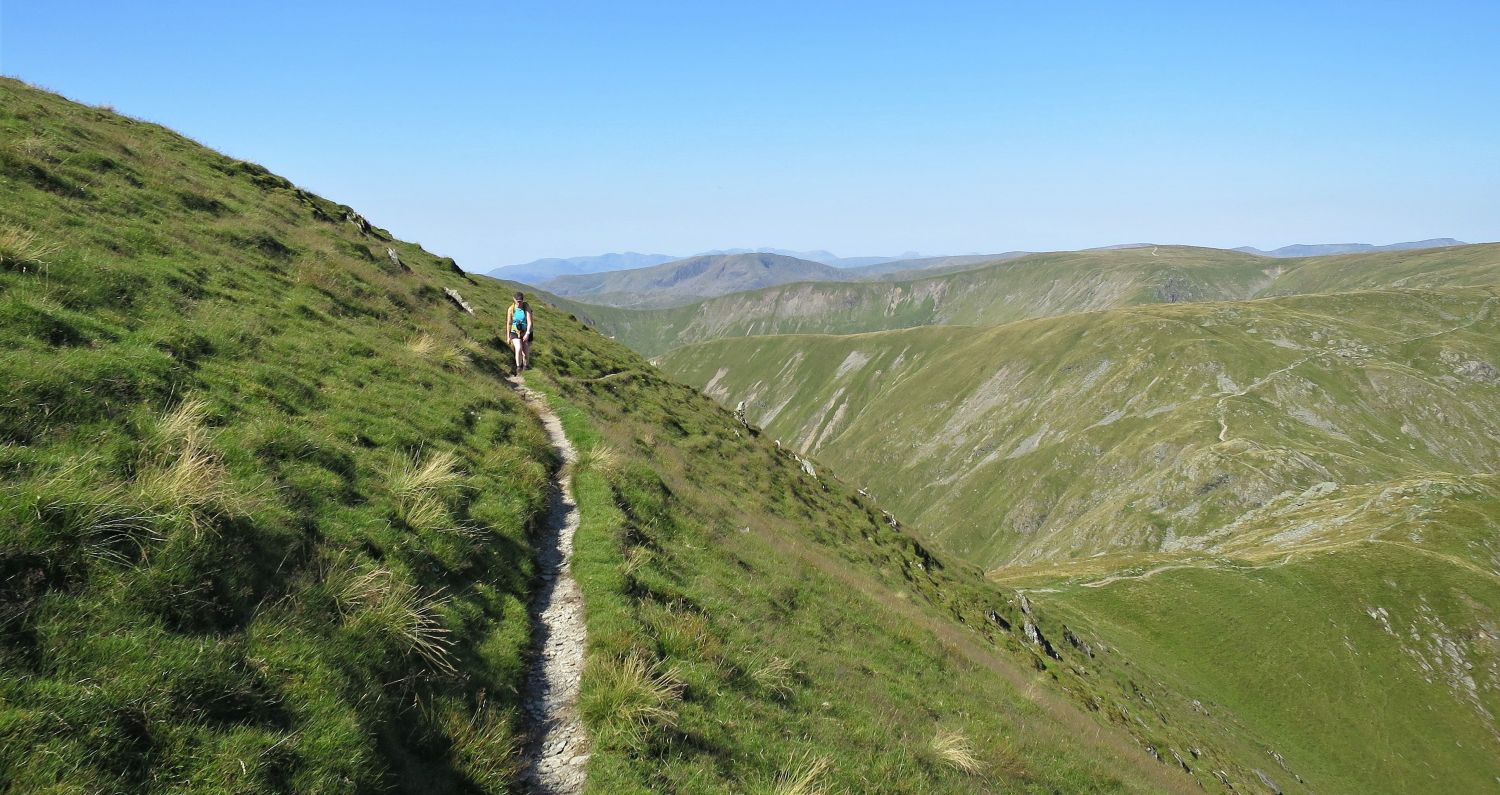
You can choose to continue following the western ridge to take a direct line to the summit plateau, but we prefer to follow the narrow path that zig-zags its way up the north-west flank.
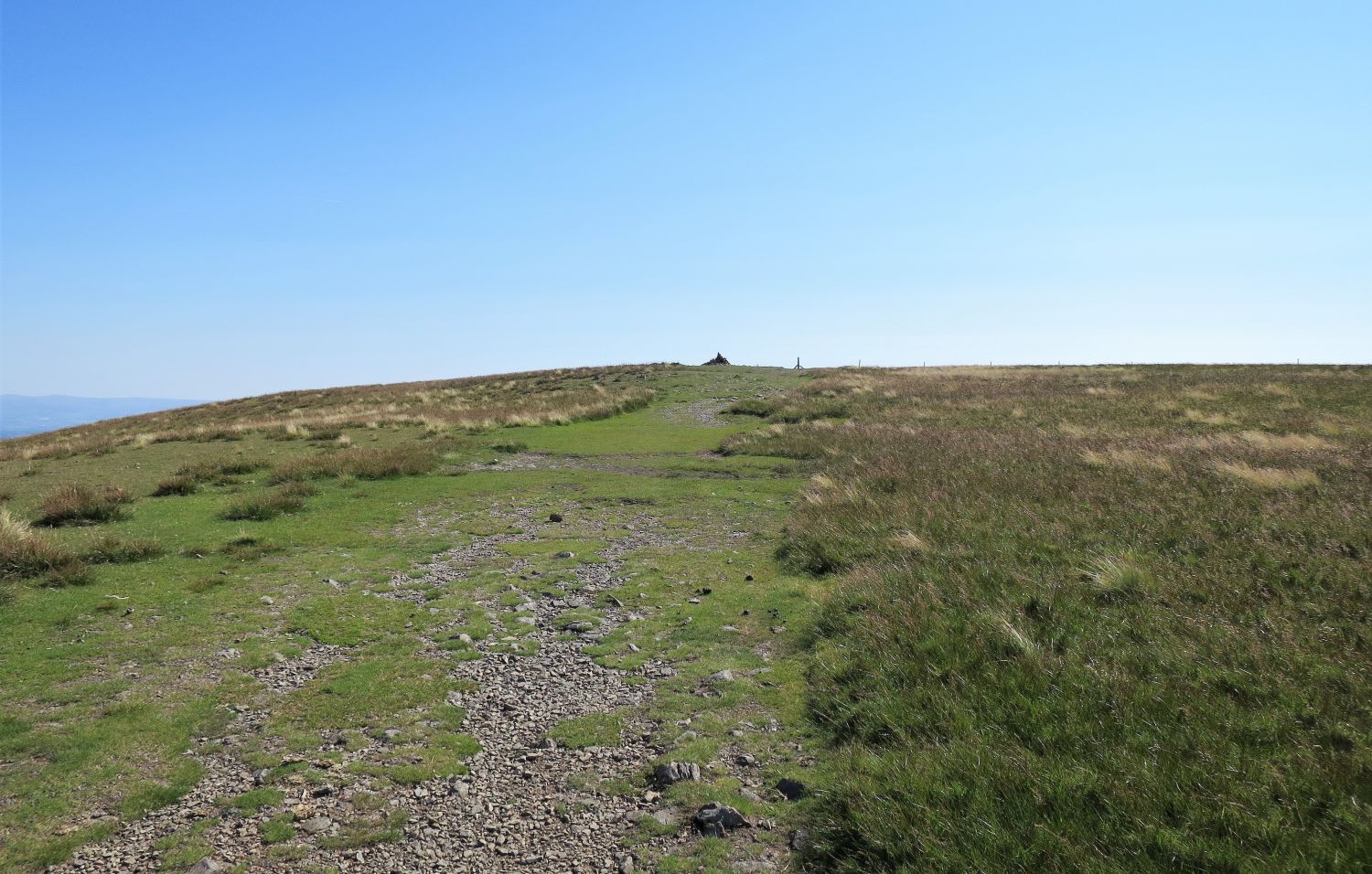
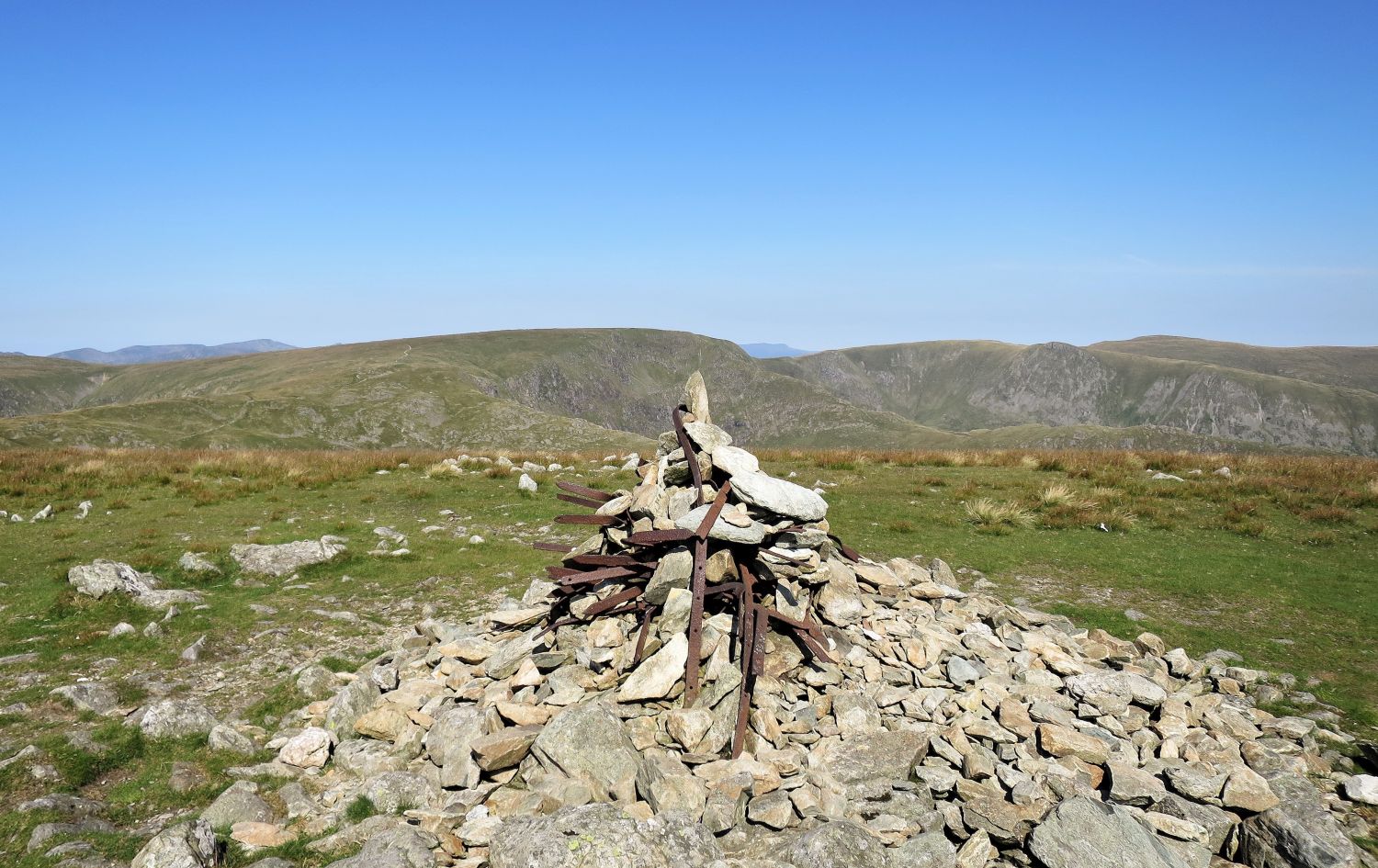
“A mild shock awaits anyone reaching the top of the fell on a first visit, especially in mist, for there is a spectral weirdness about the two highest cairns….”
The Far Eastern Fells
Harter Fell 9
“The Summit”
“….The stones support an elaborate superstructure of iron fence-posts and railings, which, having served their original mission, now act as an adornment that has a nightmarish quality. The summit cairn, illustrated above, now has a higher proportion of stones to metal.” Harter Fell 9
— Alfred Wainwright (revised by CH)
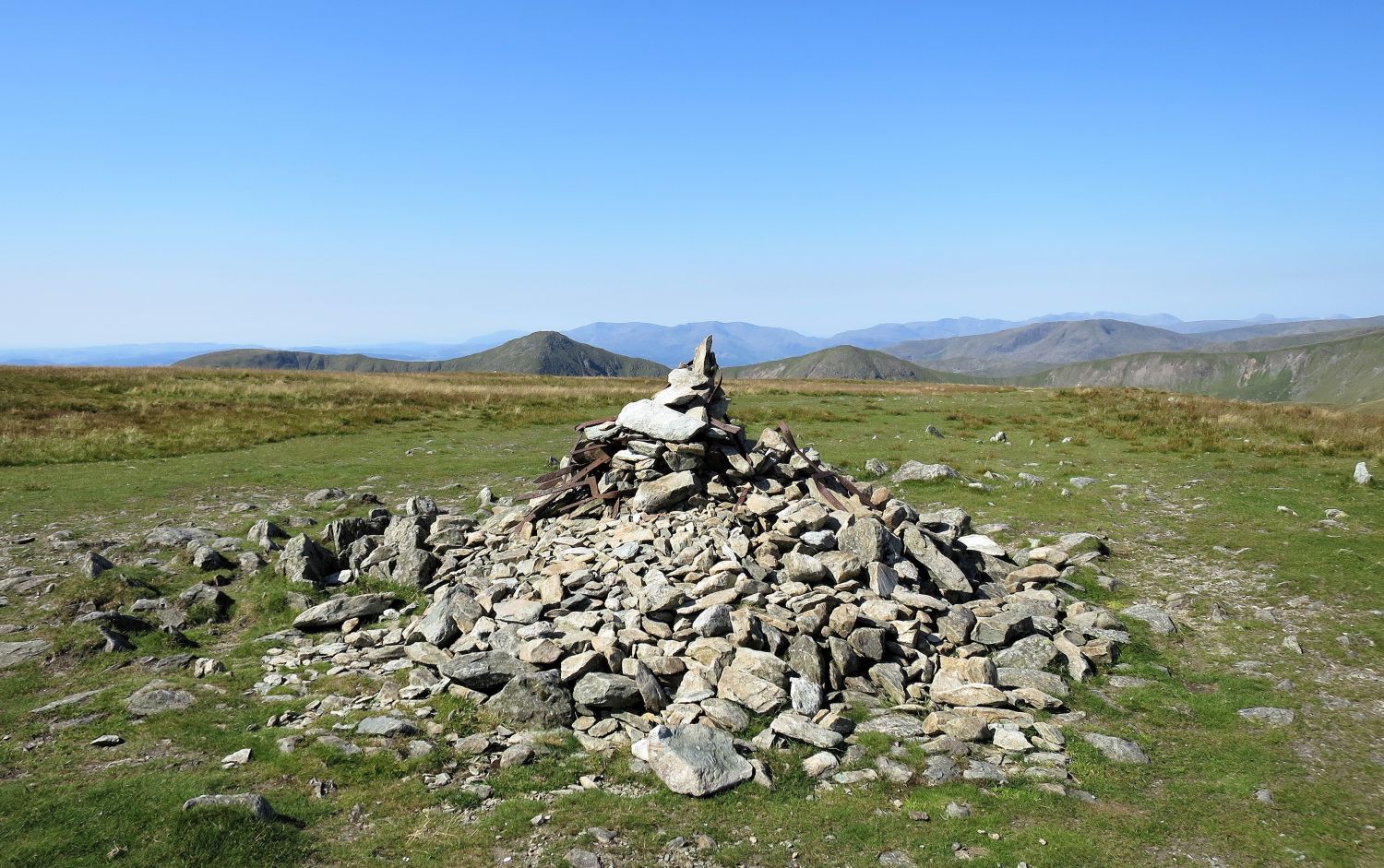
Over on the right, in the very far distance, the Scafells and Great Gable are easily recognisable. The dominant-looking fell on the right is Red Screes.
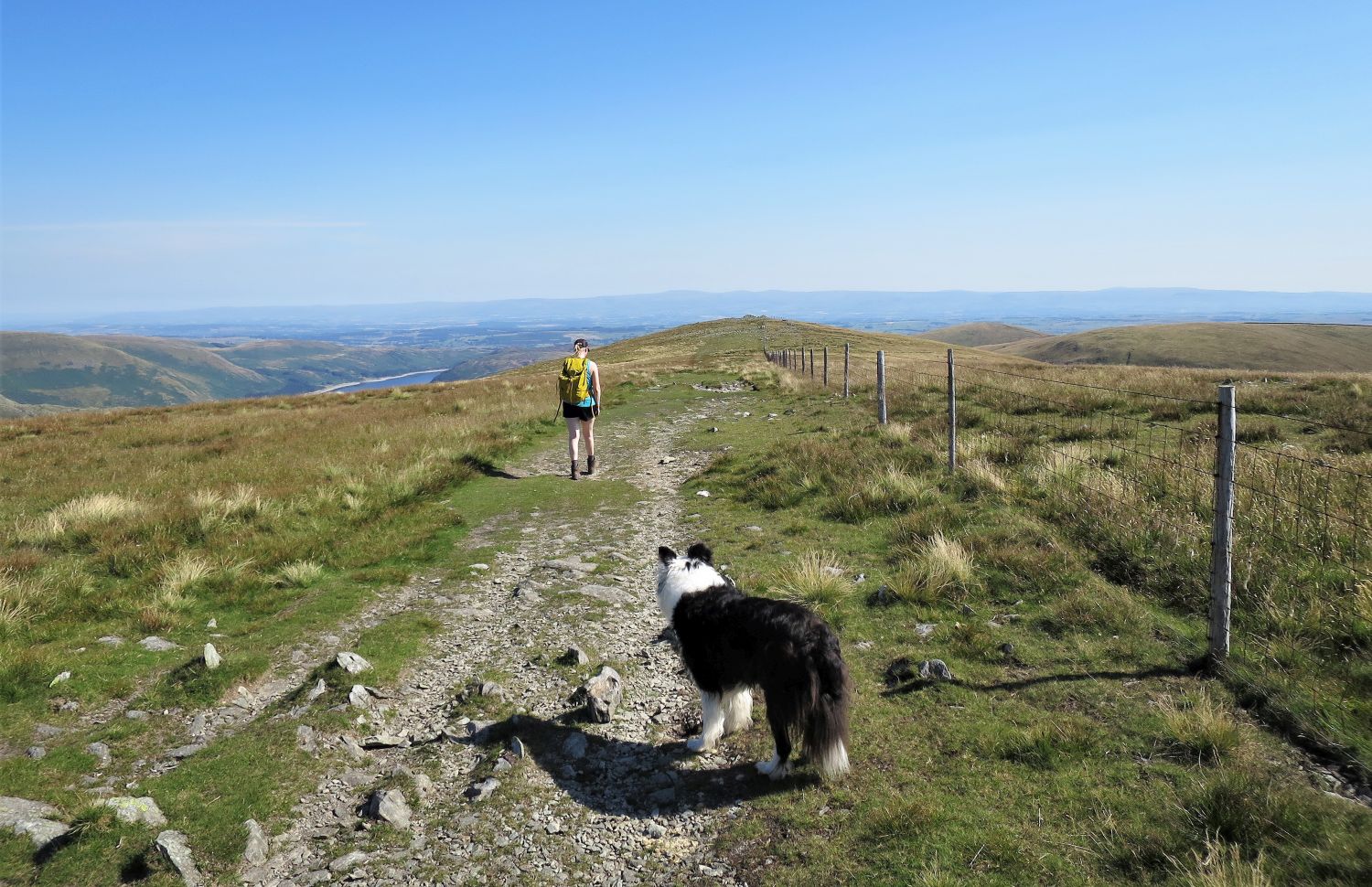
“The pedestrian route across the top follows a wire fence. The paths are clear on hard ground, in places ten yards wide or more.” Harter Fell 9
— Alfred Wainwright (revised by CH)
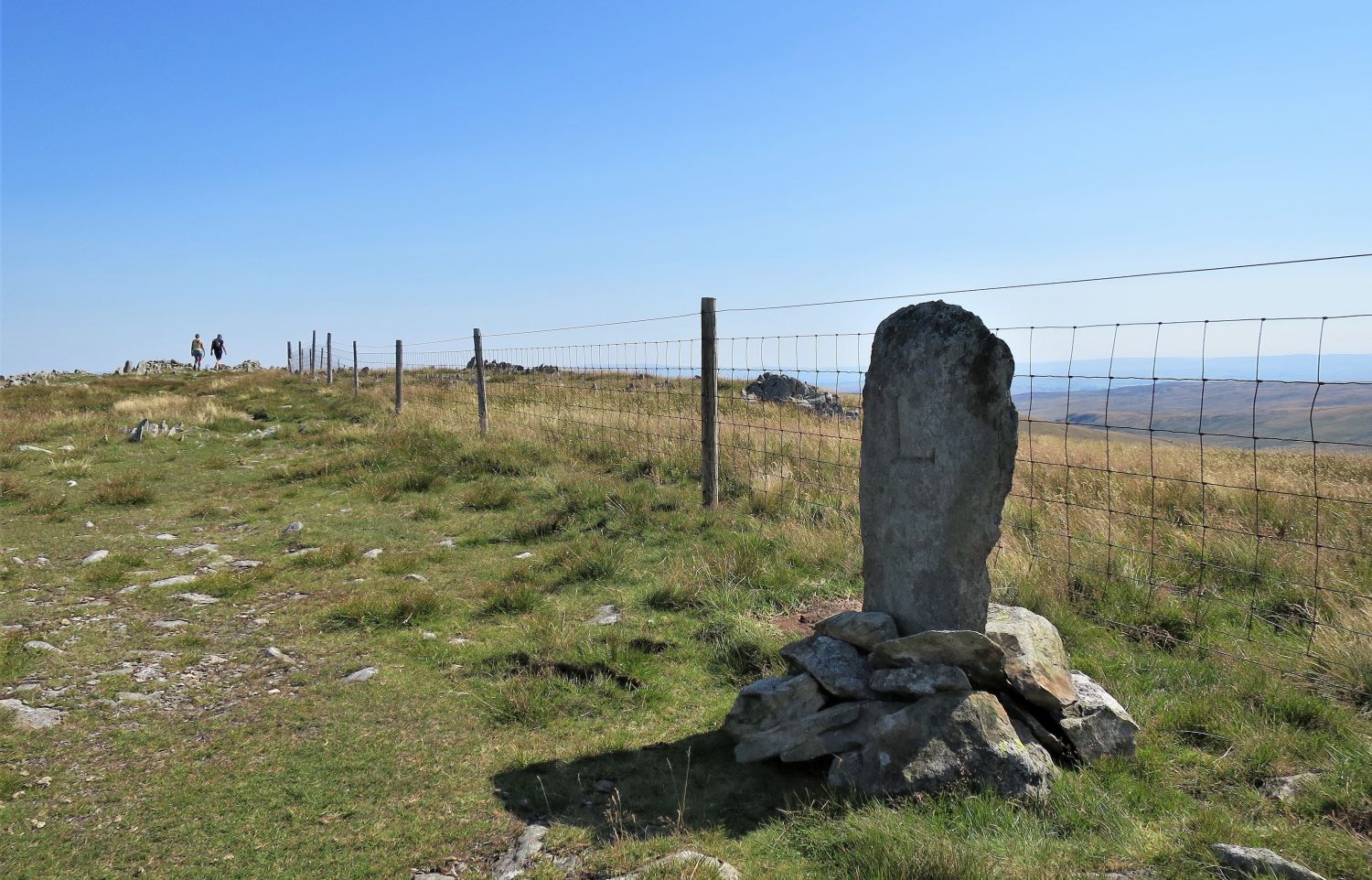
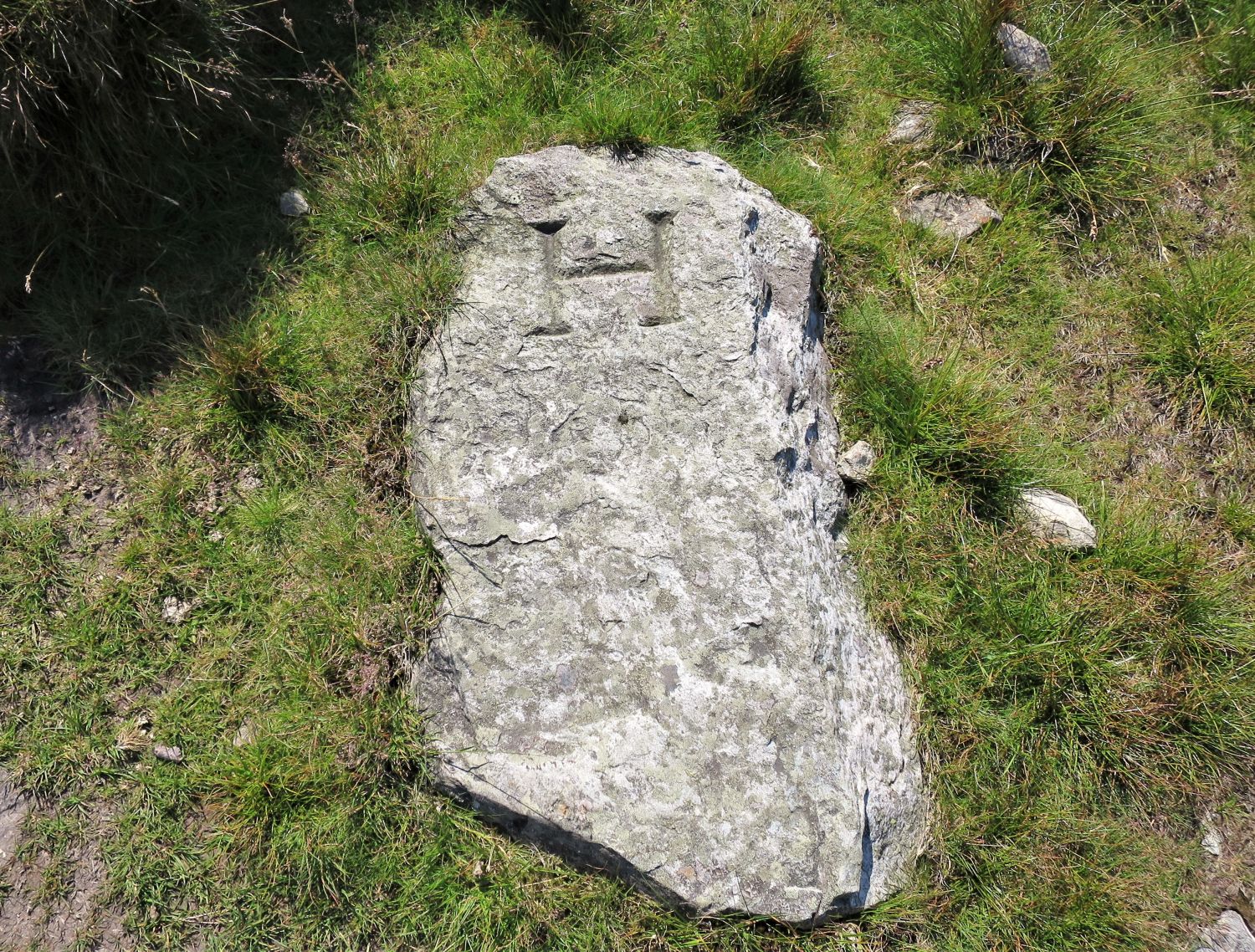
This large stone, engraved “L” on one side and “H” on the other, once marked the boundary between the land around Mardale (owned by the Lonsdale Estate) and Longsleddale (owned by the Harrison Estate). My wife and I decided to place it back in an upright position, as it had been lying flat in the grass for many decades. Although it is no longer required, we simply didn’t see the point of leaving it there out of view. Sadly, we didn’t have enough time on this day to build a more substantial cairn around it, but we hope that, over time, more stones will be added so it can stay in position and continue to battle the elements on Harter Fell.
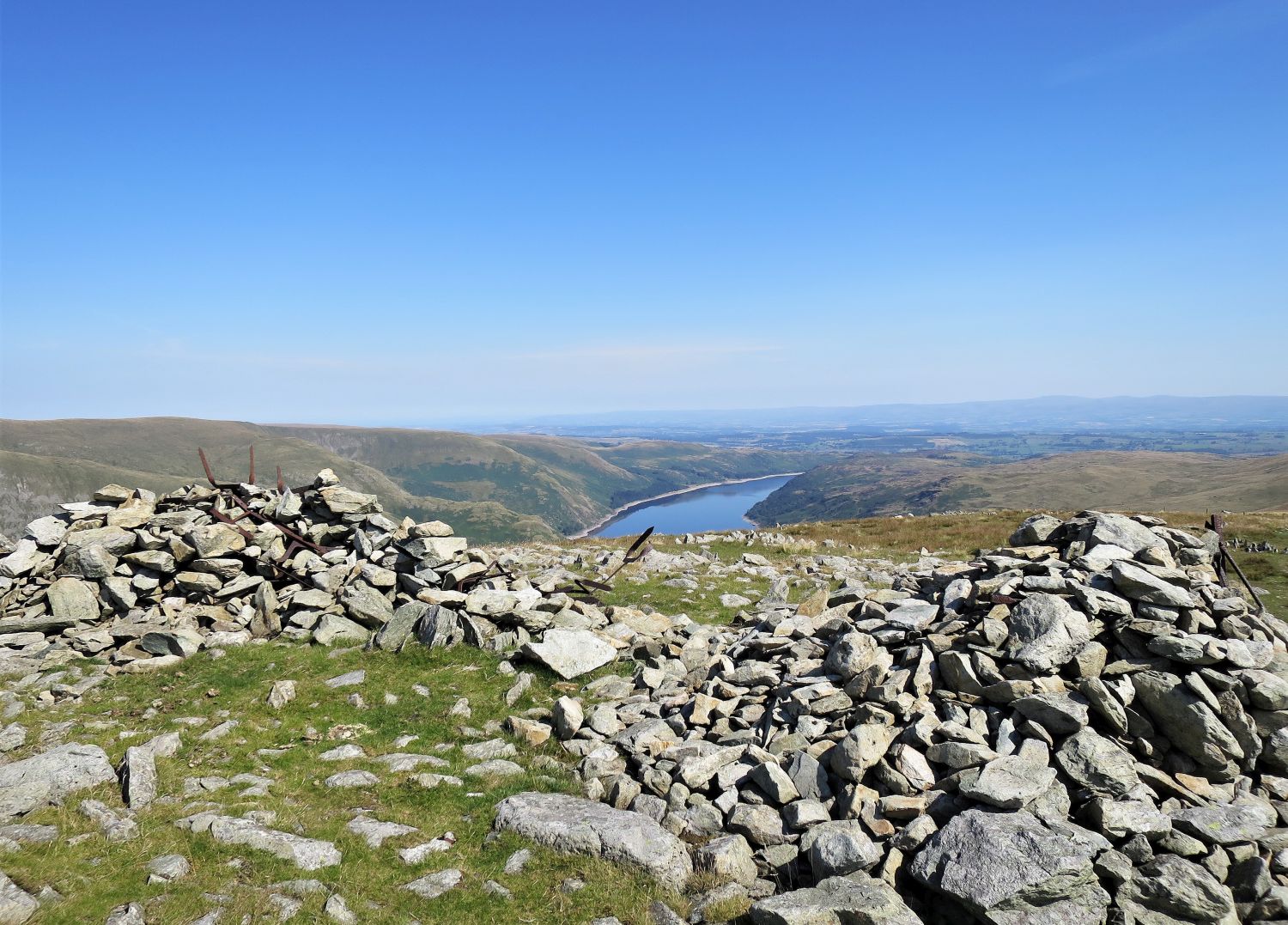
Not sure why, but there are two large cairns at this location. Was there an attempt to build a wind shelter many years ago?
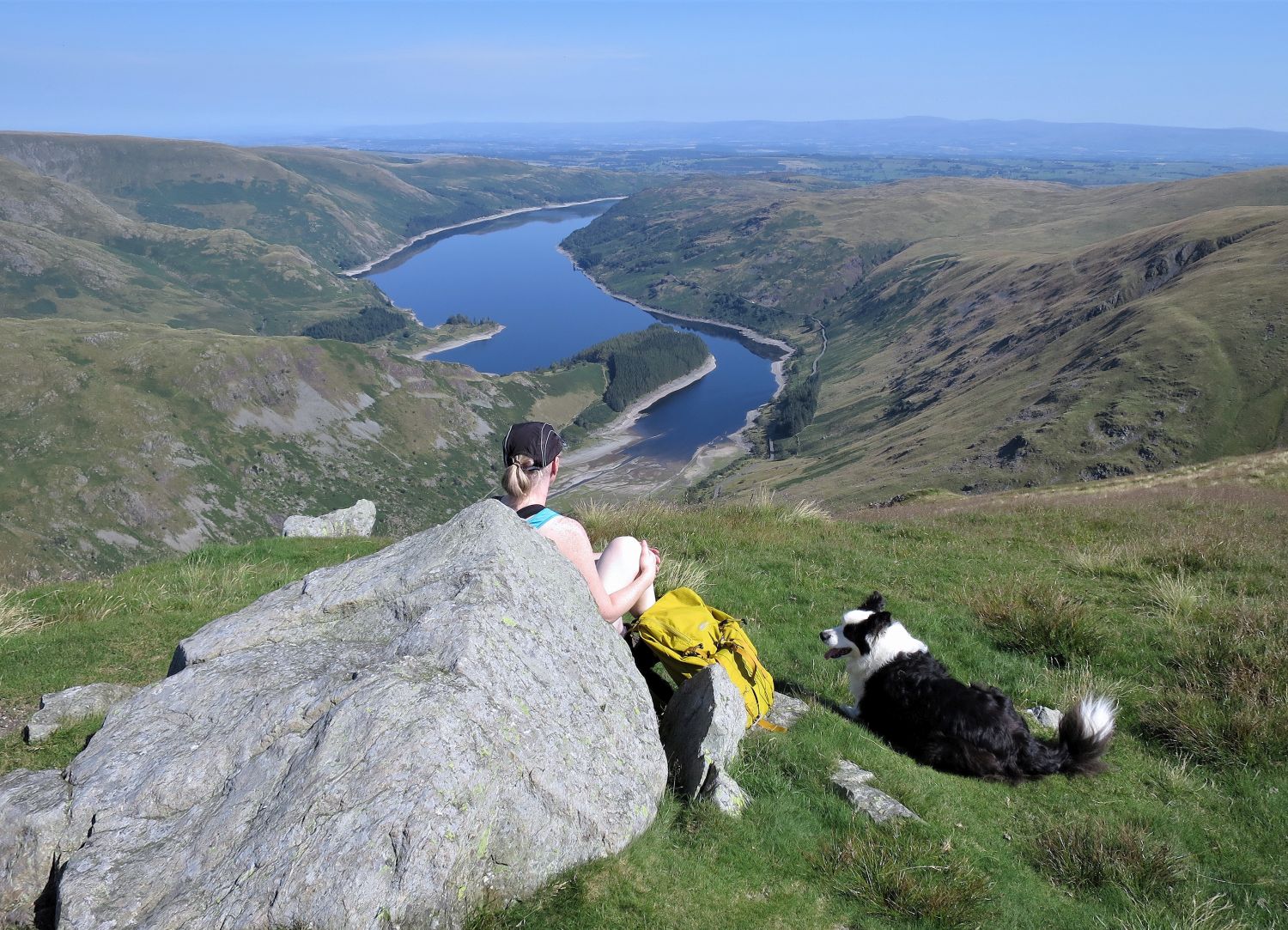
A very popular place to sit where Alfred Wainwright once sat to admire the view down the valley of Mardale.
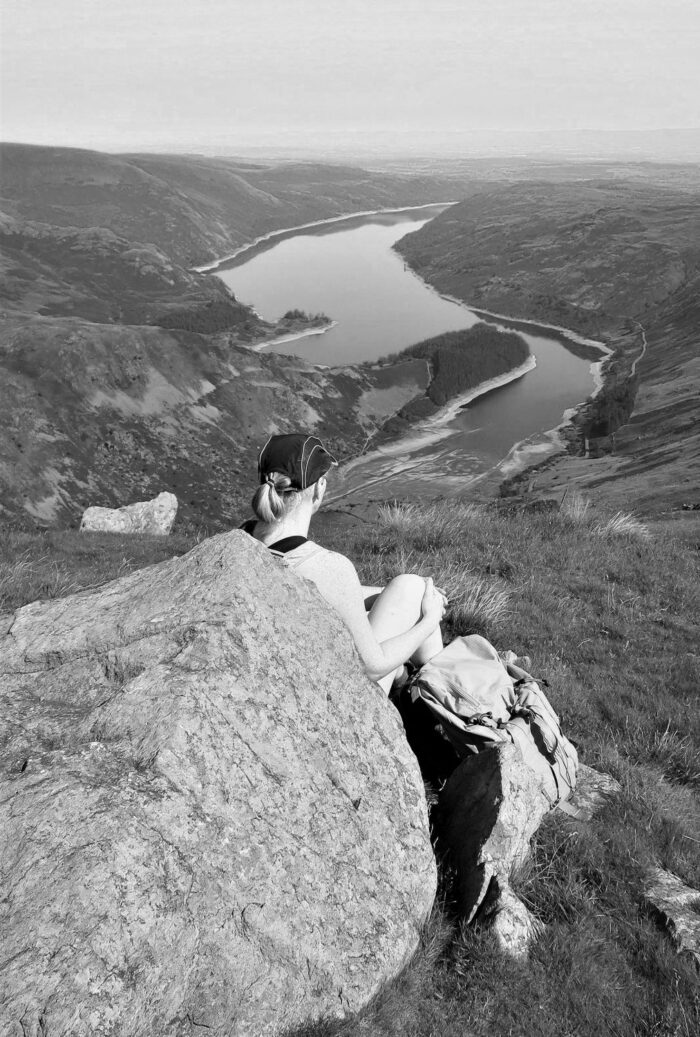
The Far Eastern Fells
Harter Fell 10
“Haweswater from the fence corner”
“The fence corner is the setting for the illustration opposite, which was used to introduce the author’s television programmes in the 1980s.” Harter Fell 9
Chris Jesty
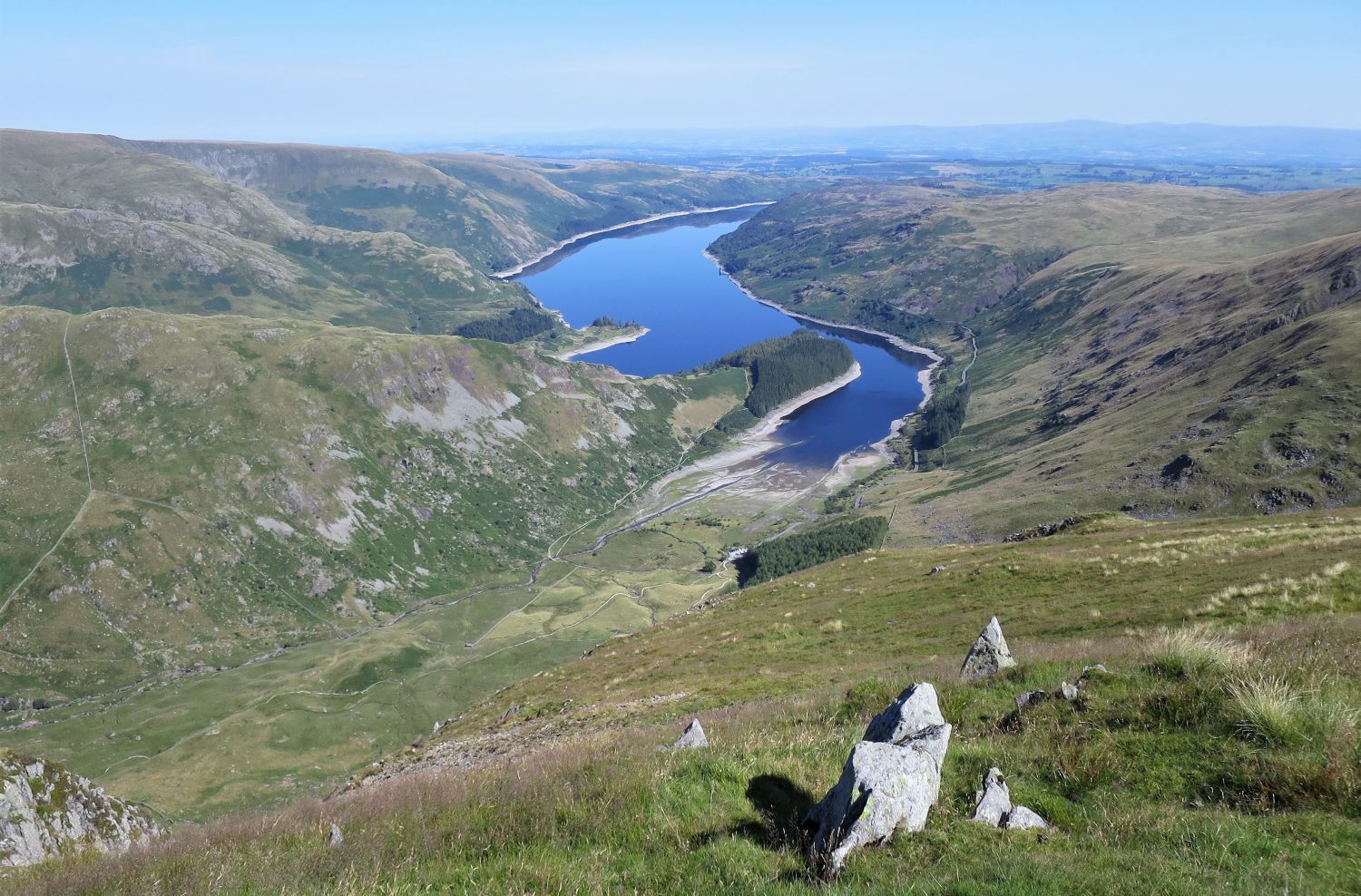
Walk a little bit further to the edge and you are rewarded with an even more impressive view.
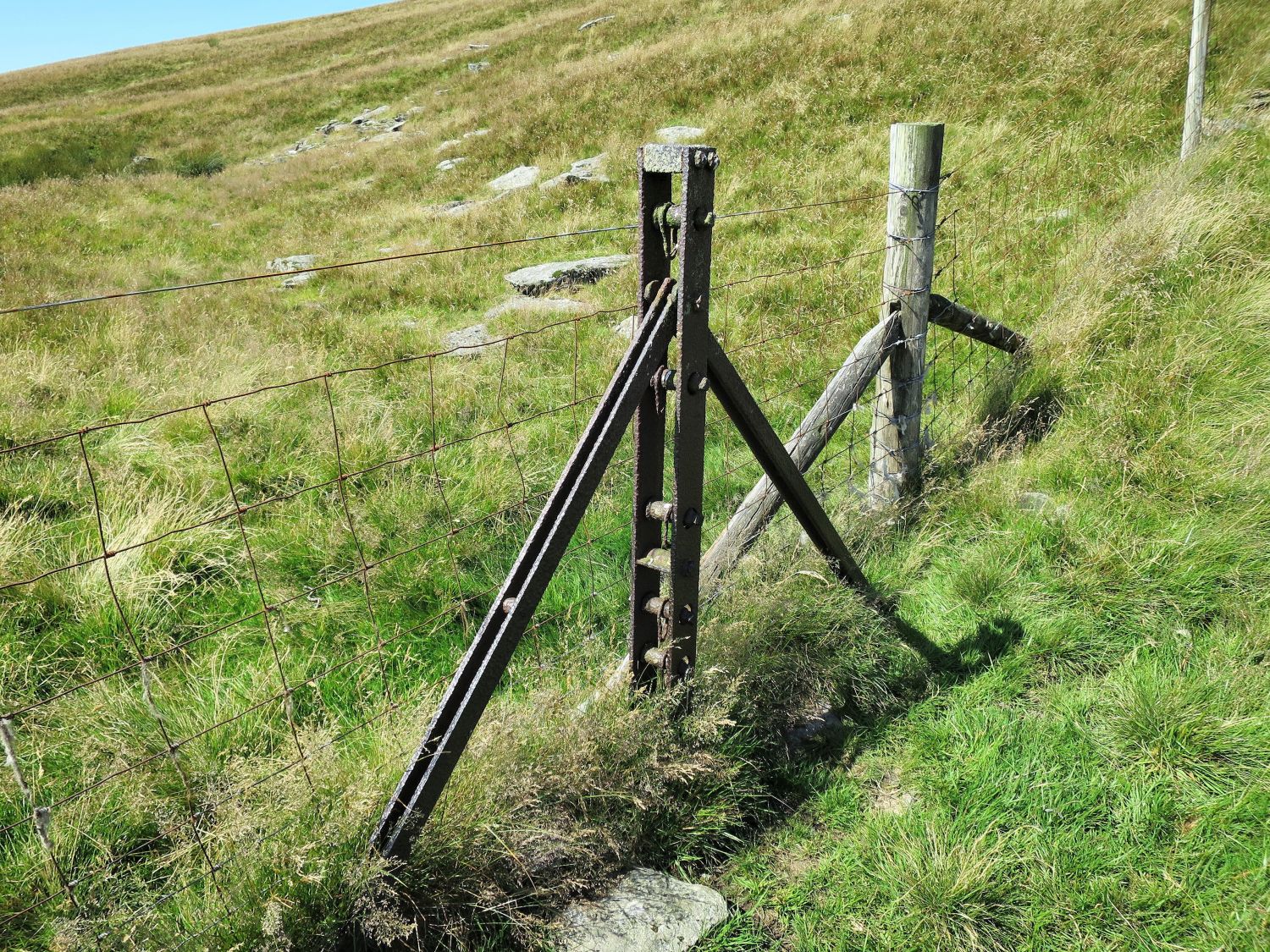
“The route around the top of the fell follows the ruins of a wire fence….Traces of the fence are continuous between The Knowe and Adam Seat.” Harter Fell 7
— Alfred Wainwright
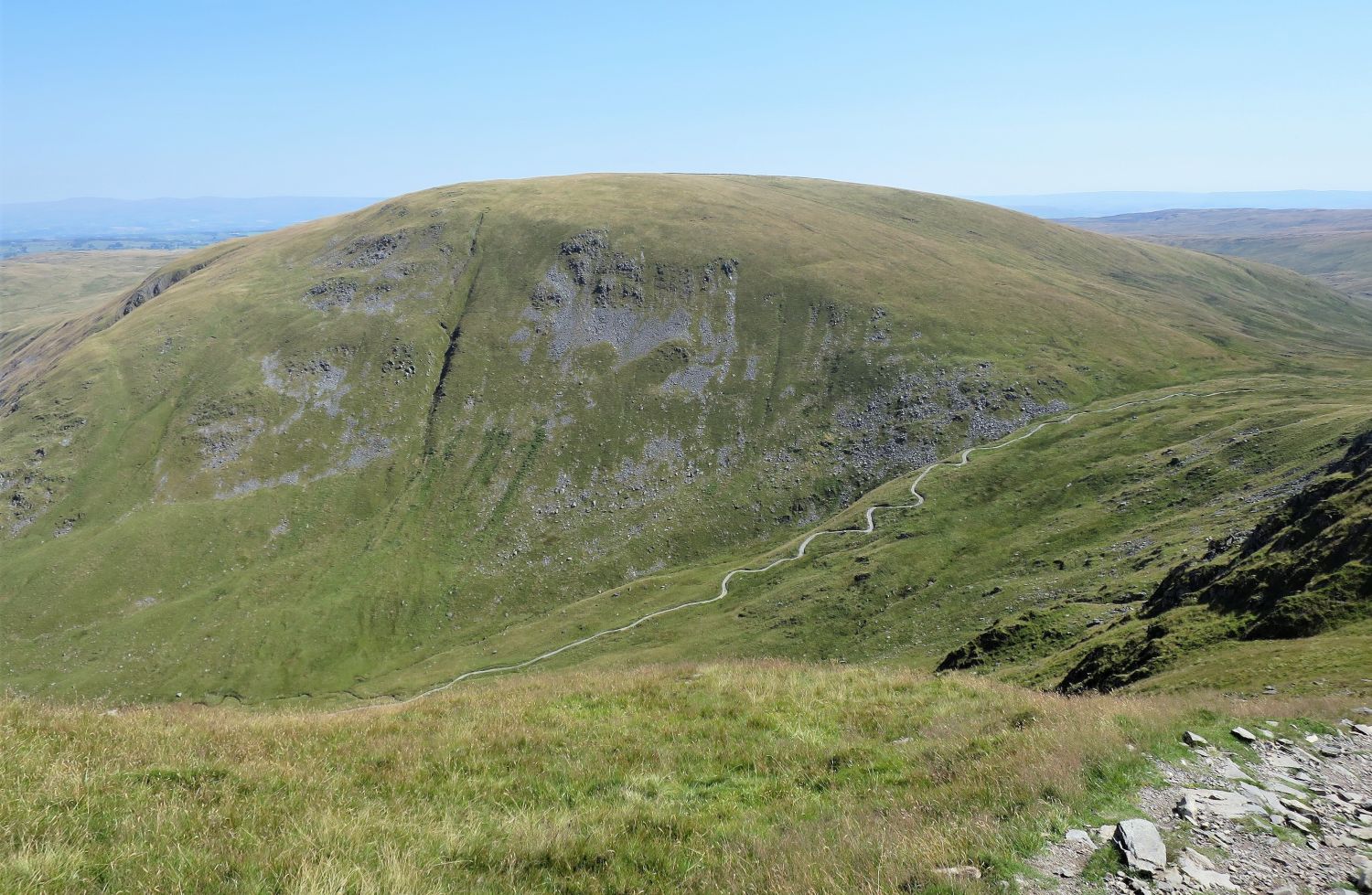
Our route back to Mardale is in plain sight below us, as we descend to Little Harter Fell.
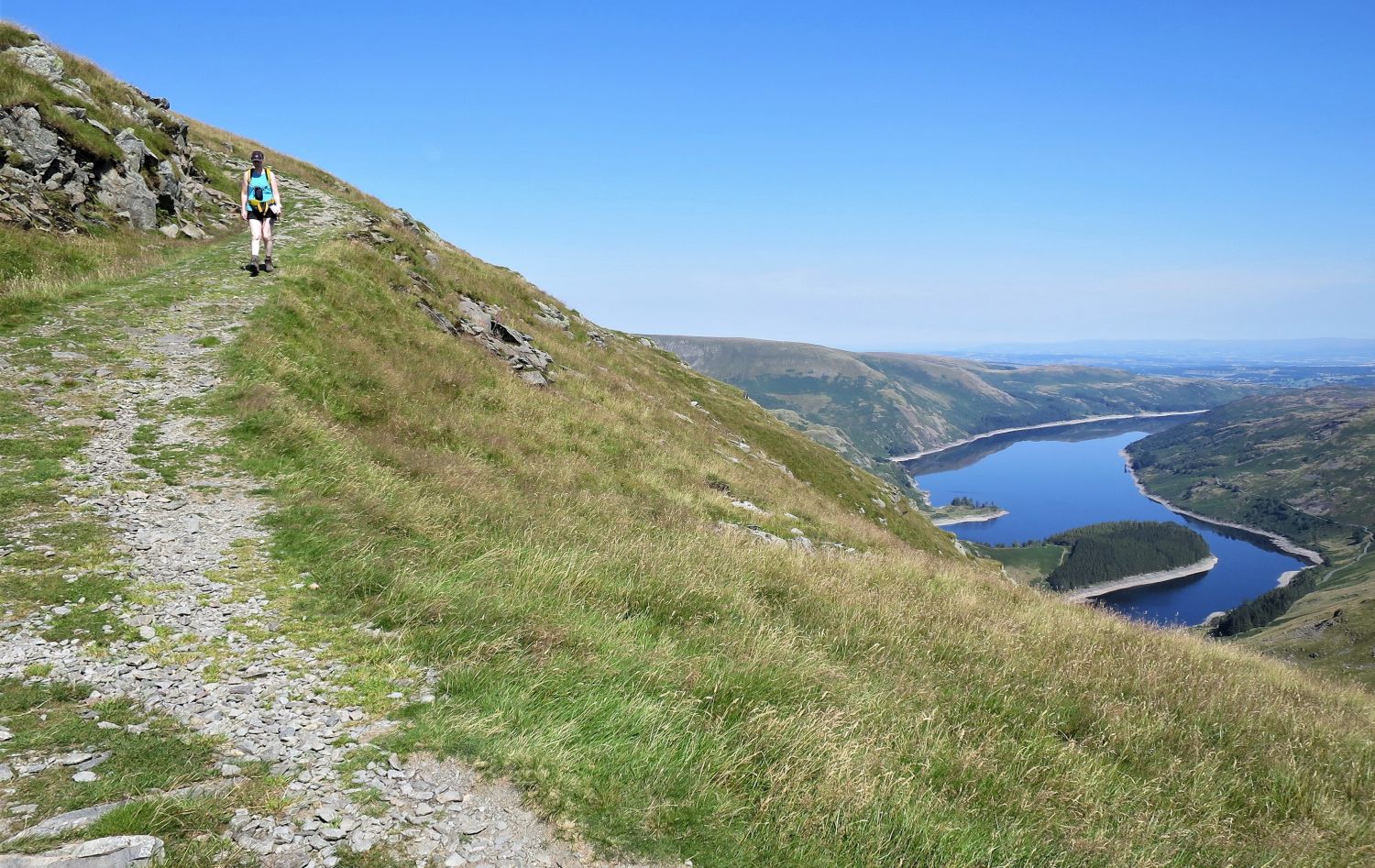
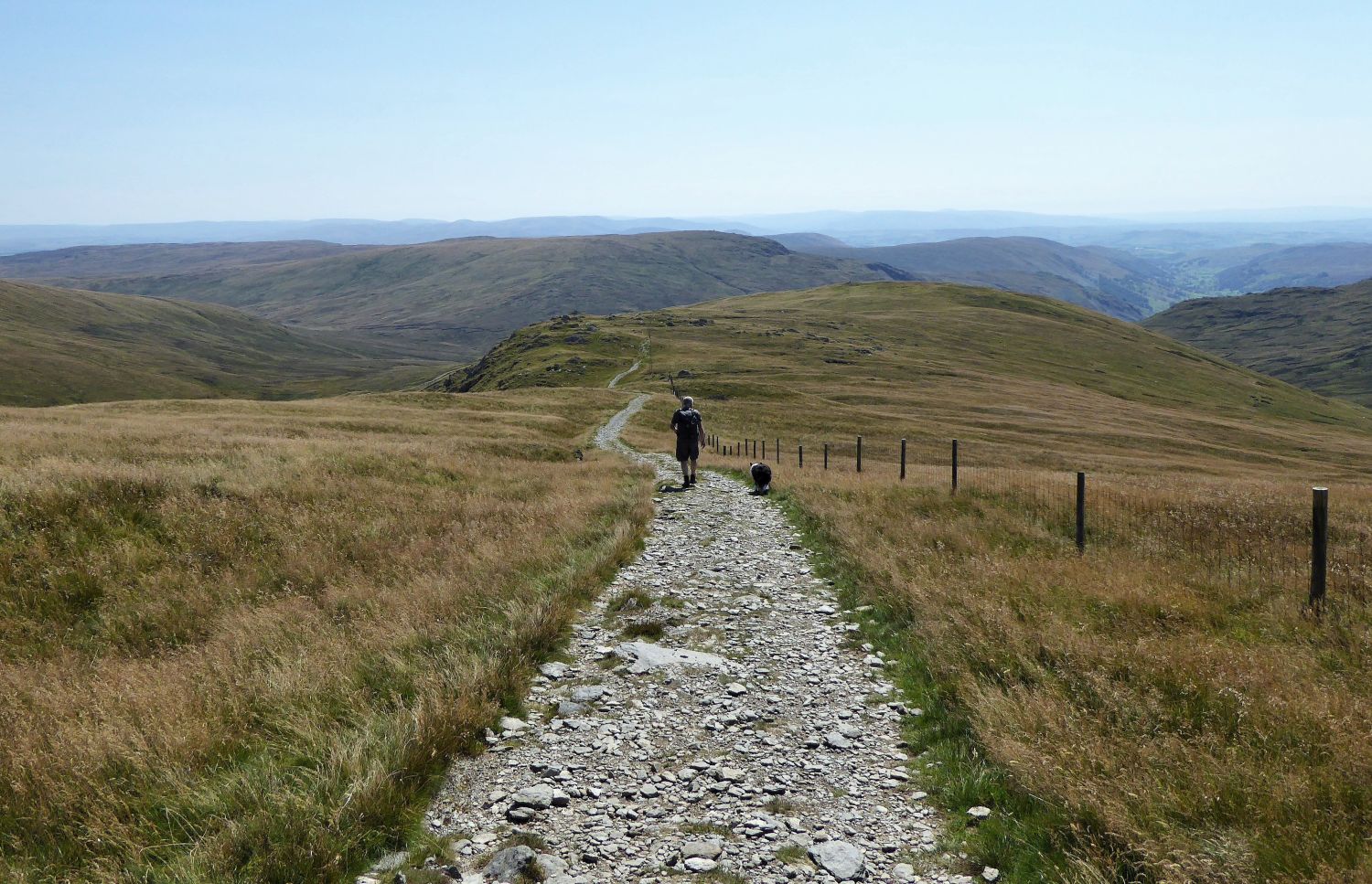
The valley of Longsleddale can be seen over on the far right.
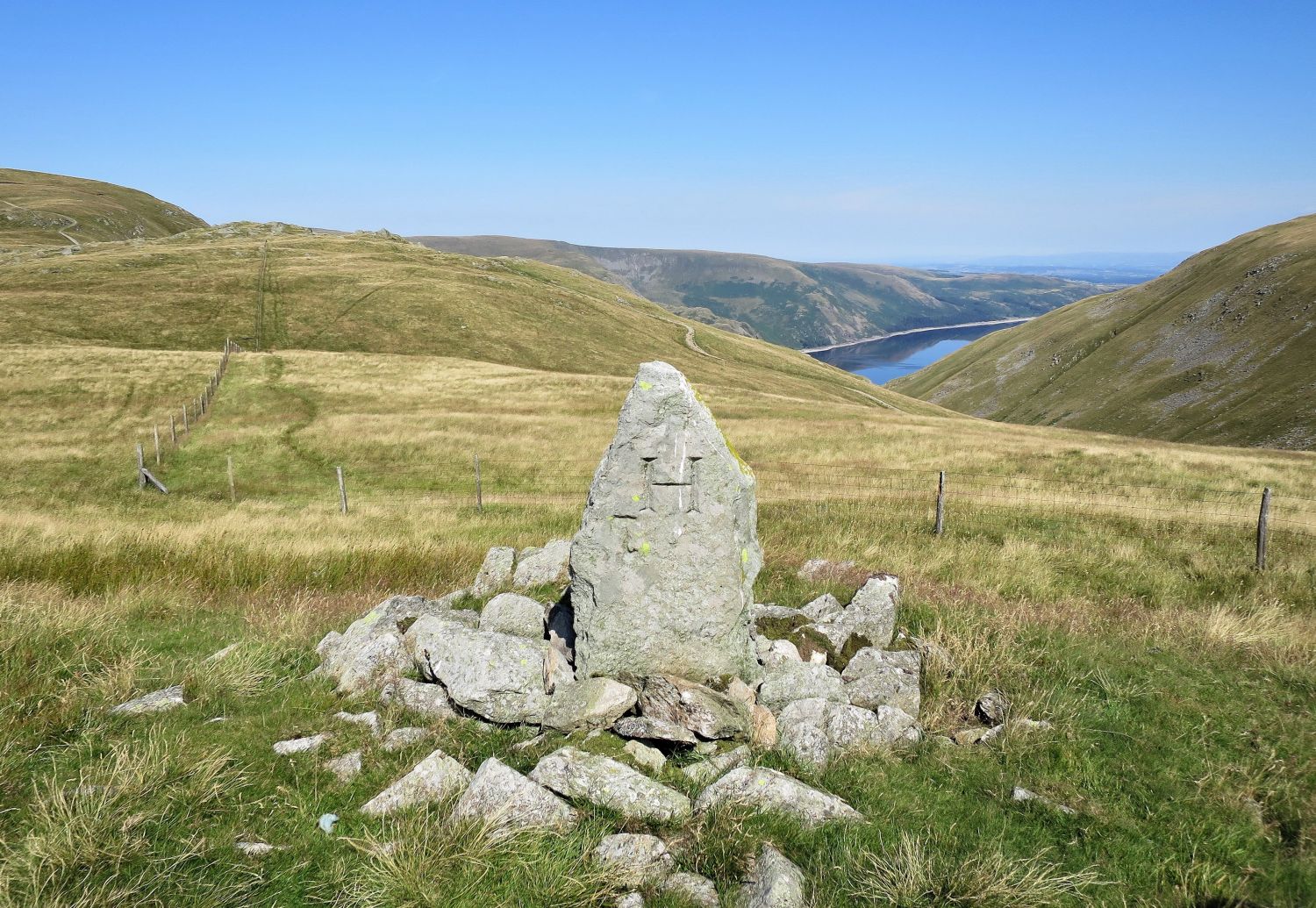
A third boundary stone can be found, still in its original position, on the summit of Adam Seat. All three stones on Harter Fell and Adam Seat are still marked as “BS” on present-day OS maps; there is also a fourth stone on Branstree.
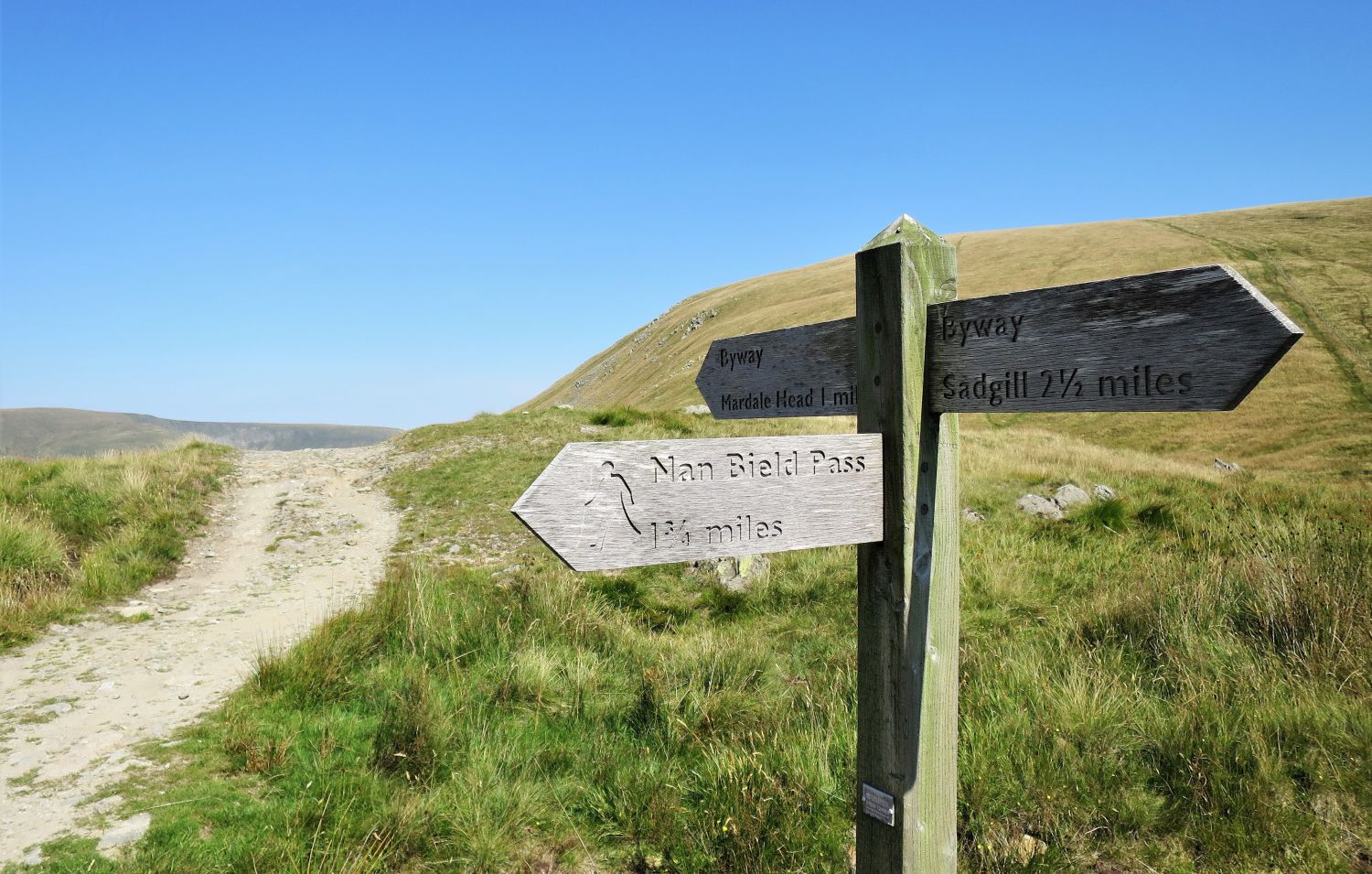
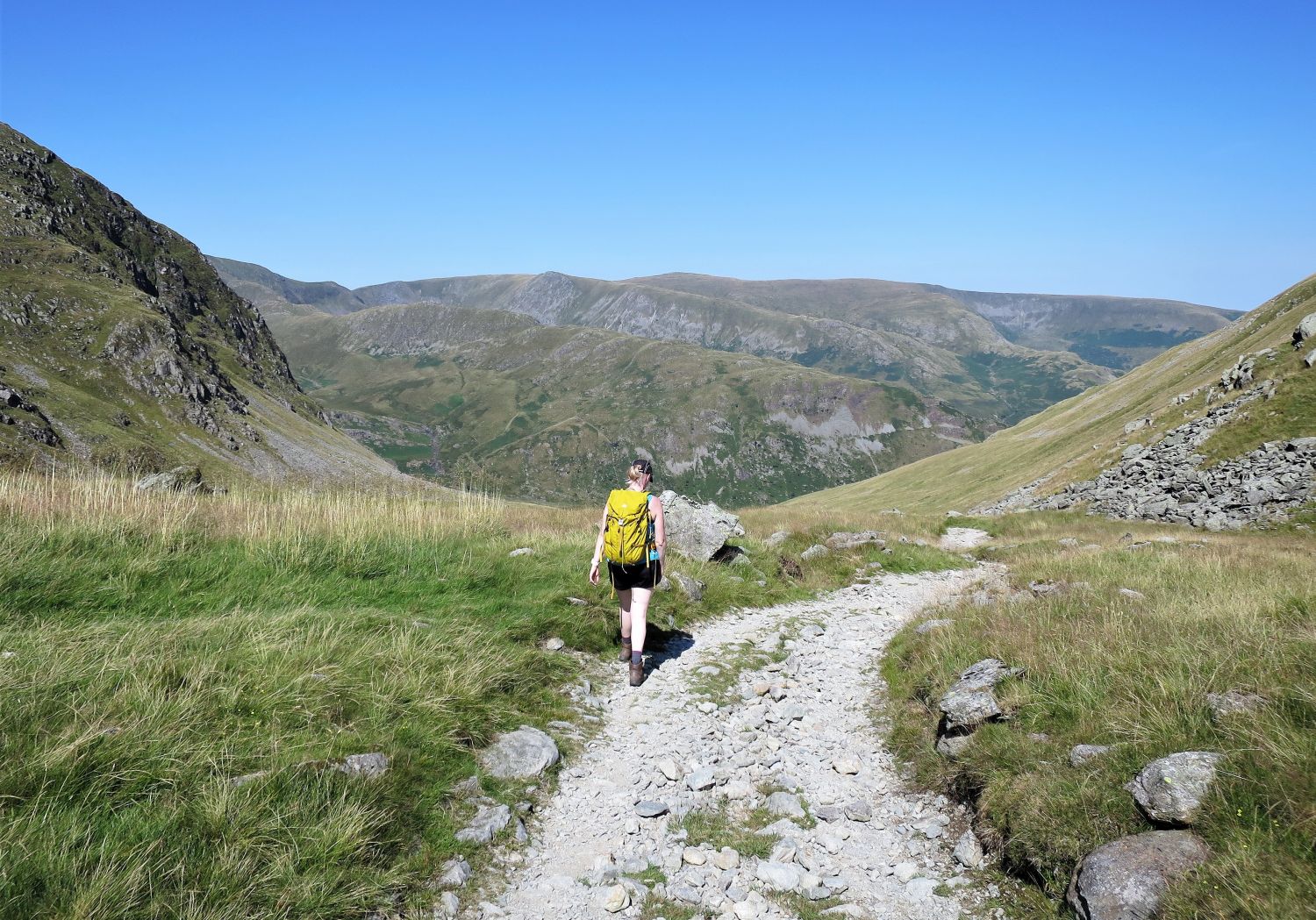
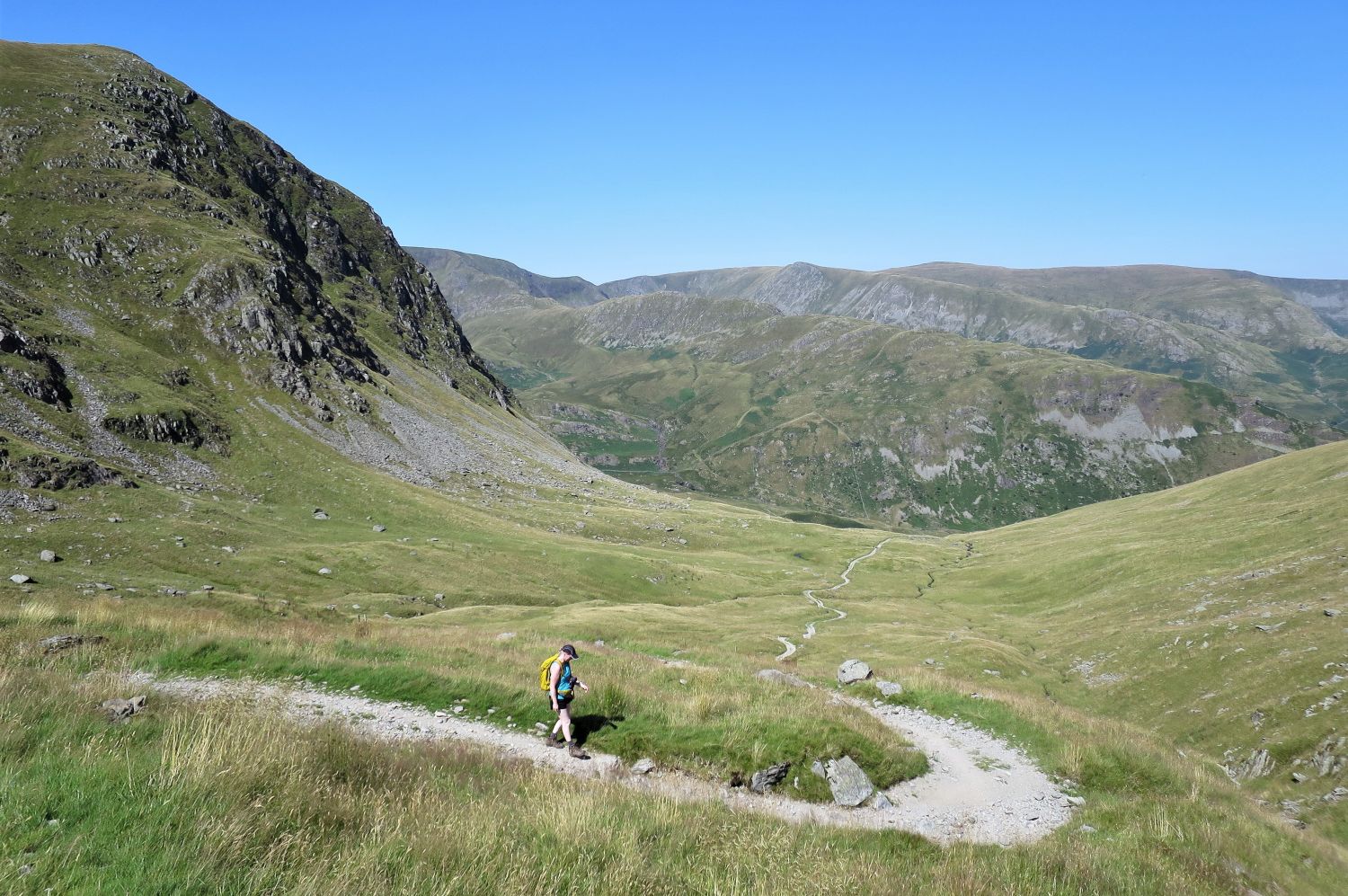
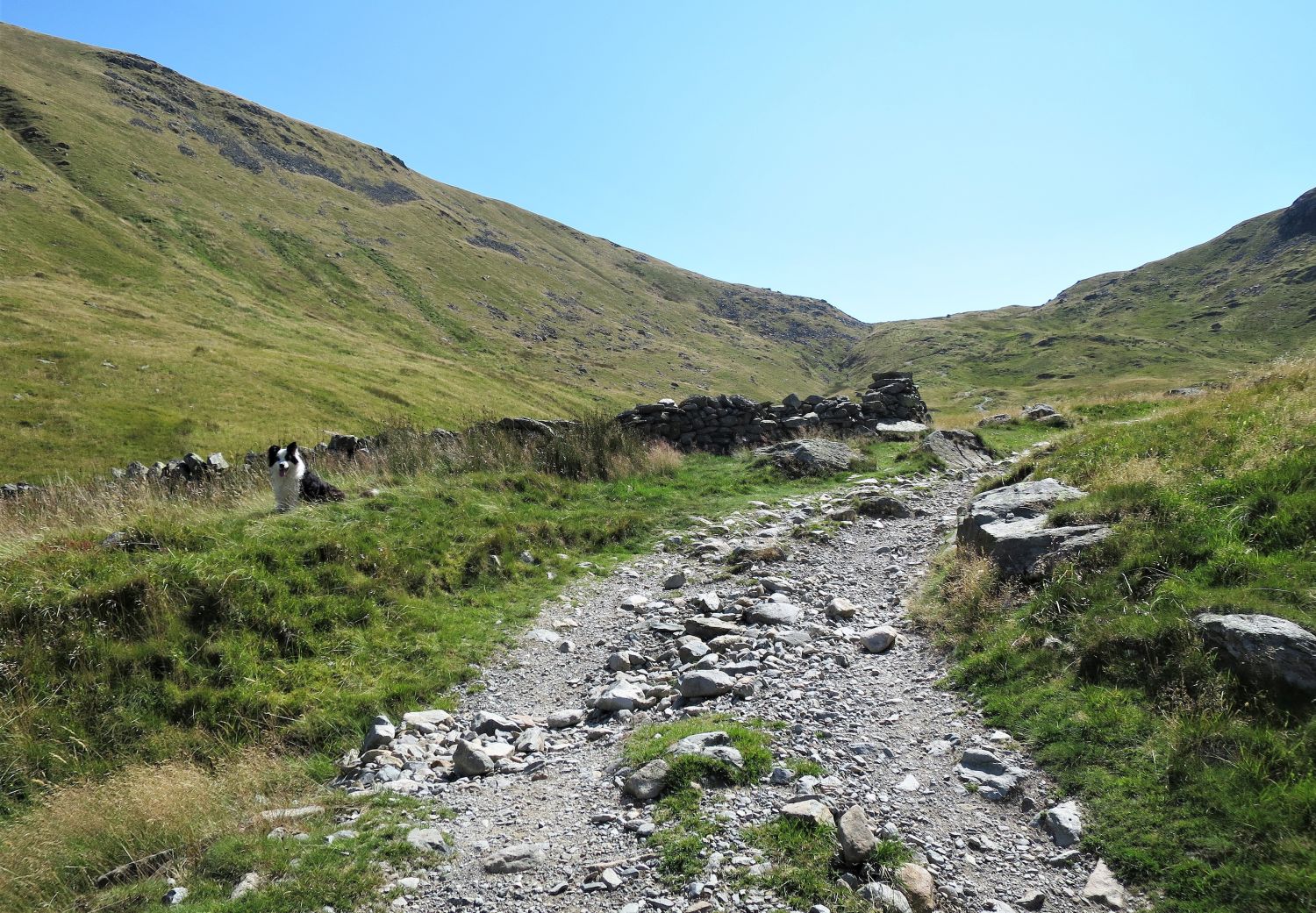
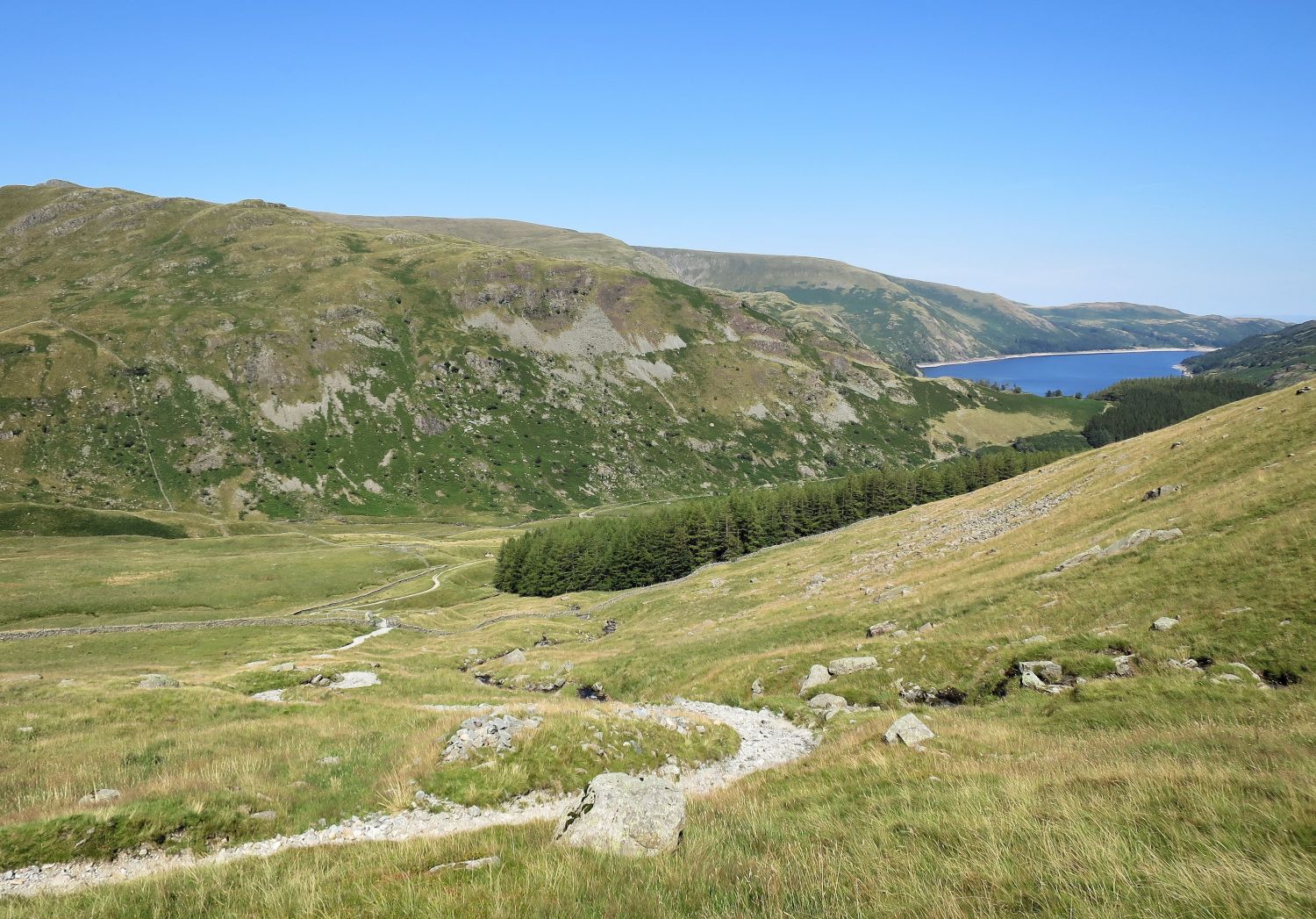
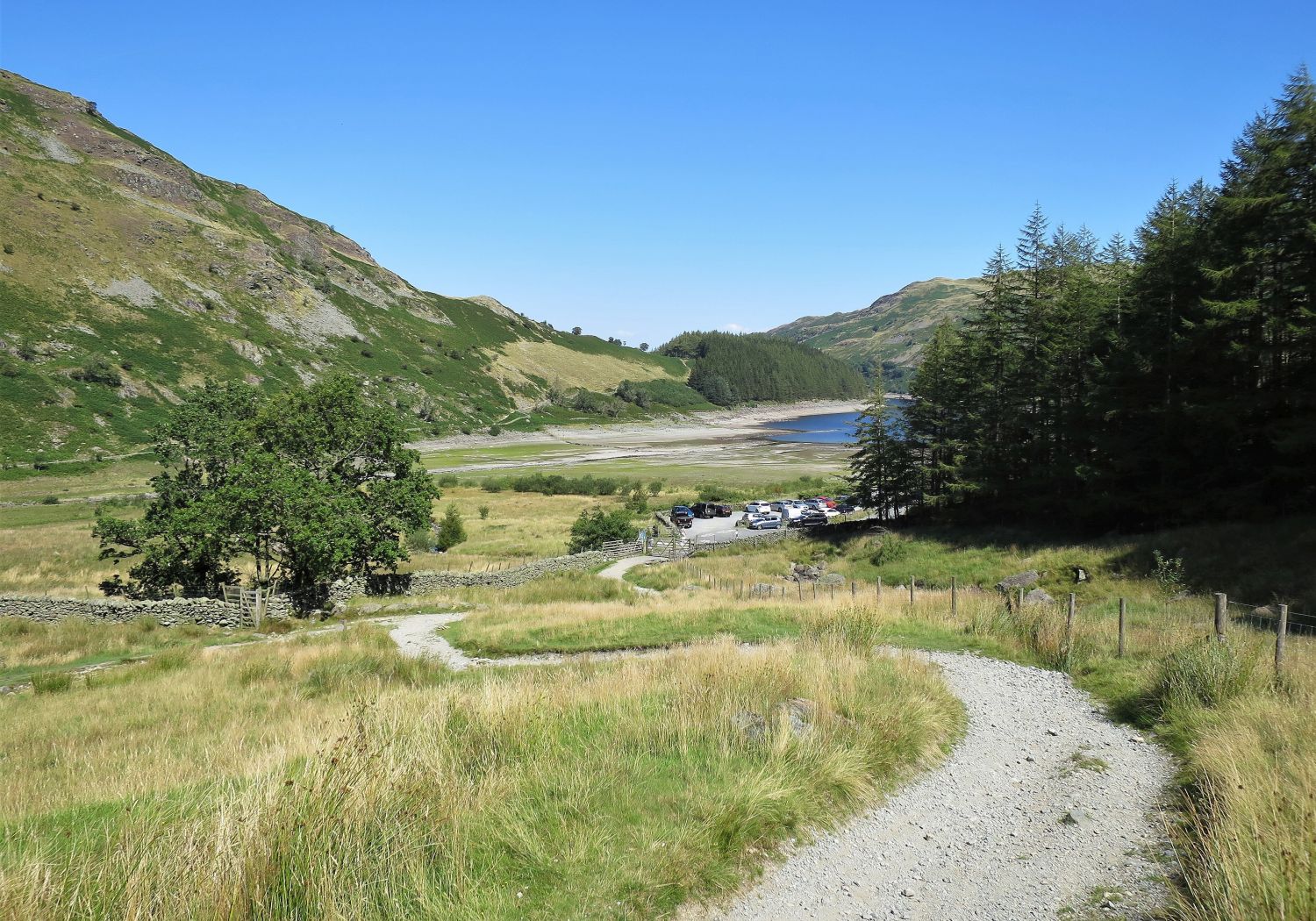
It was midday when we left the summit of Gatescarth Pass, and the heat was close to being unbearable. Thankfully, we hadn’t far to go to reach the car park at Mardale Head.
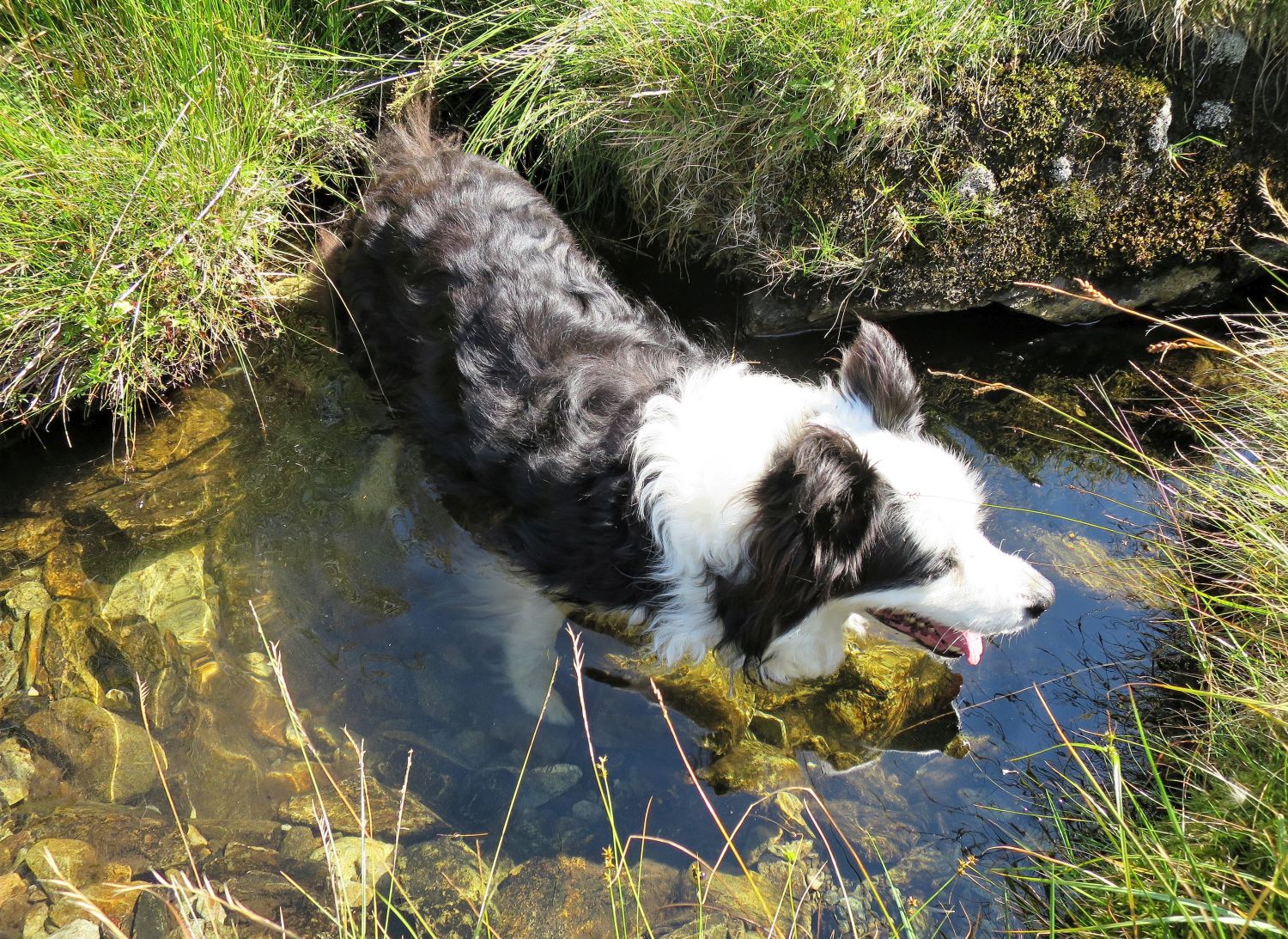
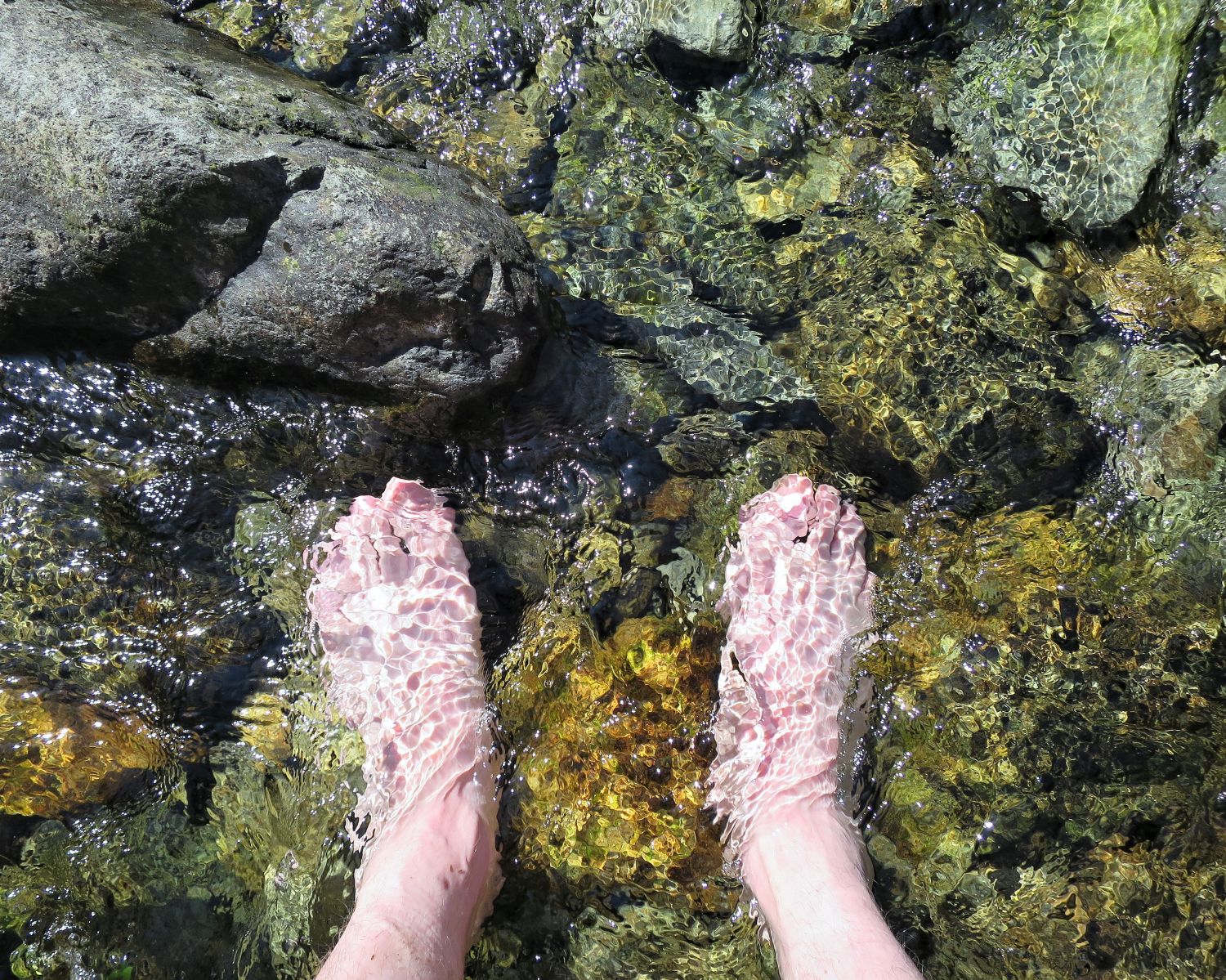
There’s no better feeling….
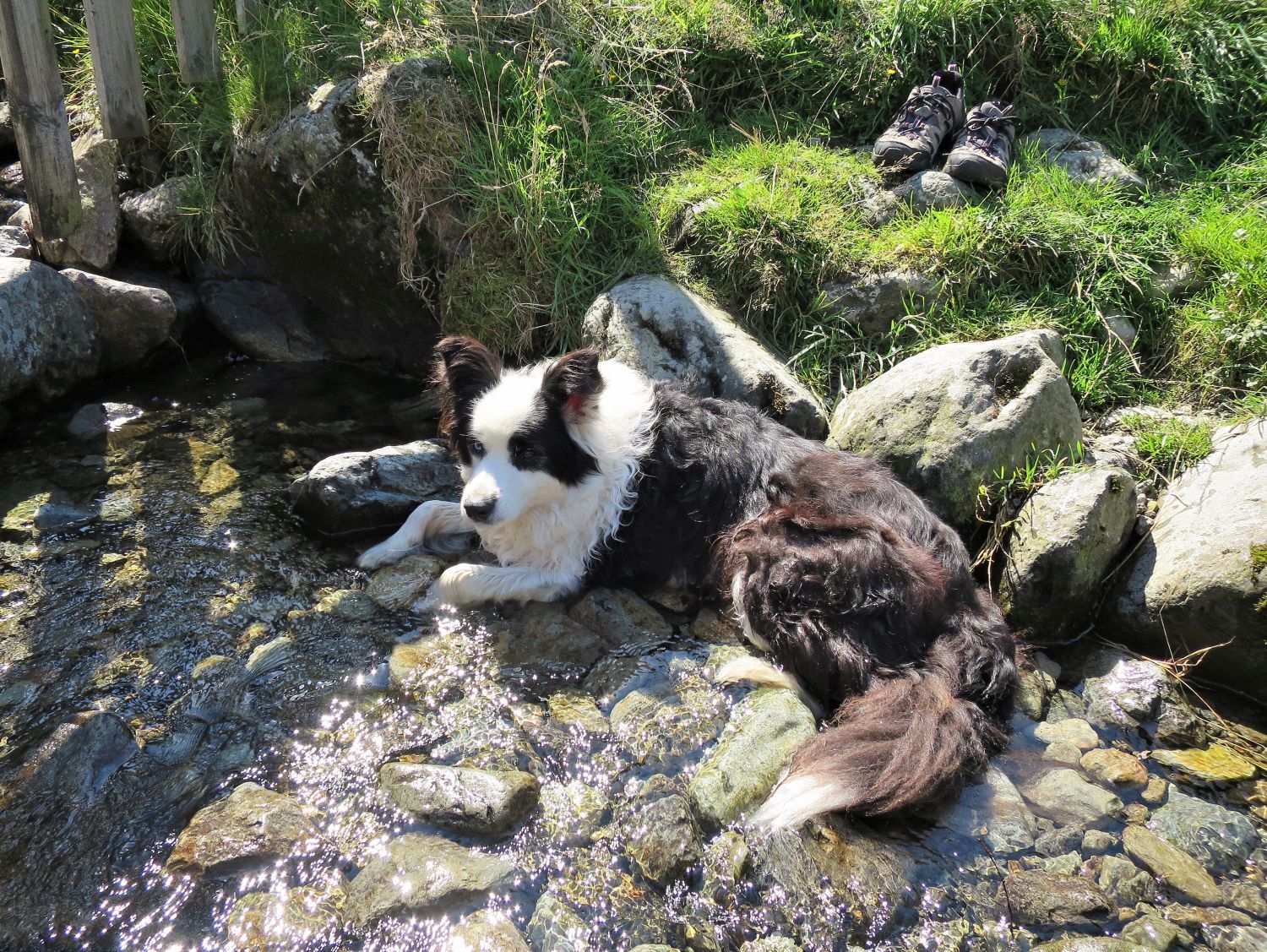
….is there, Frankie?
<<>>
Thanks, sources and further reading:
‘Book Two – The Far Eastern Fells’ by Alfred Wainwright