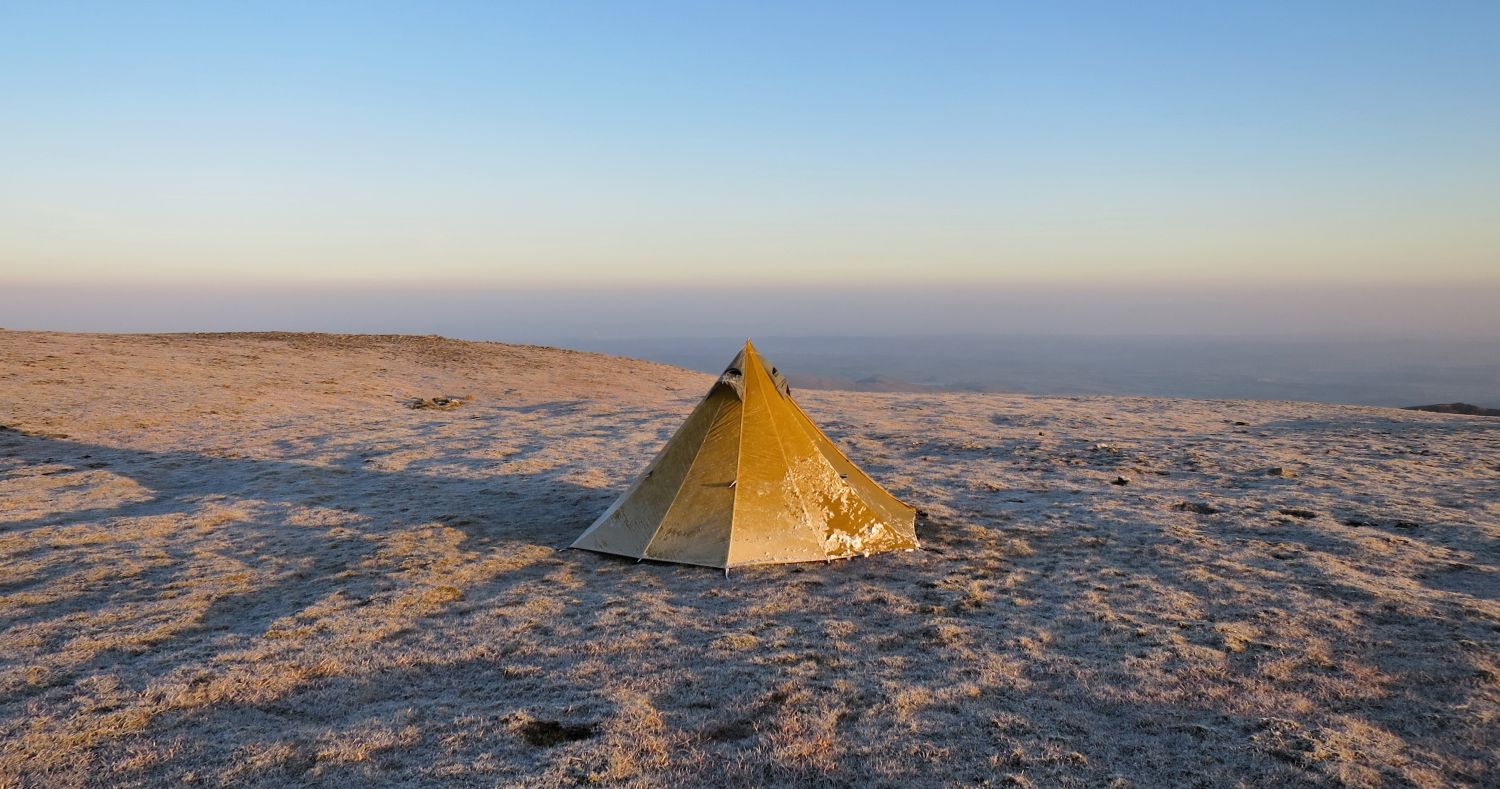
There are some tents that come and go, replaced every few years by something lighter, stronger or more fashionable. And then there are tents that refuse to disappear.
The GoLite Shangri-La 3 is one of those tents.
I have owned one for many years, and it has always been one of my favourite shelters. Simple, remarkably spacious, adaptable and, in my experience, virtually bombproof, the Shangri-La 3 developed a devoted following among lightweight backpackers.
But GoLite disappeared, and so did the Shangri-La 3.
Or at least, that is what we thought.
What makes the Shangri-La 3 particularly interesting is that the basic design survived the demise of its original manufacturer. Over the years, it passed through several companies and appeared under several different names, eventually becoming the WickiUp 3 sold by BACH Equipment.
So, this is the story of a tent that has had a rather more interesting life than most.
The origins: GoLite Hex 3
The story begins with GoLite, one of the pioneers of the lightweight backpacking movement.
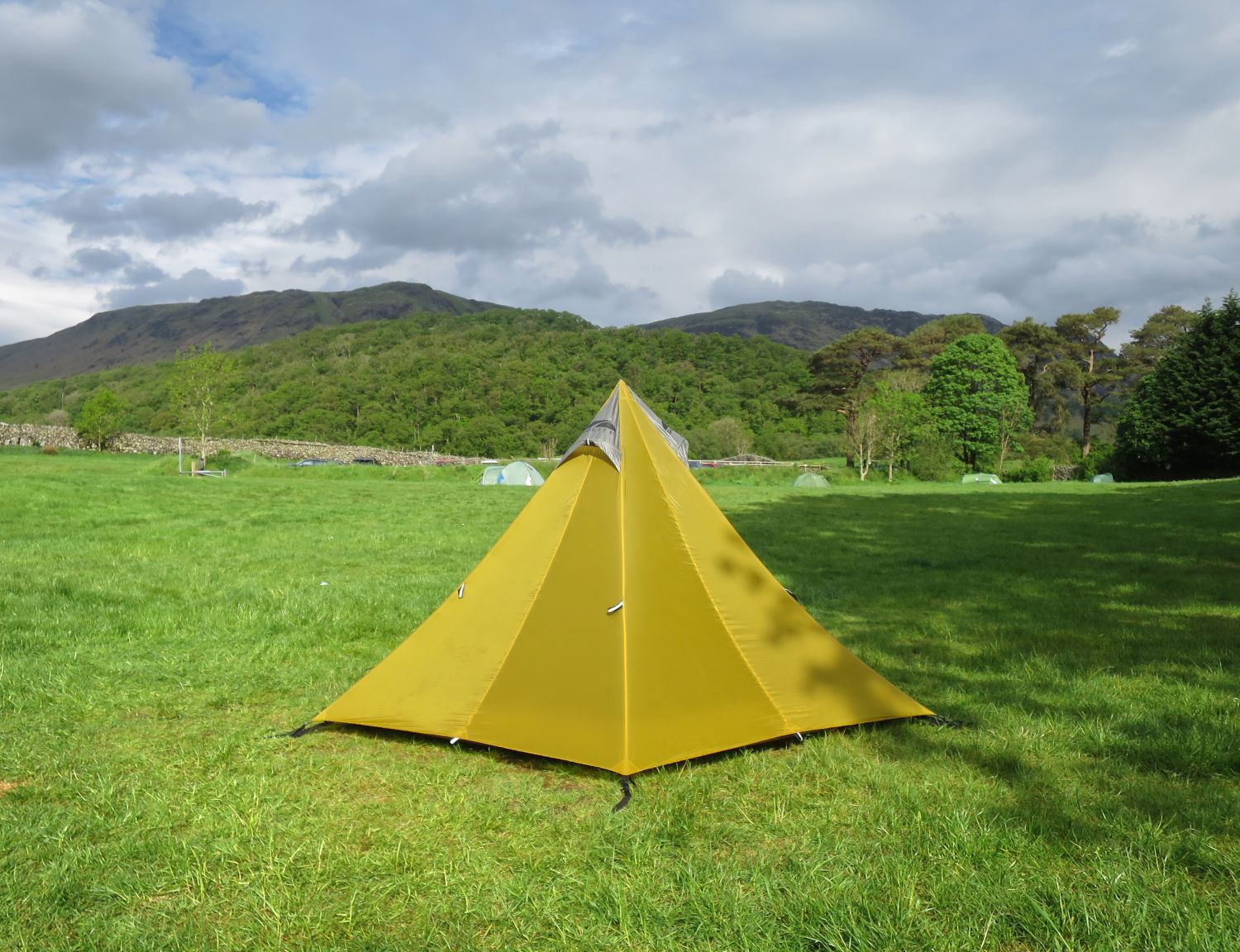
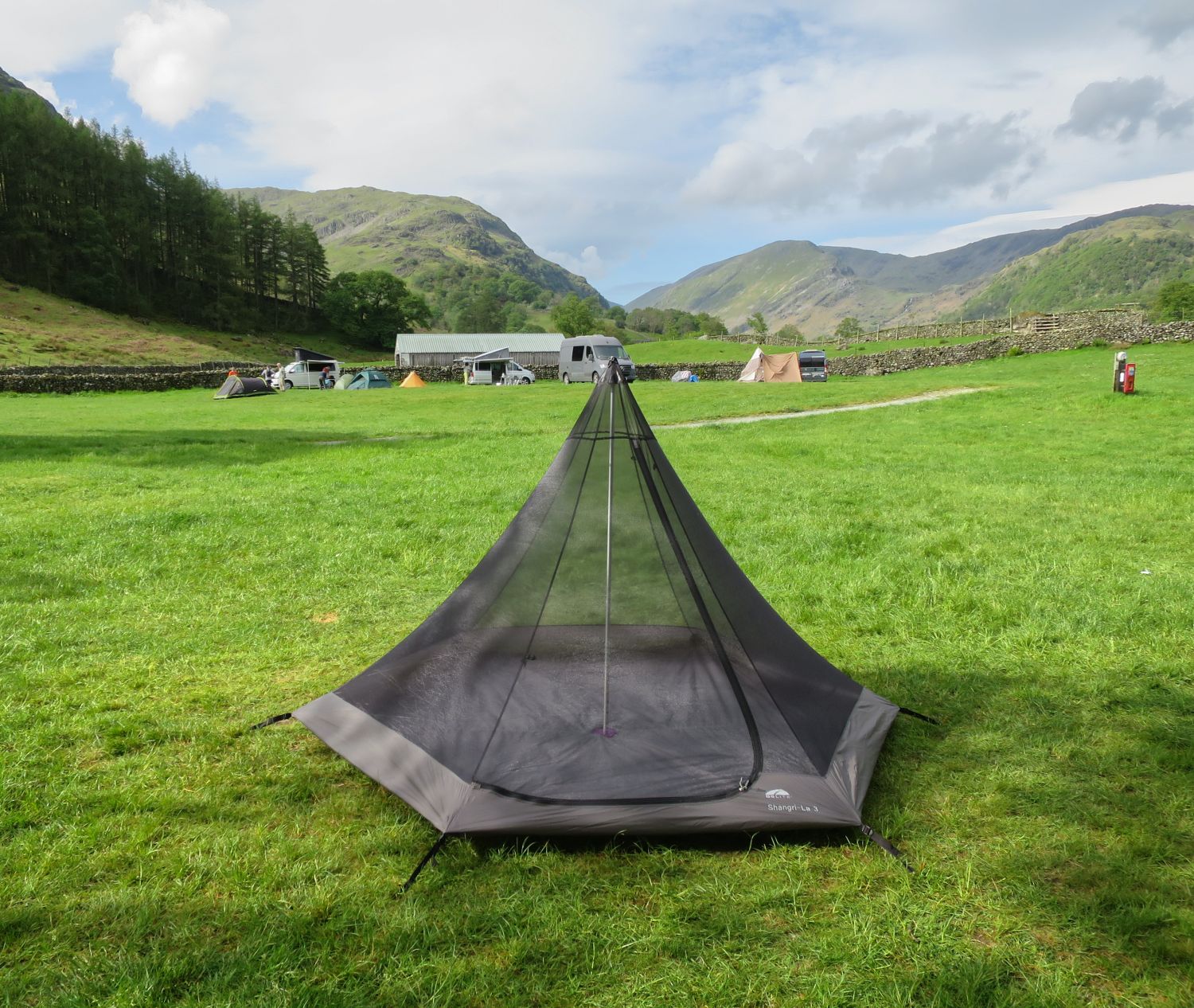
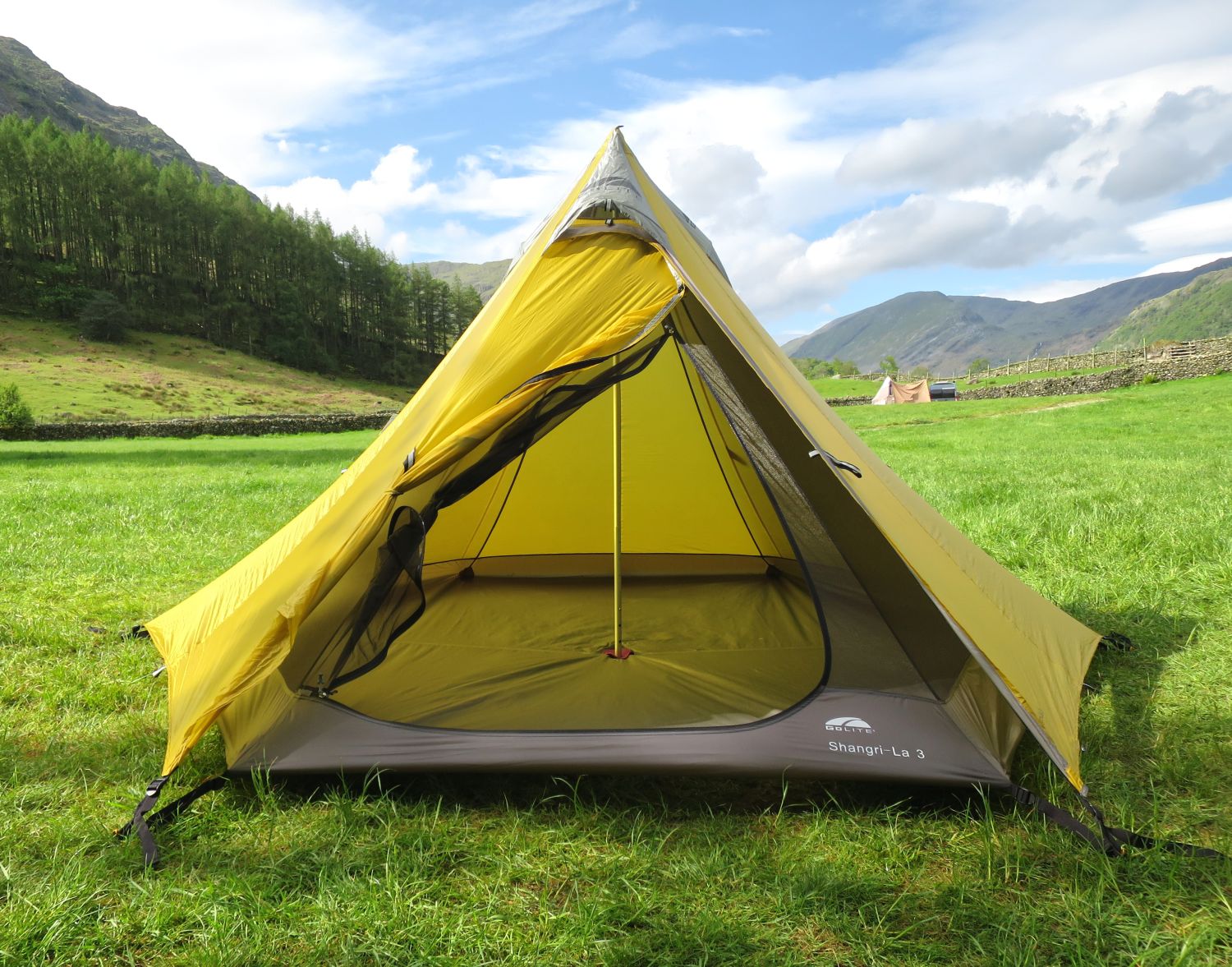
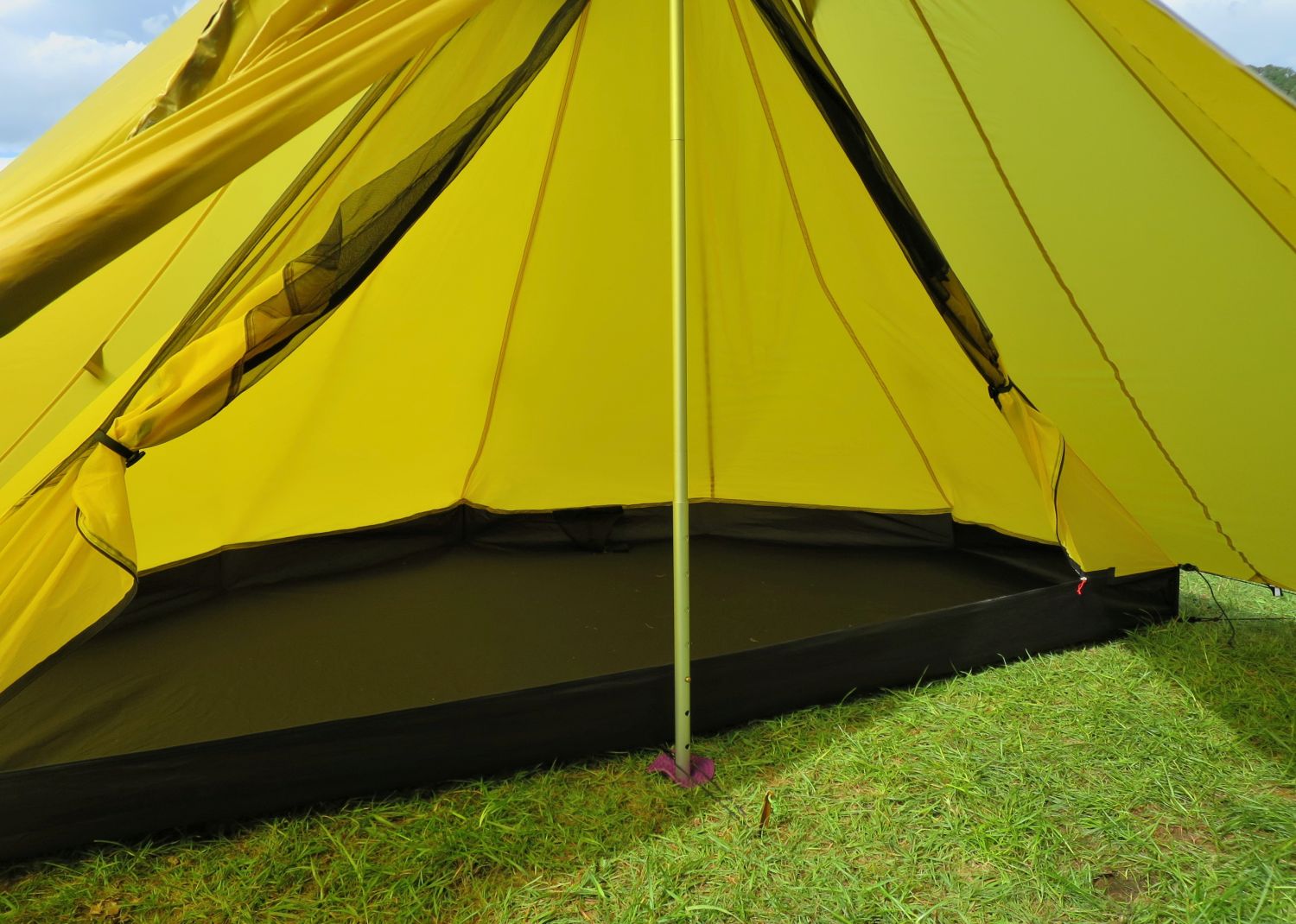
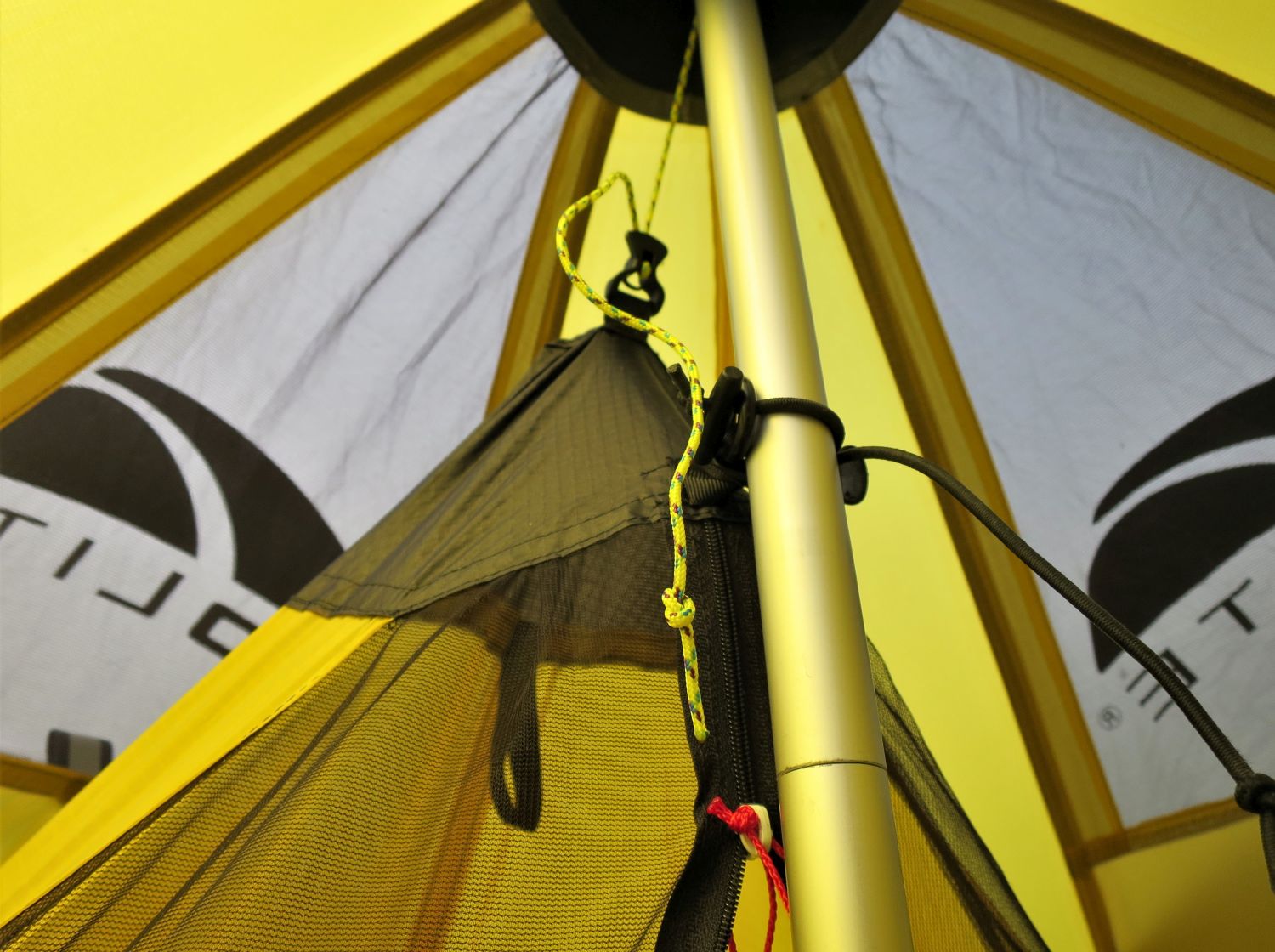
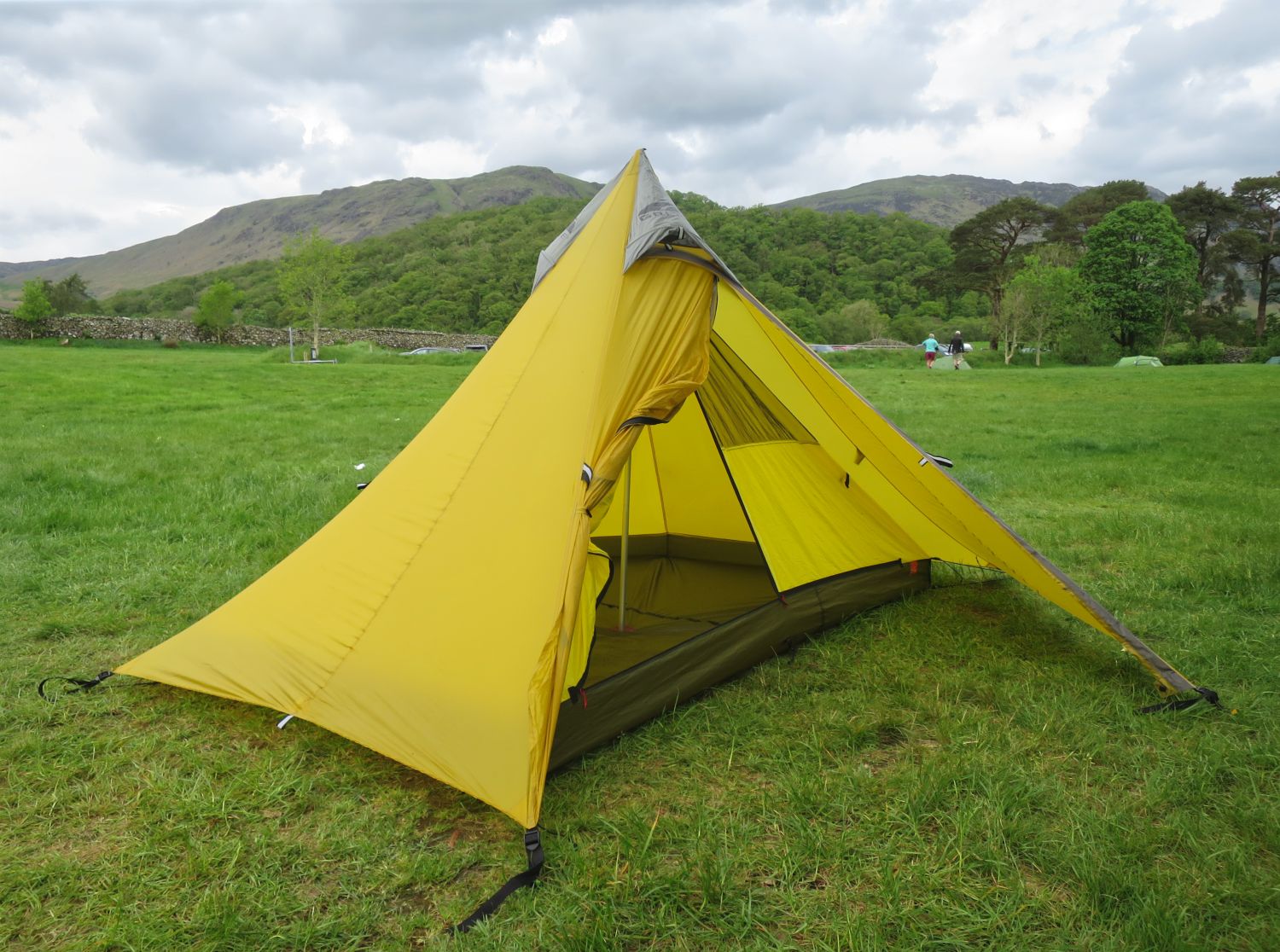
The original shelter was known as the GoLite Hex 3. It was a simple hexagonal pyramid, supported by a single central pole, with a remarkably good ratio of interior space to weight. The fly could be used on its own, or combined with an inner nest. This made the shelter unusually versatile. For a solo backpacker, there was no need to carry the full inner, while a couple or small family could use the complete arrangement. The central pole could even be suspended from a suitable branch, removing it from the living area and creating an unobstructed interior.
It was an extremely simple idea, but a very good one. And importantly, it worked.
The Shangri-La 3
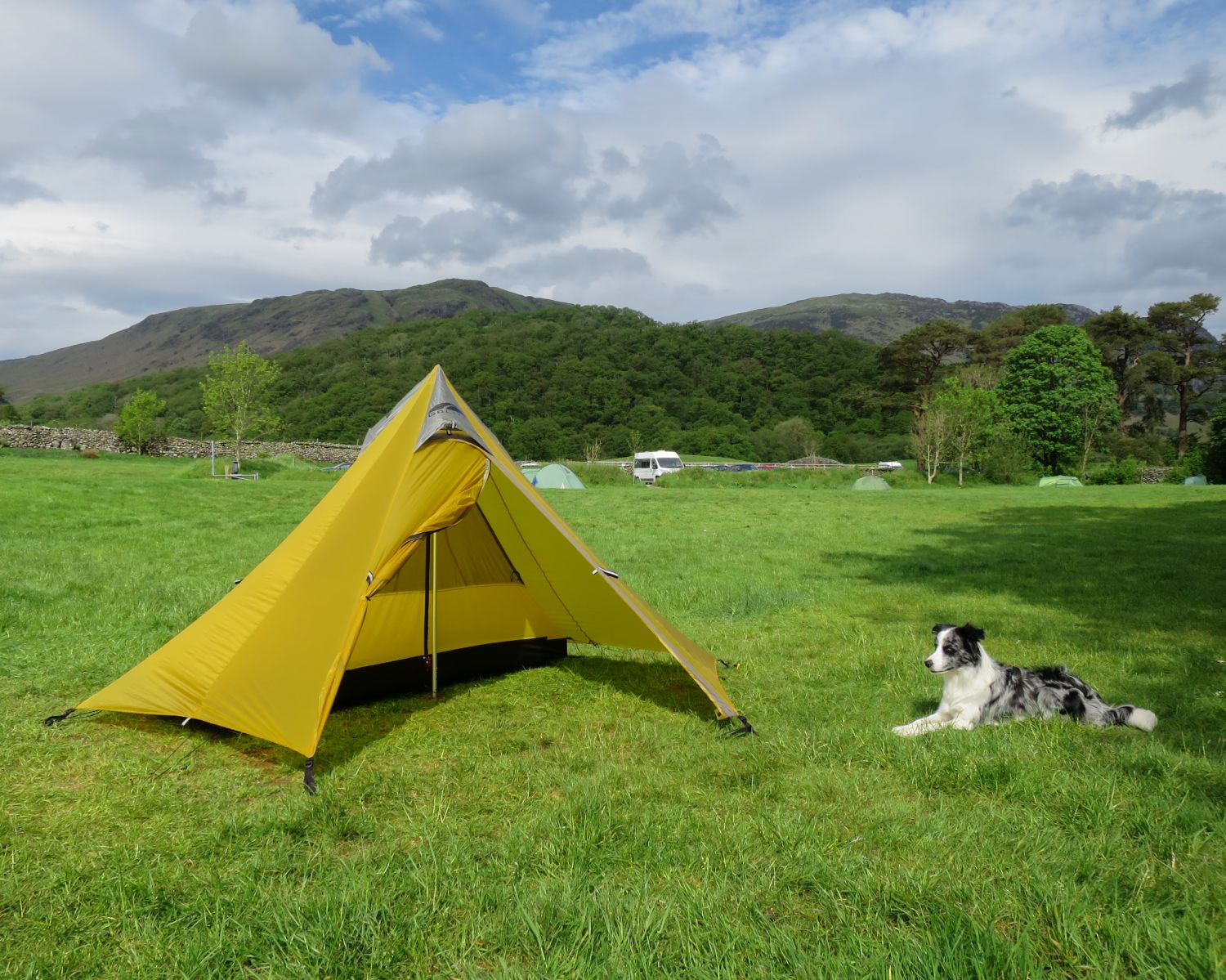
The Hex 3 subsequently became the Shangri-La 3, and the name is the one that became particularly familiar to lightweight backpackers. The SL3 was marketed as a three-person shelter, although most experienced users found it considerably more comfortable for two adults with a child, or two adults and a dog, particularly when carrying all their equipment inside.
One of the things that made it so remarkable was its weight. The original Shangri-La 3 weighed around 2 kg with the full inner, which was exceptional for a shelter offering this much space. It gave lightweight backpackers a genuine family-sized tent without having to carry the sort of weight normally associated with a much larger conventional tent.
The six steep sides made excellent use of the available floor area, while the pyramid shape gave the shelter considerable strength in poor weather.
The design also had another advantage that became increasingly important to lightweight campers: modularity.
You could use the fly on its own, add a groundsheet, or use a full or partial inner depending on the conditions and how many people were sleeping inside. The pole was also adjustable, which was a particularly useful feature. The height of the fly could be altered to suit the conditions, giving more ventilation when required or allowing the shelter to be pitched lower when the weather demanded it.
This also helped with one of the few drawbacks of the original design. The fly was made from nylon, which meant that it could sag when it became wet. This is something that is less of an issue with many modern tents using polyester fabrics, which don’t stretch in the same way when wet. With the Shangri-La 3, however, the adjustable pole meant that the fly height could easily be altered as conditions changed.
In my experience, condensation was never a significant problem with the SL3 either. The combination of its large internal volume, steep-sided design, ventilation and the ability to adjust the pole height made it a remarkably comfortable shelter.
Chris Townsend was one of the SL3’s most prominent users. He used the single-skin, floorless version on mountain trips, including the Cairngorms, and also experimented with alternative inner arrangements.
By the early 2010s, the Shangri-La 3 had become something of a cult classic.
The Oookworks connection: custom SL3 inners
One of the most interesting chapters in the SL3 story took place here in Britain. The standard GoLite inner was a full-size nest designed to occupy virtually the entire shelter. That was fine if three people were sleeping inside, but for one or two people it sacrificed one of the great advantages of the Shangri-La 3: its enormous porch and flexible living space.
Enter Sean at Oookworks.
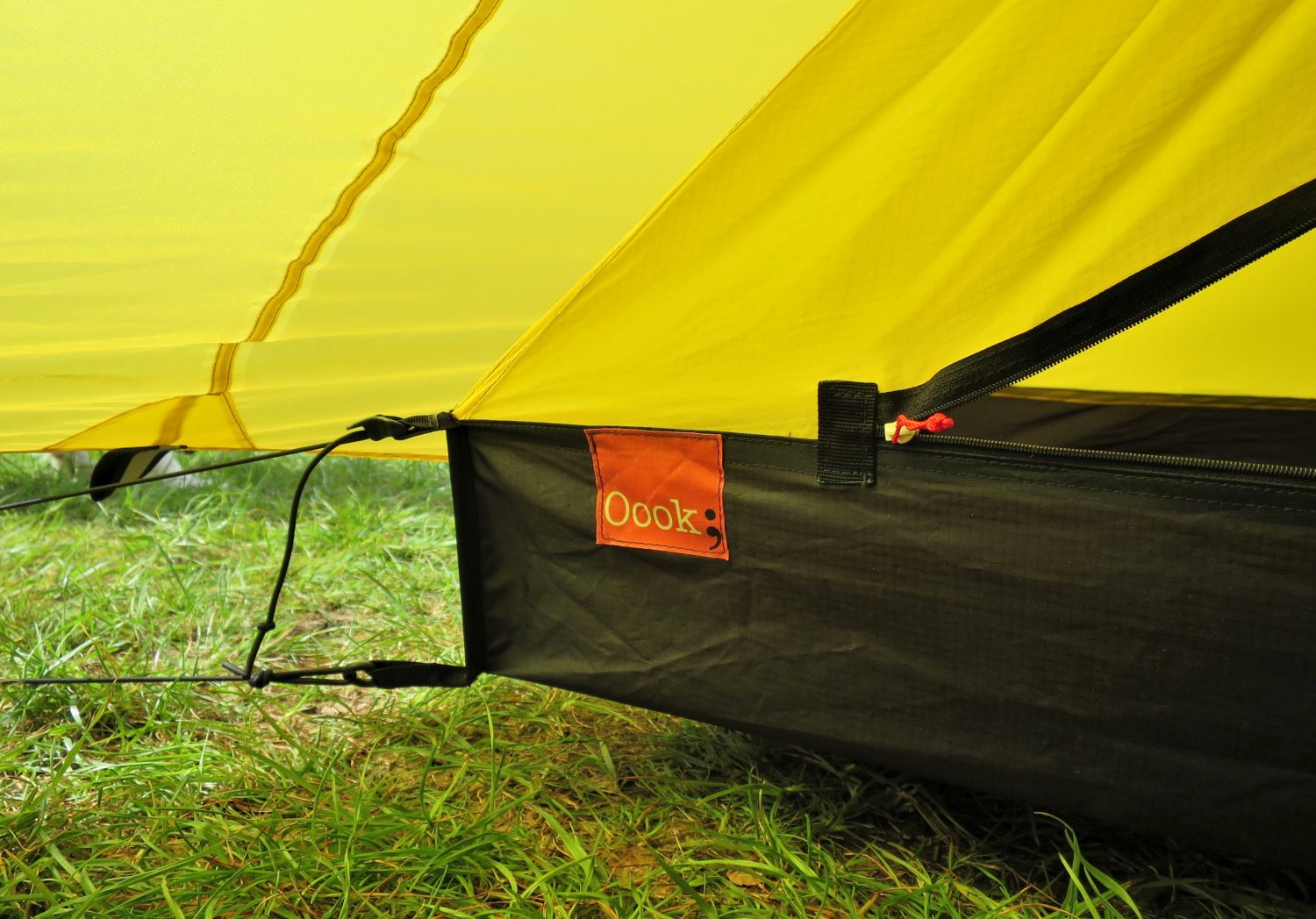
Oookworks became well known among British lightweight backpackers for producing highly customised tent inners and other specialist outdoor equipment. Sean began making bespoke inners specifically for the GoLite Hex 3/Shangri-La 3, giving owners considerably more choice than the standard GoLite nest.
Half, three-quarter and full-size inners were available, with the smaller designs making much better use of the SL3 when it was being used by one or two people. In 2012, Sean was offering the solo inner (OookNest) and had just introduced the two-person inner (2OookNest), with various customisation options available.
The idea was simple but extremely effective. A solo walker could use a smaller inner at one end of the tent, leaving a large area for equipment, cooking and general living space. Two people could use a larger inner while still retaining much more usable space around it than was possible with the original full-size inner.
This was one of the things that made the Shangri-La 3 such an adaptable shelter. Rather than having to accept the arrangement supplied by the manufacturer, owners could choose an inner to suit the way they actually used the tent.
The Oookworks inners became an important part of the SL3’s story in their own right. And, rather wonderfully, the rare Shangri-La 3 I eventually acquired came with two of them.
2014: the end of GoLite
Sadly, GoLite could not continue forever.
GoLite ceased trading and filed for bankruptcy in 2014.
With it went the Shangri-La 3 and many other products that had helped establish GoLite’s reputation as a pioneer of lightweight backpacking. For a while, it looked as though the Shangri-La 3 had reached the end of the road.
But the design had already acquired something more valuable than a product catalogue. It had a following, and some of the people who knew the design best weren’t prepared to let it disappear.
The resurrection: Eureka! WickiUp 3 SUL
This is where the story becomes particularly interesting.
Former GoLite European Sales Manager Mark Flanagan and former Export Manager Marcus Bauer approached Nigor, asking the company to develop a shelter based on the GoLite design. The resulting tent appeared under the Eureka! name as the WickiUp 3 SUL.
The name had changed, but the fundamental design had not.
Chris Townsend reviewed the WickiUp 3 in 2016 and described it as essentially the same shelter as the Shangri-La 3, albeit with some changes, including different fabric and additional guyline attachment points.
The new name makes sense.
Shangri-La was GoLite’s name for the product. Once another company was producing the shelter, it could no longer simply continue selling it as a GoLite Shangri-La 3.
So the shelter acquired a new identity: Shangri-La 3 became WickiUp 3.
The design survived. The name didn’t.
Nigor WickiUp 3
The tent subsequently appeared under the Nigor name as the Nigor WickiUp 3.
For anyone familiar with the original GoLite, it was immediately recognisable.
The same basic pyramid architecture remained. The same single central pole remained. The same concept of a lightweight outer that could be used with different inner arrangements remained. The tent had effectively survived the death of GoLite.
It had simply changed its passport.
Another branch: My Trail Company Pyramid 3
There was also another fascinating attempt to continue the design. From around 2017, the shelter appeared in the United States as the My Trail Company Pyramid 3.
Again, former GoLite employees were involved, and the relationship to the Shangri-La 3 was no secret. According to Three Points of the Compass, the Pyramid 3 was essentially a straightforward reproduction of the Shangri-La 3, with very little changed apart from materials and details.
So, for a while, the old GoLite design was living on in two different forms: the WickiUp 3 in Europe, and the Pyramid 3 in the United States.
BACH Equipment: WickiUp 3
Eventually, another change took place. Nigor ceased trading, and BACH Equipment acquired Nigor’s designs.
BACH had traditionally been associated with backpacks, but it began expanding into other outdoor equipment, including tents. The WickiUp 3 became part of the BACH range, and this is the version that brings the story right up to the present day.
The BACH WickiUp 3 is unmistakably descended from the GoLite shelter. The name is different, the materials have evolved and there have been refinements along the way, but the fundamental idea remains remarkably intact.
Chris Townsend reviewed the BACH version in 2023, noting that he had first used the shelter seven years earlier when it was branded Nigor. That means that a design first associated with GoLite was still being manufactured and sold almost a decade after GoLite itself had disappeared.
The lineage
The history can therefore be summarised like this:
GoLite Hex 3
↓
GoLite Shangri-La 3
↓
Eureka! WickiUp 3 SUL
↓
Nigor WickiUp 3
↓
BACH WickiUp 3
Alongside this main European lineage, there was also:
GoLite Shangri-La 3
↓
My Trail Company Pyramid 3
And running alongside all of them was another important part of the story: Oookworks OookNests, custom-made inner tents designed specifically to make better use of the Shangri-La 3’s enormous interior.
And then, in 2024…
After following the story of the Shangri-La 3 for years, something happened that I genuinely thought I would never see again. A brand new GoLite Shangri-La 3 appeared for sale, and not just the fly, it came with a remarkable collection of original and custom accessories.
The fly was the Bamboo-coloured GoLite Shangri-La 3, complete with its original pegs, pole and stuff sacks. There was also an unused original Shangri-La 3 full inner.
But there were two particularly interesting additions.
An unused one-person inner by Oookworks, made by Sean.
And an unused two-person inner by Oookworks, also made by Sean.
I couldn’t believe it.
This once-popular, bombproof tent had been out of production for many years, yet here was a completely unused example, accompanied by two of the specialist British-made inners that had helped make the SL3 such a versatile shelter.
I bought it.
“But you already have a GoLite, Richard?”
Yes, I did, but that one was soon to have a new home. We had purchased a Durston X-Mid 2, a lighter two-person tent, so the new Shangri-La 3 could take on a different role. It would become our family tent, with the option of using the Oookworks one-person inner when I was camping alone with my dog.
And suddenly, after all those years, I had exactly the sort of Shangri-La 3 setup I would have wanted when the tent was originally available.
QuintCraft: a custom footprint
The story continued in June 2024, when I contacted Lucy at QuintCraft to make me a custom footprint for the Shangri-La 3 and the single-person inner by Oookworks.
Lucy is regarded as one of the leading providers of tent footprints in the UK, making bespoke footprints to suit individual tents and setups. Her work is particularly useful for shelters such as the Shangri-La 3, where a standard footprint doesn’t necessarily make the best use of the available space. QuintCraft also ships its footprints around the world.
For my setup, the footprint was made specifically to work with the Shangri-La 3 and the one-person Oookworks inner. It was another example of how this old GoLite design can be adapted to suit the way an individual camper actually uses it.
In many ways, that is one of the things I love most about the Shangri-La 3. Even though the tent itself has been out of production for many years, there is still an enthusiast community willing to make and modify equipment to keep these shelters useful.
So my particular SL3 has ended up with a rather unusual combination: an original GoLite fly, an original GoLite full inner, a custom Oookworks one-person inner, a custom Oookworks two-person inner, and a bespoke QuintCraft footprint.
It’s a tent that has continued to evolve long after its manufacturer disappeared.
A piece of lightweight camping history
What fascinates me most about the Shangri-La 3 isn’t simply that it was a good tent. It’s the fact that the design was good enough to survive the disappearance of the company that created it.
GoLite disappeared, and the Shangri-La name disappeared with it, but the shelter itself refused to die. It was revived by people who had been involved with GoLite, became the Eureka! WickiUp 3 SUL, moved on to Nigor, briefly appeared as the My Trail Company Pyramid 3 in America, and eventually became the BACH WickiUp 3. Meanwhile, in Britain, Sean at Oookworks was making custom inners for owners who wanted to get even more from the original design.
But for me, the Shangri-La 3 is more than an interesting piece of lightweight camping history. I’ve used mine extensively in the Lake District, and I’ve seen first-hand just how incredibly strong this deceptively simple design can be. On one occasion, it survived winds of more than 80 mph on the summit of Scafell.
I think a large part of that strength comes from the simplicity of the design itself. Unlike a conventional tent, where the structure is often held in place by poles working against one another and guy lines pulling the tent sideways, the Shangri-La 3 is essentially a pyramid that is pulled down towards the ground. Once properly pegged out, the central pole supports the peak while the tension in the flysheet pulls the whole structure down and out towards its anchors. The result is an incredibly stable structure with very little for the wind to get hold of.
There is something wonderfully simple about it. No complicated framework, no collection of crossing poles, just a strong geometric shape, a central support and a series of carefully positioned anchors holding the whole thing down. It looks almost too simple to withstand severe weather, but that simplicity is a large part of its strength.
My Shangri-La 3 has been through some genuinely severe conditions in the Lake District, and it has always come through them. So when I look at it now, I don’t just see an old tent. I see the beginning of a remarkably long lineage, a tent designed during the early days of lightweight backpacking that has survived through several companies, several names and several generations of outdoor equipment.
And, for me at least, it has survived something else too: some of the most challenging conditions I’ve ever subjected a tent to.
More than a decade after GoLite disappeared, the Shangri-La 3 is still out there.
It just has a different name.
And mine is still going strong.
Richard