
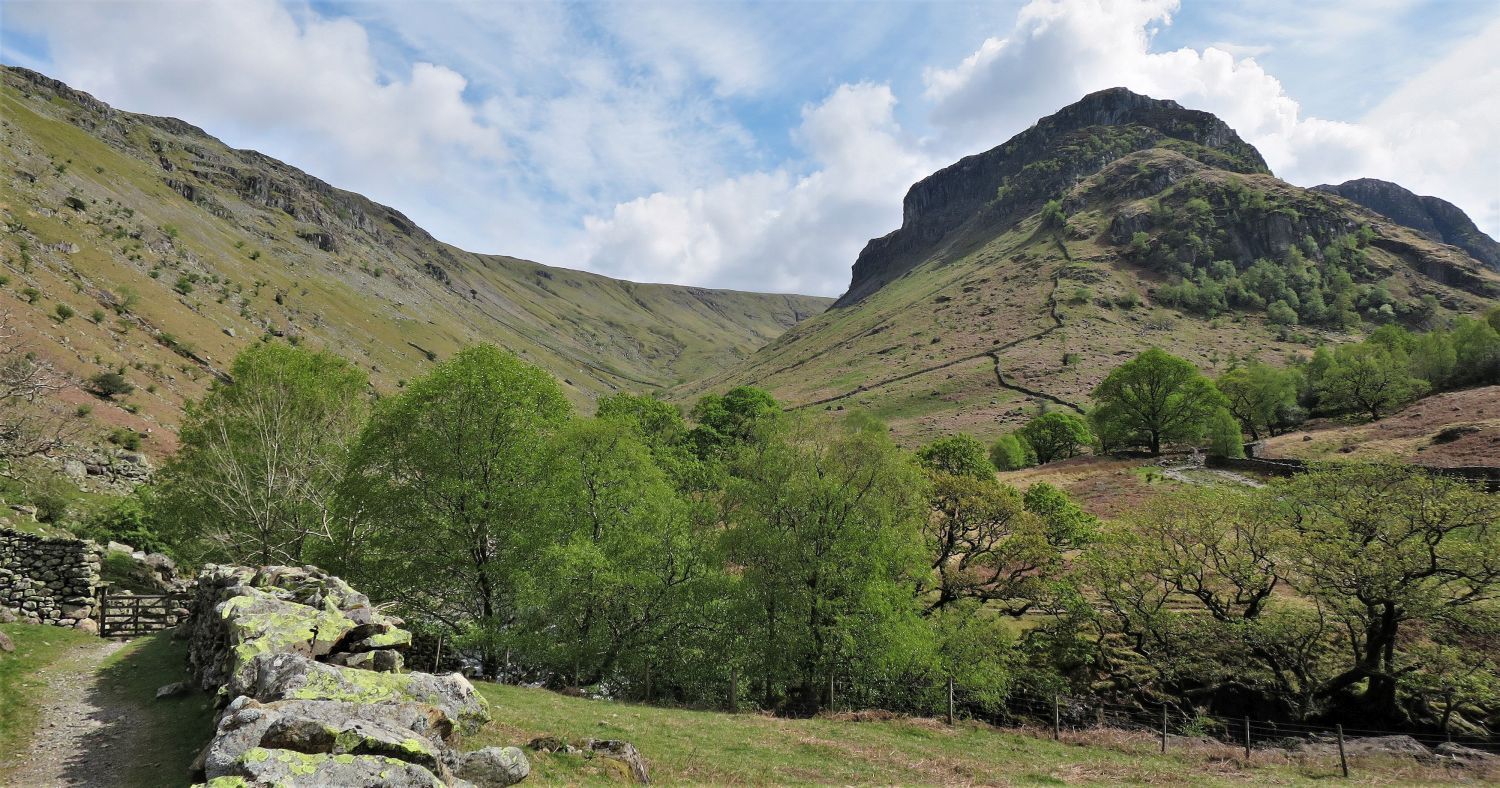
“Jacko, I’m off up to look for that plaque!” That was the first thing I said to Jacko on one of many visits to his little cottage in Stonethwaite. From that moment, a quest to locate a stone carving on Eagle Crag began, and yet again I found myself researching a forgotten tale of the Lakeland Fells.
You need to see Jacko Jackson!
On a lovely day in mid-November 2018, I was introduced to Jacko by author and Lakeland mining expert, Ian Tyler. Earlier that morning, Ian and I had visited a mysterious carving near High Doat in Borrowdale, and with Ian also having an interest in Lakeland plane crash sites, we got talking about the Wellington bomber which had crashed in Johnny Wood in 1942, on the steep, craggy northern side of High Doat.
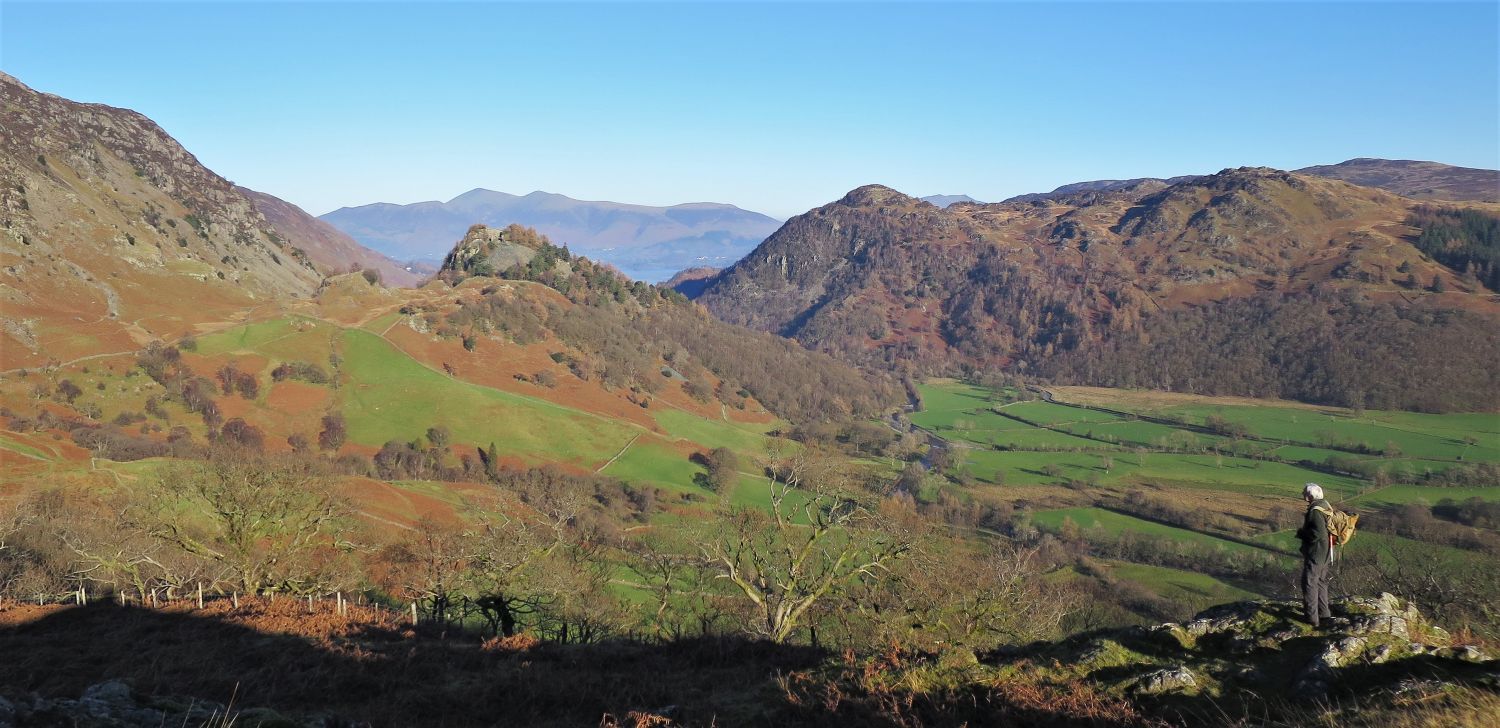
I mentioned to Ian that I hadn’t found any fragments to photograph from the crash site on previous visits, and it was becoming a frustrating exercise. “You need to see Jacko Jackson down in Stonethwaite; we’ll see if he’s in later!” Ian said, with a wink and a large grin on his face.
So, if the day wasn’t overwhelming enough, walking the fells with such a knowledgeable gent, I was now going to meet a living legend and a well-known local character of Borrowdale.
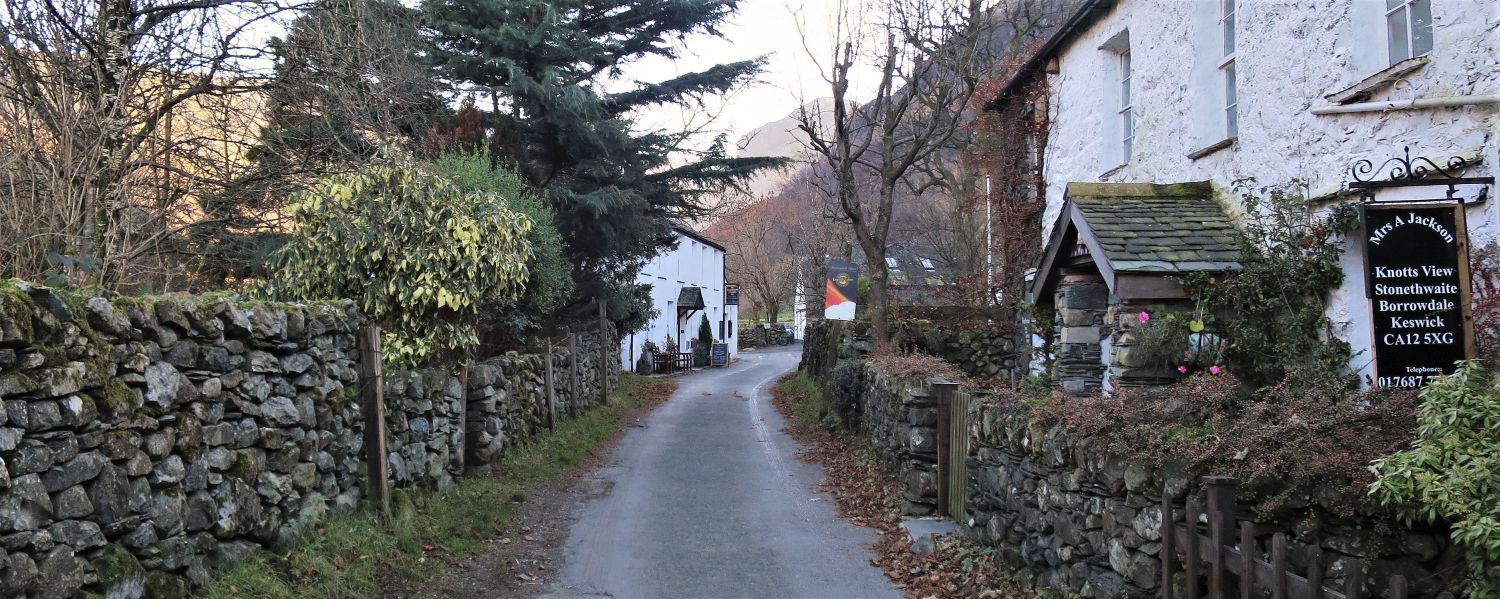
It’s worth noting that Stonethwaite, which is a hamlet nestled in a side valley of Borrowdale, receives very little sunlight in the colder months of the year. It’s as though the hamlet goes into hibernation, and the only sign of human existence is smoke billowing from the small cottages — the valley is asleep, so we approach quietly.
“Are you in?” Ian said, while peering through the open doorway of this typically quaint Lakeland cottage.
“Aye, come in!” a voice replied from within.
“Do you remember me then?” Ian said, looking down at Jacko relaxing in his armchair, who understandably wasn’t going to move from the warmth of the log-burning fire.
“Aye, Ian Tyler, of course I do,” Jacko replied.
During the early ’90s, Ian was researching for his book, Honister Slate – The History of a Lakeland Slate Mine, and, like many men from the area, Jacko once worked as a quarryman up at Honister and had vast knowledge of working with the beautiful, world-famous Westmorland green slate.
I began by telling Jacko about my research of the plane crash on High Doat, and the stone carving which Ian and I had visited only a few hours previously. Jacko knew a lot about the crash, and even though he had not heard of the stone carving, he did know a little about the quarryman who Ian believed had carved it 127 years ago.
We were pushed for time, but I couldn’t leave without asking Jacko if I could visit again.
“Aye, call in anytime, I’m always knocking about,” he said.
A few days later, I visited Jacko again at his cottage in Stonethwaite. However, on this occasion, we had more time to chat in detail about his life, living and working in Borrowdale. I was fascinated to hear what it was like to work up at Honister for all those years, including the conditions the quarrymen endured, especially during the harsh winter months high on the fells. We also talked about his family and where the Jacksons lived in and around Borrowdale and its side valleys.
“Many liked the work, for it was in their blood, but the place in winter was depressing and seriously cold.”
Ian Tyler’s book: Honister Slate – The History of a Lakeland Slate Mine
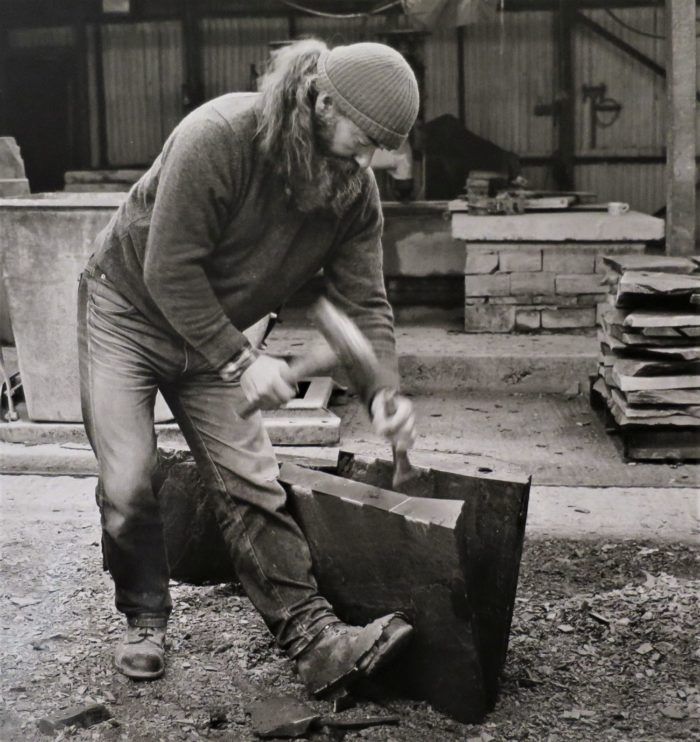
Jacko started working at Honister Slate Mine in November 1949.
“I worked there until 8th June 1952, and then I went into the Army for three years; it was National Service then. When I came out I went back to Honister, I then worked there right up to 1975 when I got made redundant, and had seven months holiday. I went back again at the end of 1975, and worked there until the McAlpines took over for four years in 1985. It then closed down in 1989 and I never went back.”
It wasn’t until I was leaving that Jacko asked if I’d found any more information about the carving which Ian and I had visited near High Doat just a few days previously. I said the research was becoming frustrating due to the date of the stone (1891), and it may take some time to solve the mystery.
It was at that moment, as I was standing at the front door, that Jacko said: “There’s a carving up on Eagle Crag somewhere!”
“Really?” I replied.
“Aye, Beware of the Wolfman, or something like that. It’s about me. A friend put it up there.”
With amazement, and an eagerness to find out more, I said to Jacko: “You do realise I’ll have to come and see you again, don’t ya?”
Jacko laughed and insisted I could call anytime.
Jacksons of Borrowdale
The following chapter is a window into the life and movement of a Borrowdale family from the mid-1850s to the present day.
Jacko’s younger brother, Rob, lives with his wife, Ann, at Knotts View, which is directly across the narrow lane from Jacko’s cottage. Rob was very kind to invite Jaclyn and me for coffee and a chat — I was keen to ask him about the history of Knotts View because the cottage has a connection to the High Doat carving I was researching.
During our conversation, Rob shared with me what he knew about his family’s history, where they lived and worked in the Borrowdale area, and, of course, about his older brother, Jacko.
Jacko came from a long family tradition of working with slate. During the 1800s and 1900s, men of Borrowdale mainly either farmed the valley or worked in the surrounding quarries. His great-grandfather William, grandfather John, and father Fred all worked at Honister at some point in their lives. It was common to marry local women, and they didn’t travel far to settle in new homes.
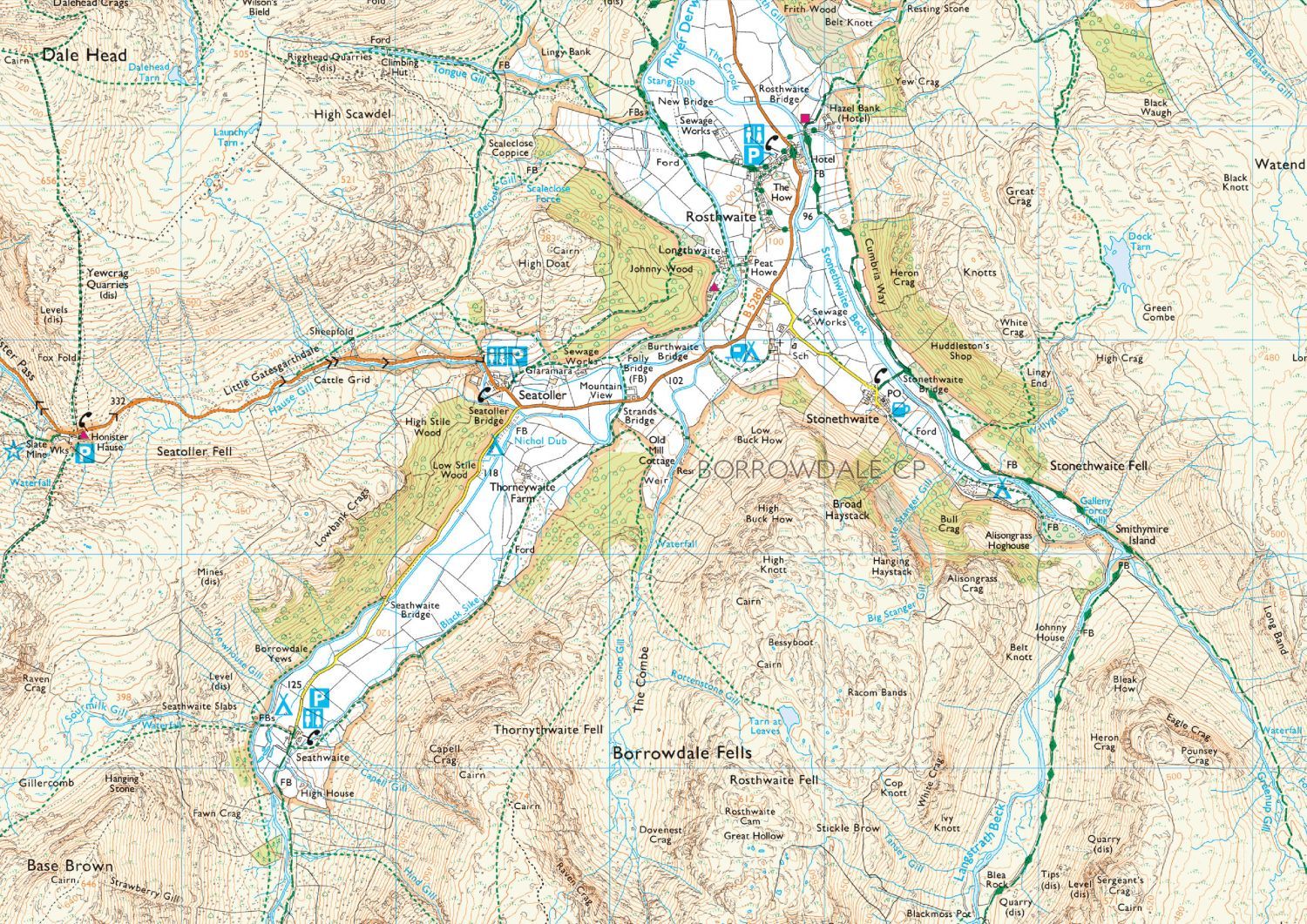
The map above shows the key areas where the Jacksons lived in Rosthwaite, in the heart of Borrowdale, and the two side valleys of Seathwaite and Stonethwaite. Honister Slate Mine and Eagle Crag are also shown.
Jacko’s great-grandfather, William Jackson, was born in Ambleside in 1819. He married Elizabeth Simpson on 8th July 1847, and they lived in the hamlet of Rosthwaite.
1851 England Census, Rosthwaite, Cumberland
William Jackson, Head, aged 32, General Labourer
Elizabeth Jackson, Wife, aged 41
Thomas Simpson, Step-son, aged 9
Sarah Simpson, Step-daughter, aged 6
John Jackson, Son, aged 1
Jacko’s grandfather, John Jackson, was born in 1849.
1861 England Census, Rosthwaite, Cumberland
William Jackson, Head, aged 42, General Labourer
Elizabeth Jackson, Wife, aged 51
Sarah Simpson, Daughter, aged 16
John Jackson, Son, aged 12
Jane Jackson, Daughter, aged 9
Between 1861 and 1871, the Jacksons moved a short distance from Rosthwaite to Smithy House at Stonethwaite Road End. During this period, William started working as a quarryman at Honister Slate Mine.
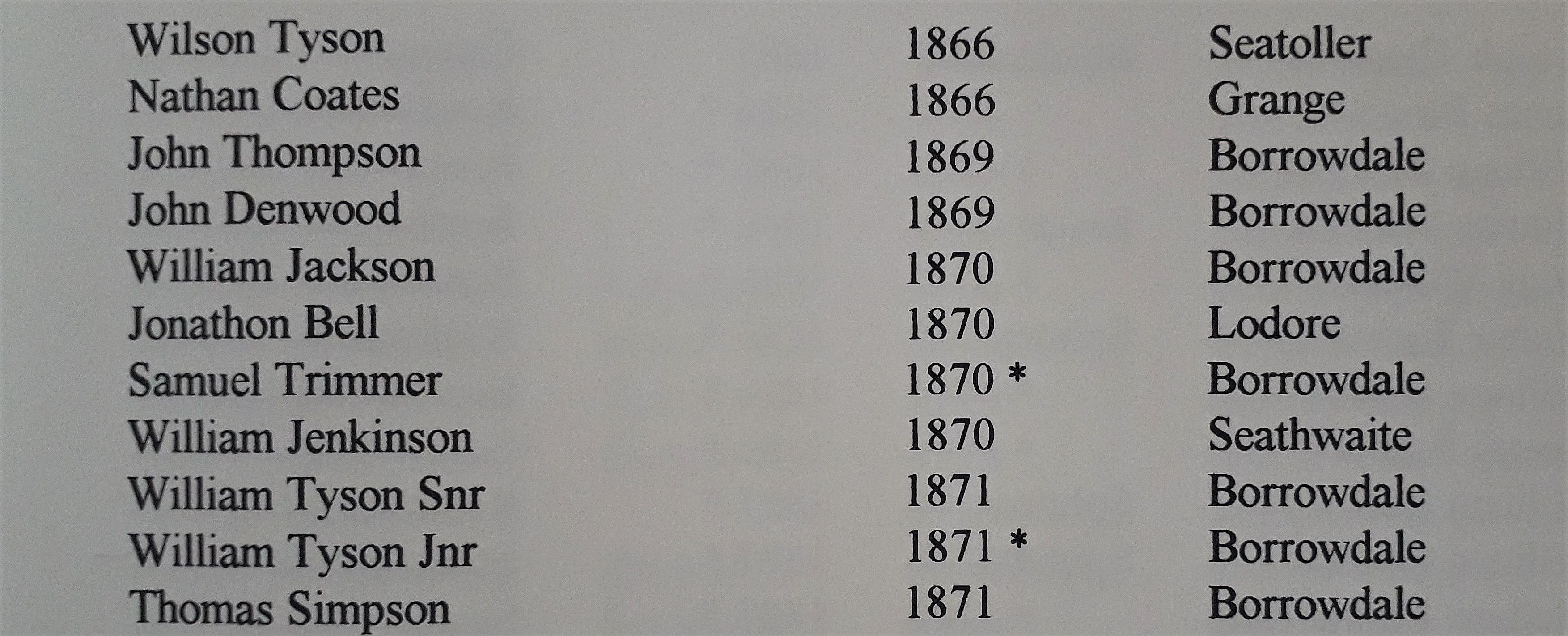
William Jackson is mentioned in Ian Tyler’s book: Honister Slate – The History of a Lakeland Slate Mine, and so is Thomas Simpson, who is Elizabeth’s son from a previous marriage.
1871 England Census for Smithy House, Stonethwaite Road End, Cumberland
William Jackson, Head, aged 53, Slate Quarryman
Elizabeth Jackson, Wife, aged 61
John Jackson, Son, aged 21, Carpenter and Joiner
Jane Barrow, Daughter, aged 19
William Jackson Barrow, Grandson, aged 6 months
At some point between 1871 and 1881, William Jackson either divided Smithy House into two separate dwellings or built an extension onto the original building, thus creating Smithy Cottage and Ivy House. The latter is more likely due to the features of the cottage, such as the position of the chimneys, for example.
This was a common theme during the 1800s, and even more so towards the end of the century when an influx of skilled quarrymen came to work the green slate at Honister. Lodgings were in demand, and by the end of 1894, two rows of cottages had been built at nearby Seatoller, along with eight two-storey cottages just outside Seatoller, which were named “Mountain View”.
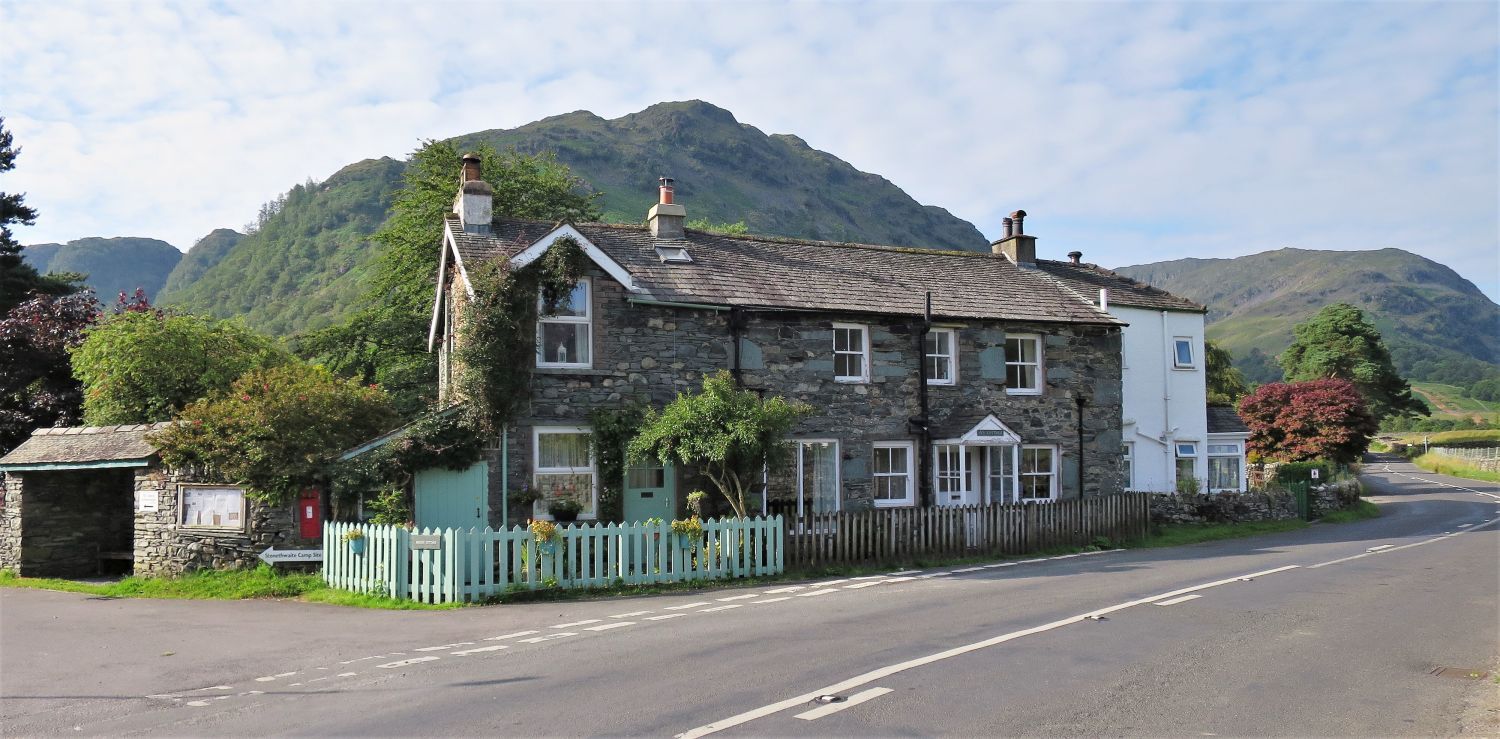
1881 England Census for Ivy Cottage, Stonethwaite Road End, Cumberland
William Jackson, Head, aged 62, General Labourer
Elizabeth Jackson, Wife, aged 71
Jane Barrow, Daughter, aged 29
William Jackson Barrow, Grandson, aged 10
Elizabeth Agnes Barrow, Granddaughter, aged 8
John Jackson (Jacko’s grandfather) is no longer living at the family home.
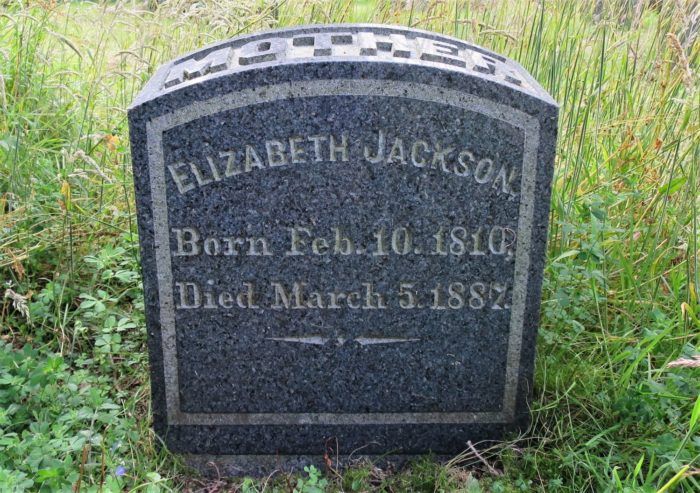
(Jacko’s great-grandmother)
1891 England Census for Ivy Cottage, Stonethwaite Road End, Cumberland
William Jackson, Head, aged 72, Retired Labourer
Edward May, Son-in-law, aged 34, Quarryman
Jane May, Daughter, aged 39
William Jackson Barrow, Grandson, aged 20, Quarryman
John Jackson, Son, aged 41, Quarryman
John Jackson, now aged 41, is back living with his parents at Ivy Cottage. He is no longer a carpenter and joiner, but is working as a quarryman. At some point between 1891 and 1901, he married Annie Isabel and moved to Raingauge Cottage (formerly Rose Cottage) in Seathwaite.
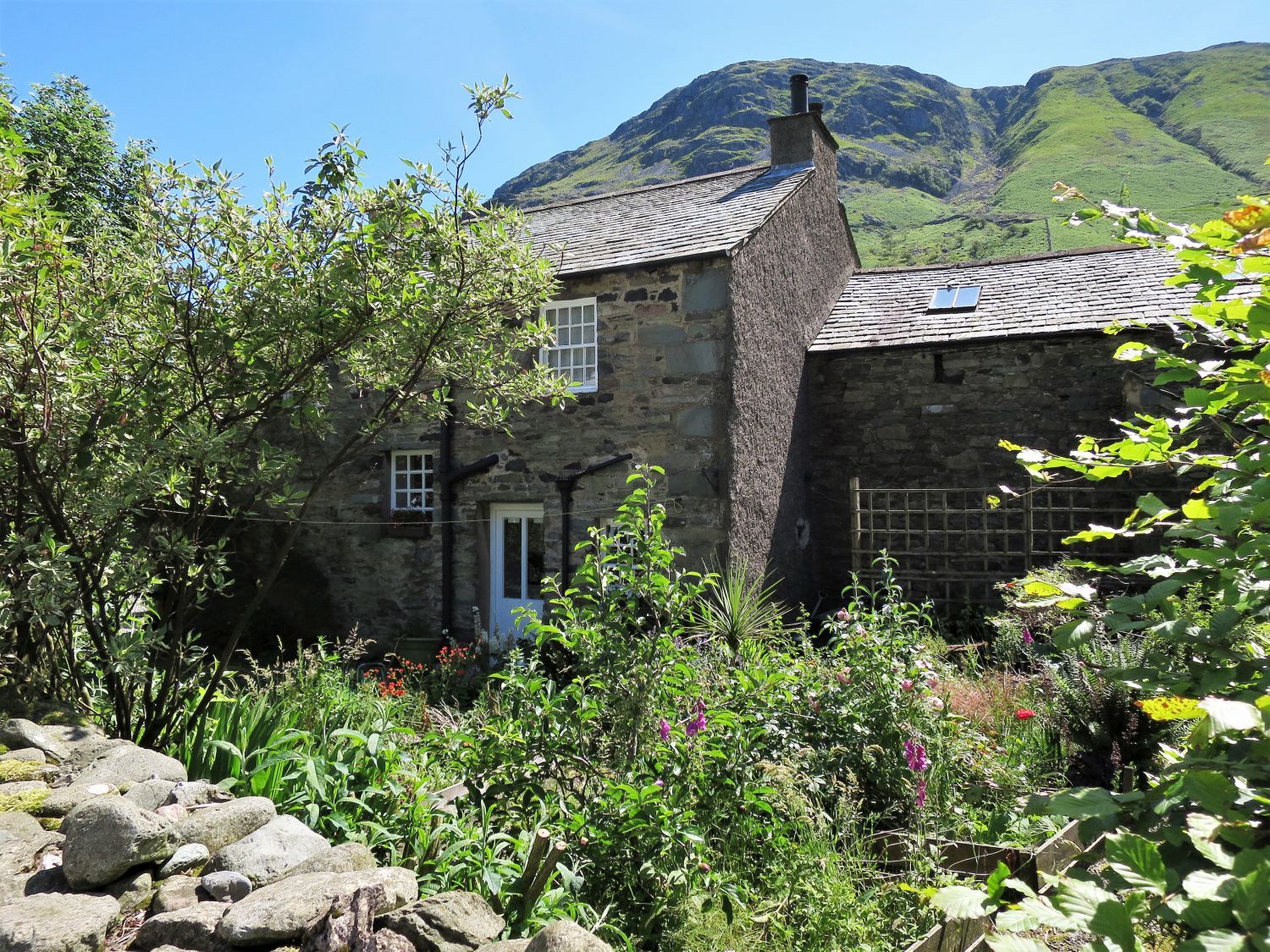
Jacko’s father, Fred Jackson, is born and is only four days old on the day of the census.
1901 England Census for Raingauge Cottage, Seathwaite, Cumberland
John Jackson, Head, aged 51, Slate Quarry Labourer
Annie Isabel Jackson, Wife, aged 38
Fred Jackson, Son, aged 4 days
Hannah Gill, Sister, aged 60
“My grandpa was a quarryman… a rock hand up at Honister. He was also a smallholder at Seathwaite. They kept a few cows and pigs. His wife, my grandma, came from Rosthwaite — they tended to marry local in those days. She used to take in visitors at Raingauge Cottage. We have a visitor book going way back… way back. In the late 1800s, A. A. Milne, the writer, used to stay with her. He climbed Napes Needle. ‘Rusty’ Westmorland, who started the Fell and Rock Climbing Club, stayed with my grandma at Seathwaite as well.”
— Rob Jackson
“It was delightful to sit on top, dangle our legs and think ‘we’ve done it’. About once every ten years it comes back to me that, in addition to all the things I can’t do and haven’t done, I have climbed the Napes Needle.”
— A. A. Milne’s Autobiography
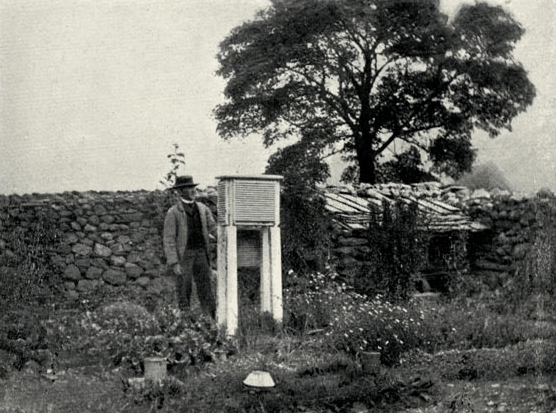
Dr J. Fletcher Miller of Whitehaven began to keep a meteorological register in 1833. In November 1843, he placed a rain gauge in Ennerdale, and in June of the following year, he established six other weather stations: Sprinkling Tarn, Brant Rigg, Styhead Tarn, Great Gable, Stonethwaite and Seatoller Common. In January 1845, the first recording came from a rain gauge placed in the back garden of Rose Cottage (now Raingauge Cottage) in Seathwaite.
The most probable reason for placing a rain gauge at the cottage in Seathwaite was the residence there of Mr John Dixon, who was the agent for the Borrowdale Plumbago Mine.
Dr Miller’s mountain gauges were abandoned in 1853. He himself died in 1856, and at that time few took any interest in the rainfall of the district except for Mr Dixon, who went on with the Seathwaite recordings until a revival took place about 1863. Since that time, there have been several observers, and small payments have been made in consideration of extra observations and of additional work.
Coincidentally, Rob Jackson, whose grandfather once lived at Rose Cottage, took recordings from the Seathwaite rain gauge while working for the River Board.
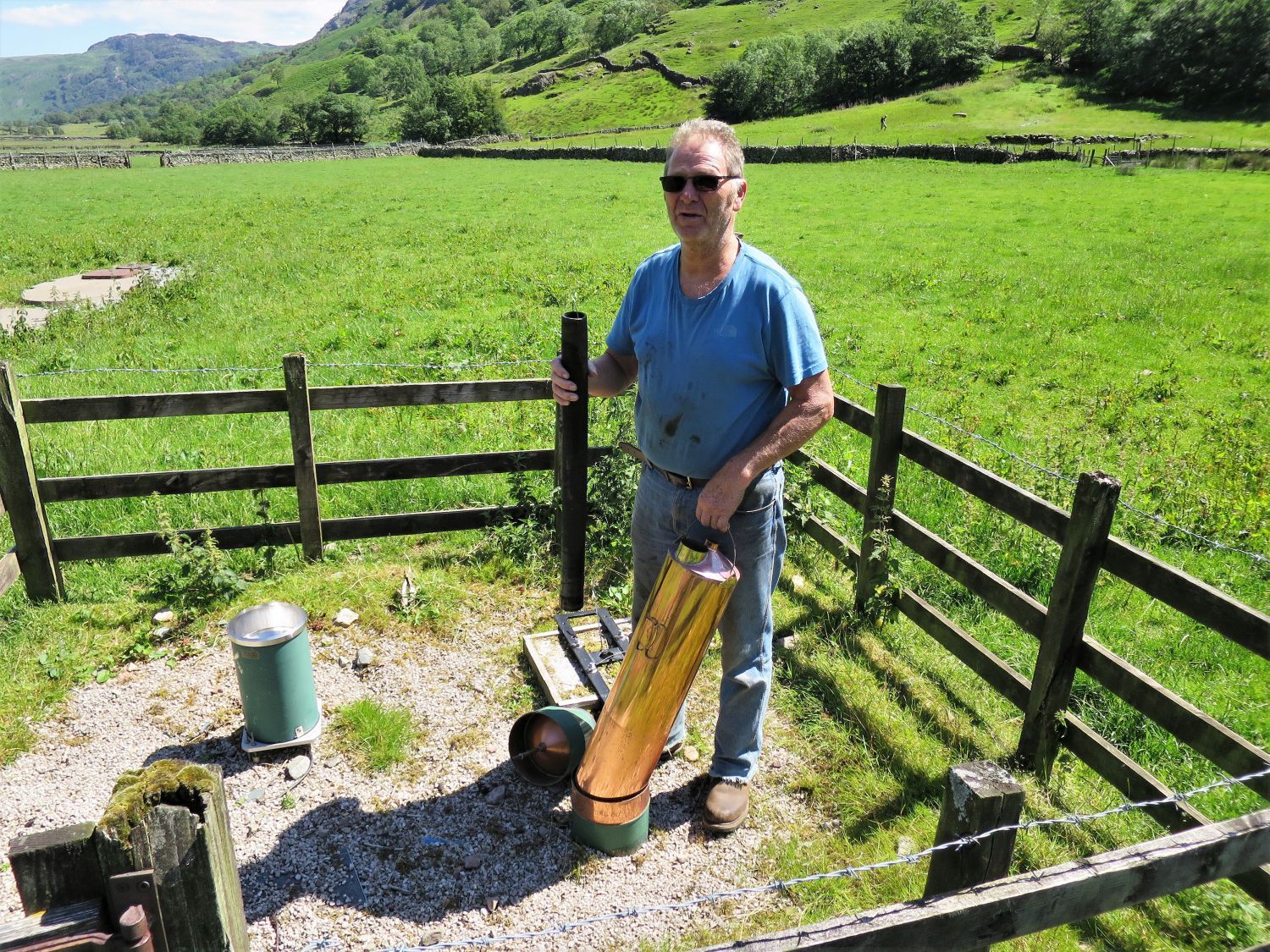
Peter Edmondson, who farms at Seathwaite, kindly took time out from his busy farming schedule to show me the rain gauge in the enclosure. The old copper gauge is positioned next to its modern-day equivalent, which reports to the Met Office automatically.
Seathwaite is the wettest inhabited place in England and receives around 3,552 millimetres (140 in) of rain per year. On 19th and 20th November 2009, Seathwaite received 314.4 millimetres (12.38 in) of rain in a 24-hour period, which was a major contributor to the 2009 Cumbria floods.
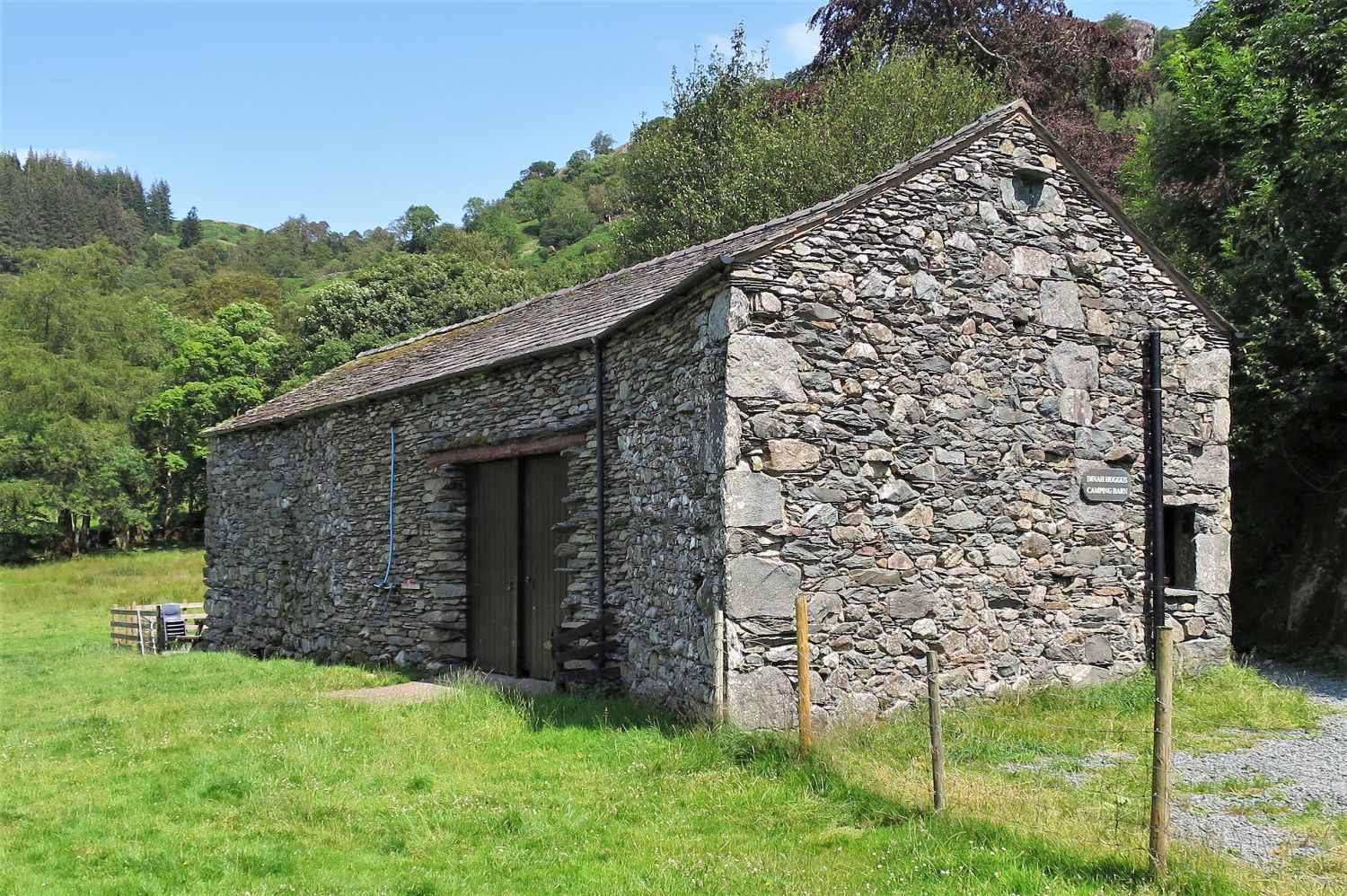
It’s not clear why the Jacksons left their smallholding in Seathwaite, but between 1904 and 1911, the Jacksons lived at Dinah Hog House (now Dinah Hoggus) near Hazel Bank, which is situated on the old packhorse route between Rosthwaite and Watendlath. It was a traditional field barn, or hog house, but today it is an independent camping barn.
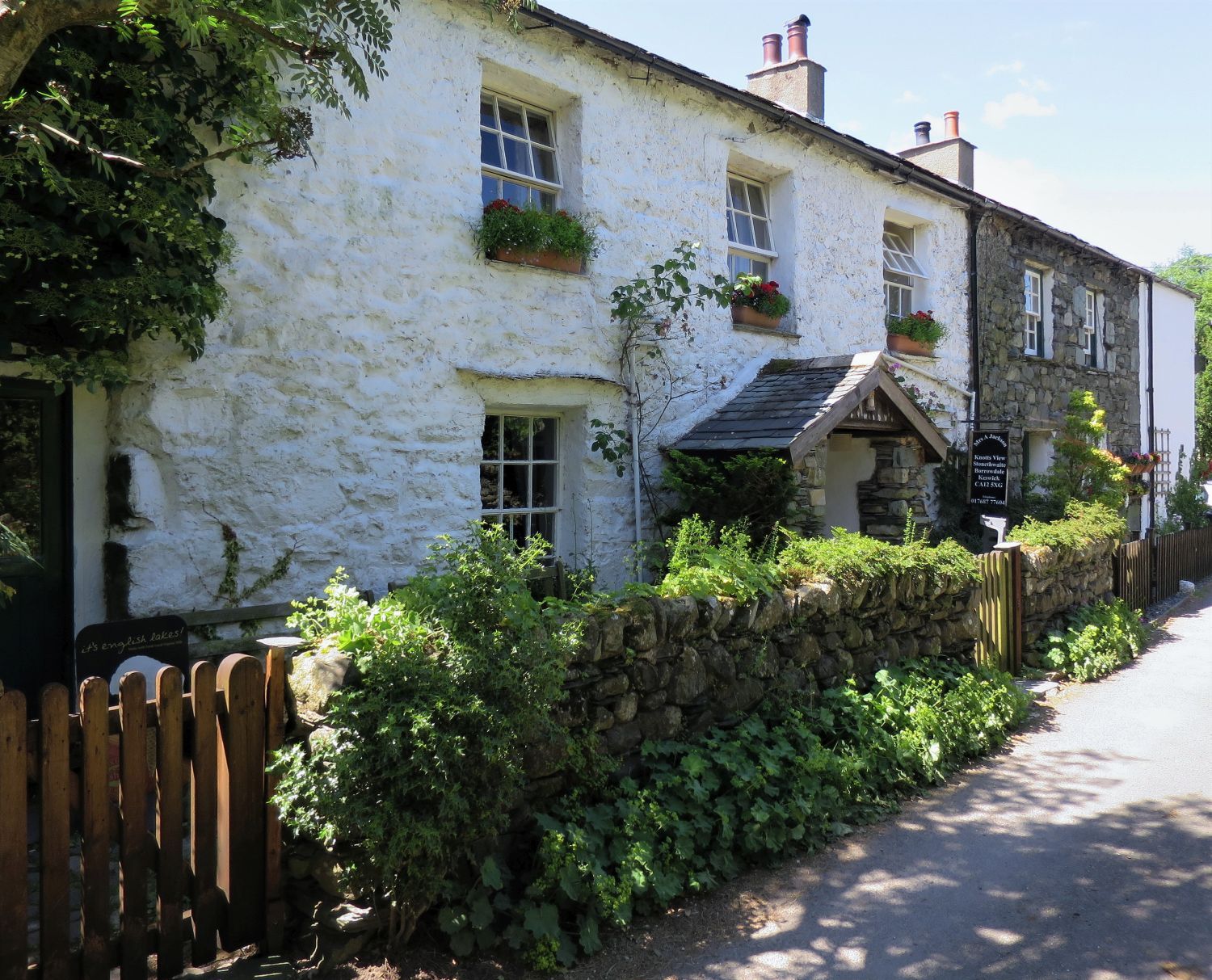
Since the Jacksons moved to Knotts View in Stonethwaite in 1911, the family tradition of providing accommodation continued, and today it is a popular stopover for ‘coast-to-coasters’ heading to Grasmere and Patterdale. In the early years, drinks were served through the window of the cottage, and today a café is still run by Rob and his wife, Ann.
1911 England Census for Knotts View, Stonethwaite, Cumberland
John Jackson, Head, aged 62, Slate Quarry Labourer
Annie Isabel Jackson, Wife, aged 48
Fred Jackson, Son, aged 10
Lilian Elizabeth Jackson, Daughter, aged 8
“My grandpa died before I was born, and he died early — heart attack, and too much work. My dad was a rockhand, and so was his dad before him.”
— Rob Jackson
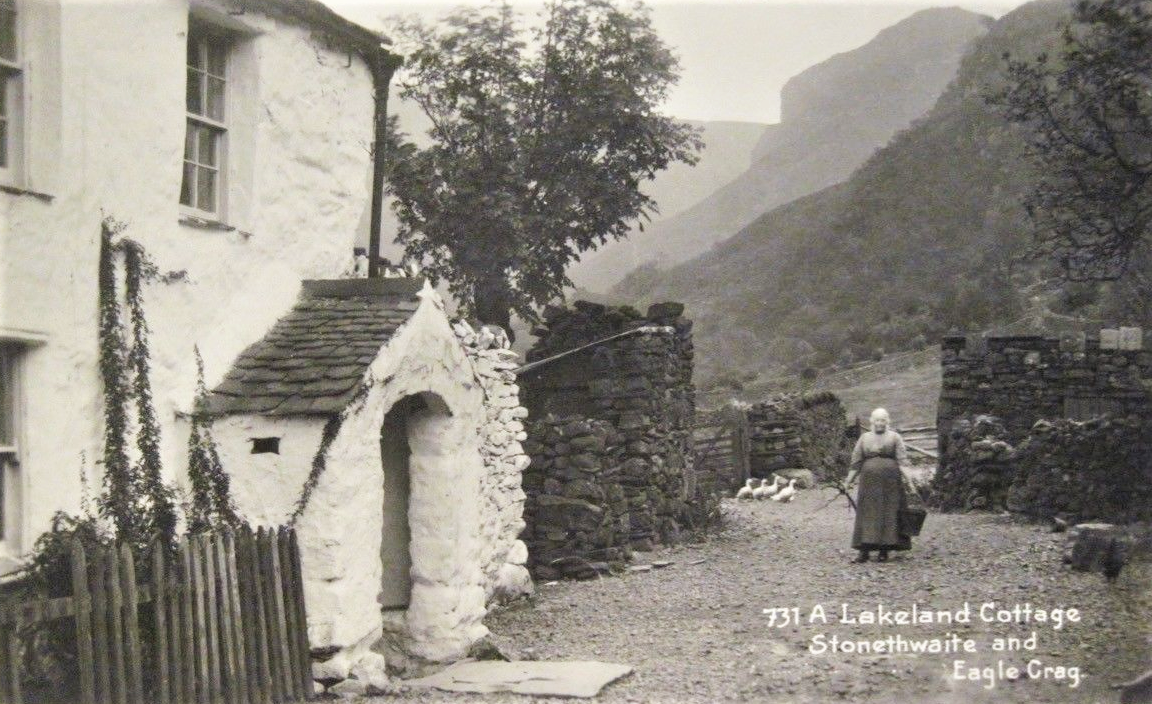
It is suggested that the lady in the picture could possibly be Jacko’s grandmother, Annie Isabel Jackson. The cottage is Dove Cottage, where the Dover family lived for many years. It was also a bed and breakfast, and is now part of the Langstrath Inn. The formidable Eagle Crag towers in the background.
1939 England and Wales Register for Knotts View, Stonethwaite, Cumberland
Fred Jackson, Head, aged 38, b: 26.03.1901, Rockman at Slate Quarry
Jane Jackson, Wife, aged 33, b: 31.07.1906 d: Apr 1969
Mary I Jackson, Daughter, aged 8, b: 10.07.1931
John Frank Jackson, Son, aged 5, 08.06.1934
James Frederick Jackson, Son, aged 5, 08.06.1934
Annie Isabel Jackson, Mother, aged 77, b: 01.11.1862
Martha Davidson, aged 66, b: 12.12.1873
Jacko was born in 1934 with his twin brother, James, and was christened John Frank Jackson. Rob Jackson was born in 1944.
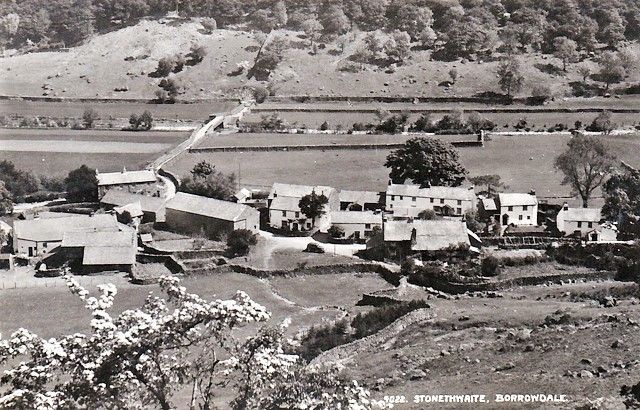
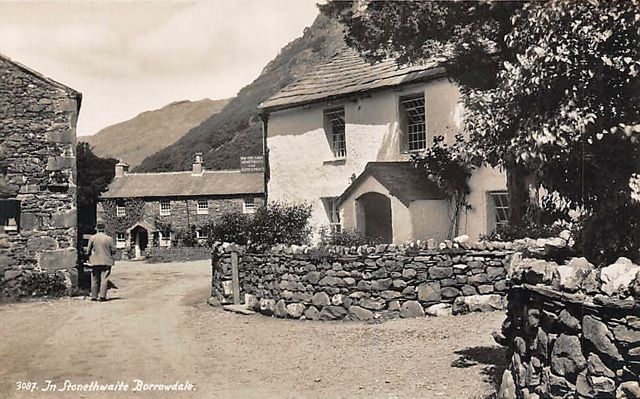
As well as being a quarryman up at Honister, Fred Jackson was a fern enthusiast in his spare time. Jacko’s wife, Ann, said: “He often had articles and letters in Cumbria Magazine. He was a fern fanatic… they found one which they named after him. He got the protection for ferns in Johnny Wood on High Doat.”
The fern named after Jacko’s father is Asplenium × jacksonii (Jackson’s spleenwort).
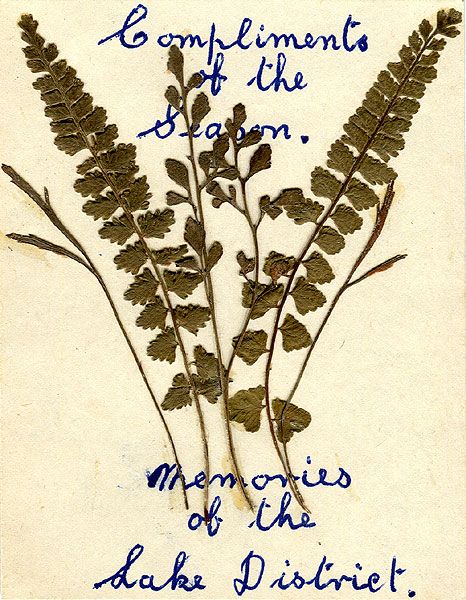
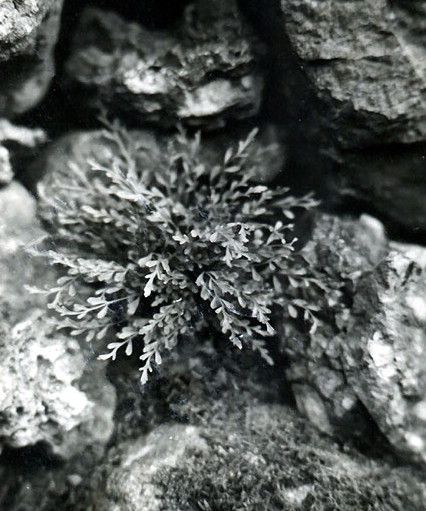
“Following a BPS meeting in the Lake District, Fred Jackson of Stonethwaite, Borrowdale, made this Christmas card, for Percy Greenfield, dated 23/12/1951. It is now in the BPS Archive. The fronds in the middle are of Asplenium x alternifolium, the hybrid between forked spleenwort, A. septentrionale, and Asplenium trichomanes subsp. trichomanes. Asplenium x alternifolium was first found in Britain in Borrowdale, by Joseph Flintoft and independently by a Miss Maria Wright. Here is a photograph from the Archive of a plant of it growing in Borrowdale. It is extremely rare in Britain, and certainly not a plant we would use for a greetings card now. Times have changed!”
— British Pteridological Society
After the death of Fred Jackson, Jacko scattered his ashes on Fleetwith Pike, above Honister Slate Mine. Mary, now 88 years old (2019), lives on an island in Scotland. Jacko’s twin brother, Jim, lives in New Zealand.
The Wolfman Plaque
Even though Jacko gave me some really useful information about the plane crash site and the High Doat carving I was researching, the idea of a plaque on Eagle Crag with “Wolfman” inscribed on it, of course, drew me in and left me drooling like a wolf searching for its prey; could this be a quick ‘local history’ story I could get my claws into, and meanwhile, put the other stories on hold? Well, that’s what I thought at the time. So, with great determination, I headed back to Stonethwaite to see Jacko.
Jacko described in more detail the plaque and a friendship he had formed with a group of lads from down south. They used to travel up every Easter and in the summer, and stayed at the campsite at Stonethwaite Farm. Like Jacko, they liked a drink or two in the Royal Oak at Rosthwaite, and the lads nicknamed Jacko “Wolfman” because of his long, thick hair and impressively long beard.
“Big Steve, he turned up here around 1976. He had a stone company in Colchester. He was on holiday and had one of these big Indian tepees with him, and we used have a good laugh in Royal Oak,” Jacko said.
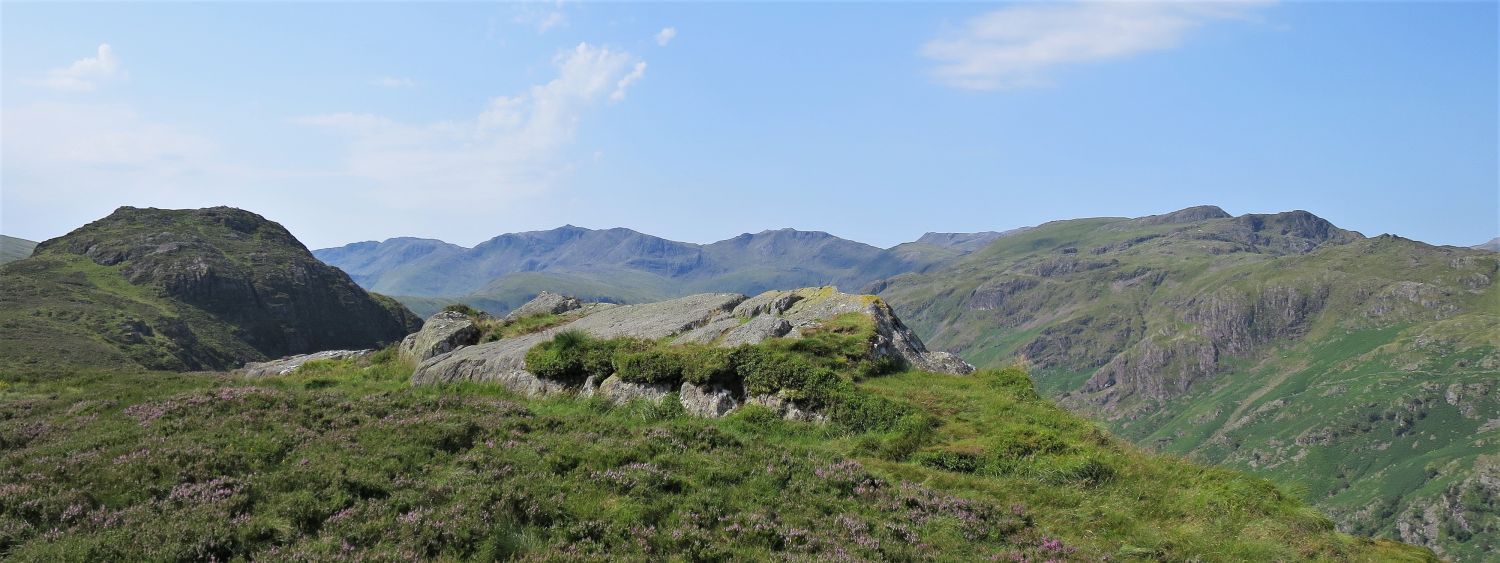
During the summer of 1976, to celebrate this new friendship, Big Steve, who was a stonemason, carved on a stone: “You are now in Wolfman Country” and placed it on the summit rock of Eagle Crag.
Jacko said: “He then had to leave his tent because his van had broken down. I looked after it until he came back up again to collect it. It stood on the camp field for well over a month or more. I used to live in it. I got paid off that year from the quarry, so I had nothing else to do; it was red hot at the time up here… I had some good fun in that tent!”
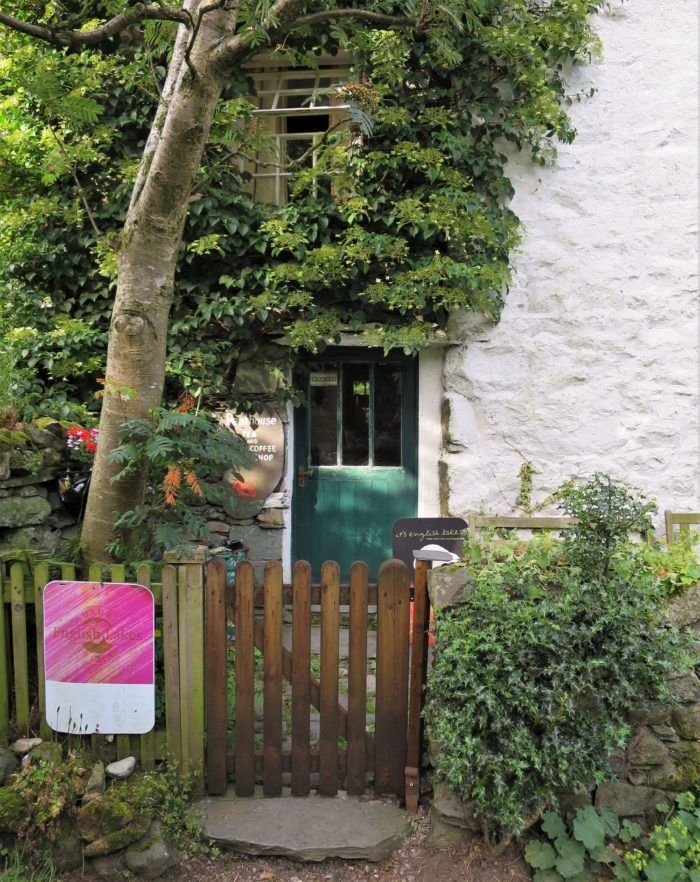
Later that year, a fell walker came across the plaque and, in fear of her life after reading the inscription, headed down the fellside to safety and reported it to the authorities. A National Trust ranger was then sent up to remove it, and, knowing of its story, it was handed over to the Jacksons at Knotts View in Stonethwaite. The plaque was then placed at the door of the cafe and stayed there for a few years until it was stolen by a visitor.
The plaque has never been seen since, but someone out there may still have it and not know the story behind it.
“My father was still alive then, and he put a bit in la paper about it; in ‘Cumbria’ magazine. He thought it was stupid,” Jacko said.
I needed to contact my friend Chris Butterfield, who is known as the “Wainwright Archivist”. He is an outdoor enthusiast and Yorkshireman like myself, and owns probably the greatest collection of Wainwright books and memorabilia. As well as this great collection, he is also just seven issues shy of collecting the whole ‘Cumbria’ magazine series. I asked if he could look through his collection for any mention of the ‘Wolfman Plaque’, and within a couple of days, he got back to me.
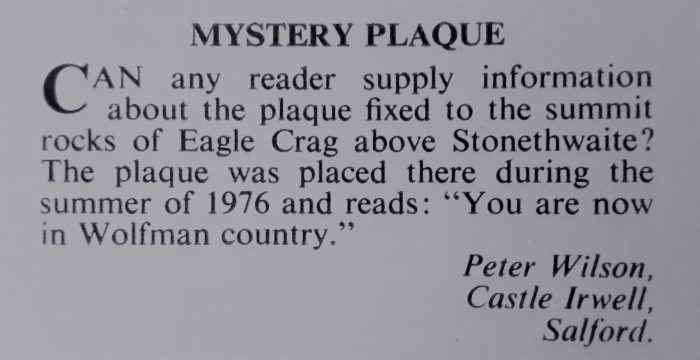
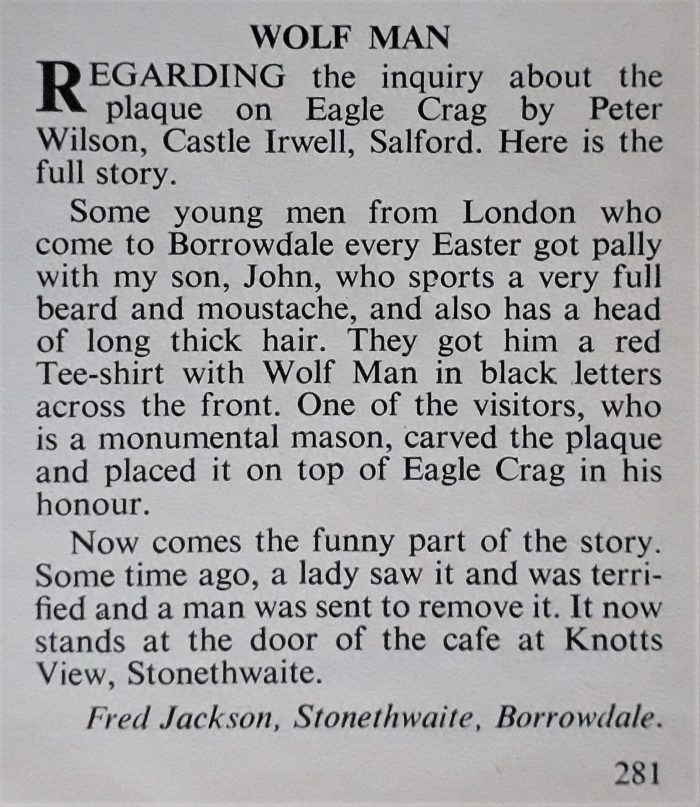
Come and get me!
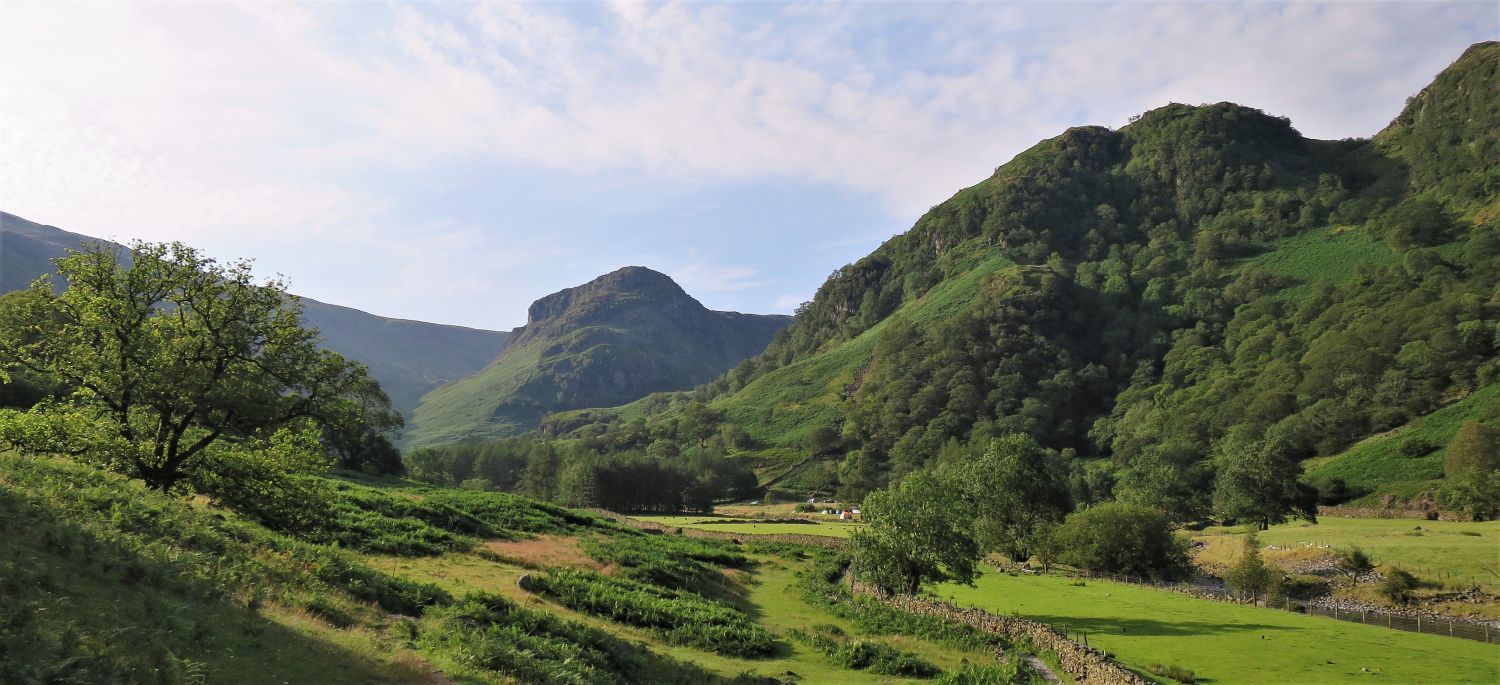
The north-east buttress of Eagle Crag was once popular among climbers. With names like Trapeze, Great Stair, Falconer’s Crag, Post Mortem and The Inquest, to name a few, these climbing routes would attract climbers from far and wide. Eagle Crag had a reputation for some of the hardest and most serious routes in all grades, but sadly, because of its north-east aspect, the rock is known to be “dirty”, and being off the beaten track, with the long approach through bracken, put climbers off, so the climbing routes became neglected in recent years.
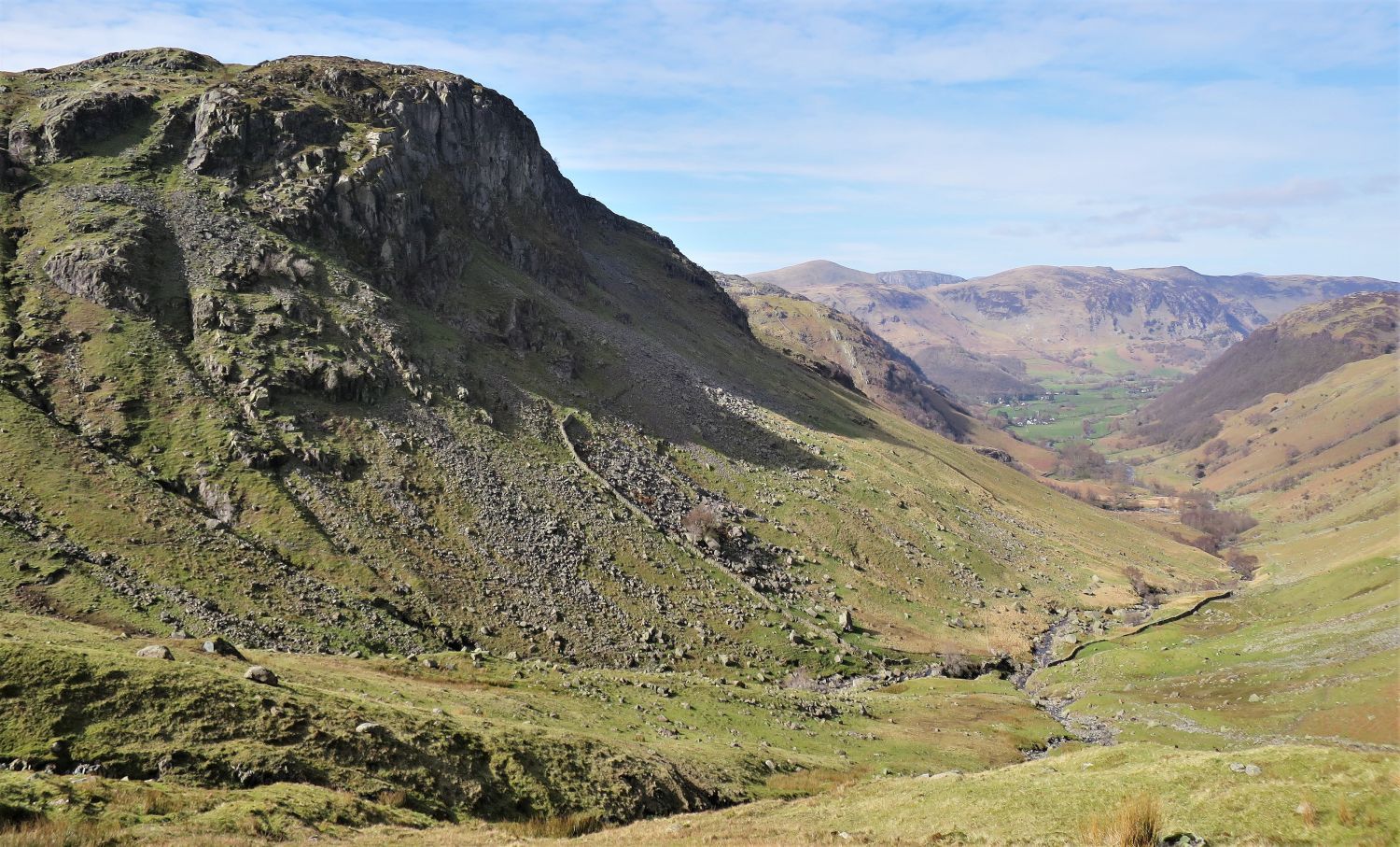
The only mention of the ‘Wolfman Plaque’ on the internet is in a discussion in 2009 on a UK climbing forum:
“Sad that it’s dirty and neglected. Post Mortem was great back in the early 1970s. There was a plaque on the hillside above it, saying: “Beware, you are now in wolf-man territory”. I screamed out across the valley: “Come and get me!” My mate said: “Mick, don’t bloody tempt fate!” Great days in the Lakes.”
— Mike Ward
“It is one of those crags which has been off the radar for a long time – with a good summer it might get the attention back again – as a change from the valley crags – but beware of the wolfman – and pigs flying by!”
— Ron Kenyon
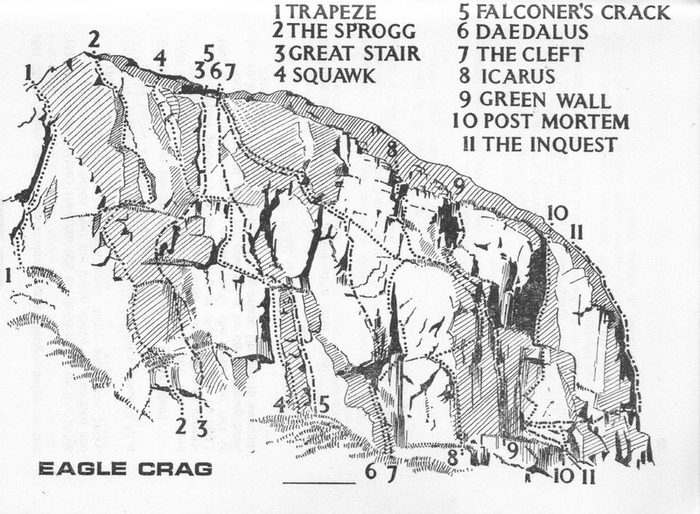
“My mate Deak wanted to lead it because he had a score to settle. I also wanted to lead it because the fall seemed less scary. (I lost.) Although Deak was in good shape, I was in terrible shape – raging cystitis (yes, like peeing glass) and two years of grief, drink and drugs (For anyone reading this, please don’t ever do drugs or drink heavily). I had savage flashbacks on Post Mortem, black carnivorous birds screaming in and out of my vision. And oh, the struggle! But it was like an instant detox. All the crap washed out of me and I’ve been clean ever since – 33 years now. When I saw the wolfman plaque, at first I thought I was still hallucinating. But Deak gently said: “No mate, it’s real!” It was the beginning of a return to half-way normal living. I’ll always be grateful to Post Mortem for waking me up, with a savage shock, before it was too late.”
— Mike Ward
Another plaque?
I thought that was the end of the Wolfman saga, but no, there was more to come. When Big Steve arrived back for a holiday at Stonethwaite in 1977, he was told about the strange occurrences in the valley while he was away. He wasn’t deterred by terrified fell walkers, the ranger, police, or disappearing plaques, though. Instead, he said to Jacko: “I’ll put you another one up there, but this time they won’t find it!”
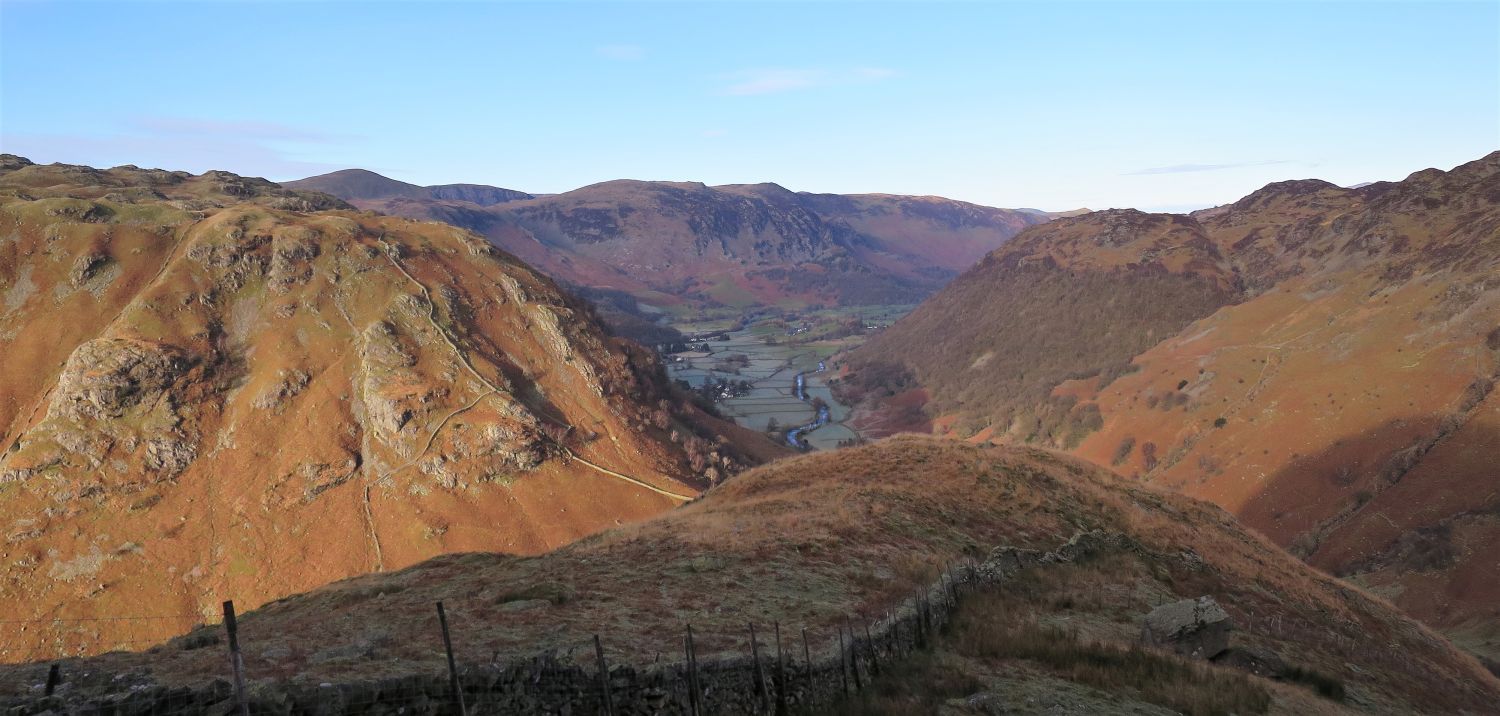
On 26th November 2018, which was just a week after Jacko told me about the story, I headed up the valley towards Eagle Crag to search for the ‘other’ Wolfman Plaque. I wasn’t sure if the climber, Mike Ward, came across the first plaque or the second one when he mentioned: “There was a plaque on the hillside above it [Post Mortem].” Did he mean seeing the first one on the summit rock or the second one, which may have been placed just “above” the notorious climb Post Mortem?
At the end of November, the days are short, so I knew I had little time for searching; the walk up the valley from Stonethwaite, and the scramble up the ‘north ridge’ of Eagle Crag, can take well over two hours. Because of this, after scrambling up the ‘north terraces’ and visiting the summit rock, I chose to only search the ‘grassy shelves’ above the notable climbs on the main buttress of Eagle Crag. These shelves are very dangerous, especially if the ground is wet, so care is needed.
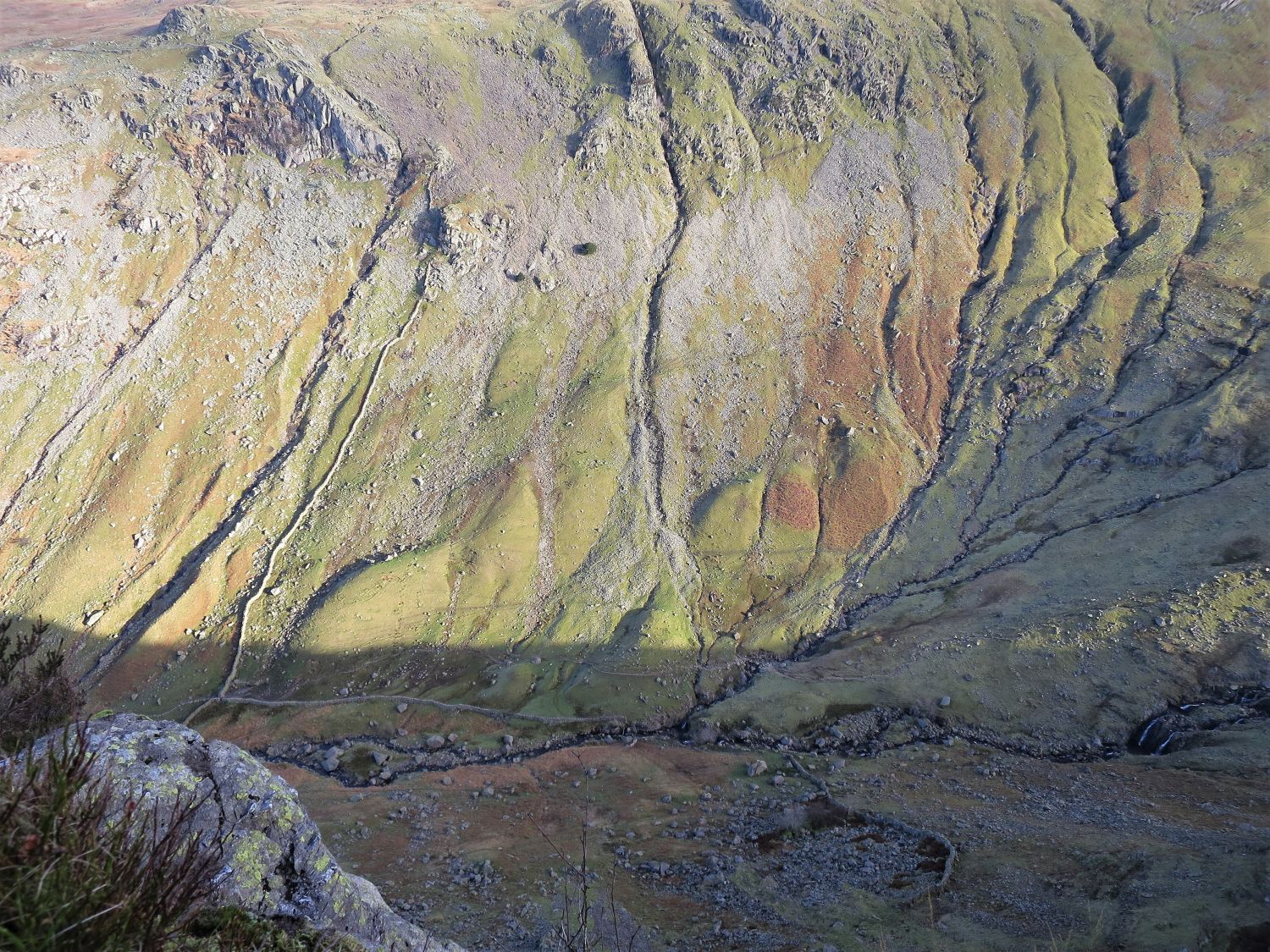
I spent a couple of hours searching along the shelves, but sadly, I found nothing.
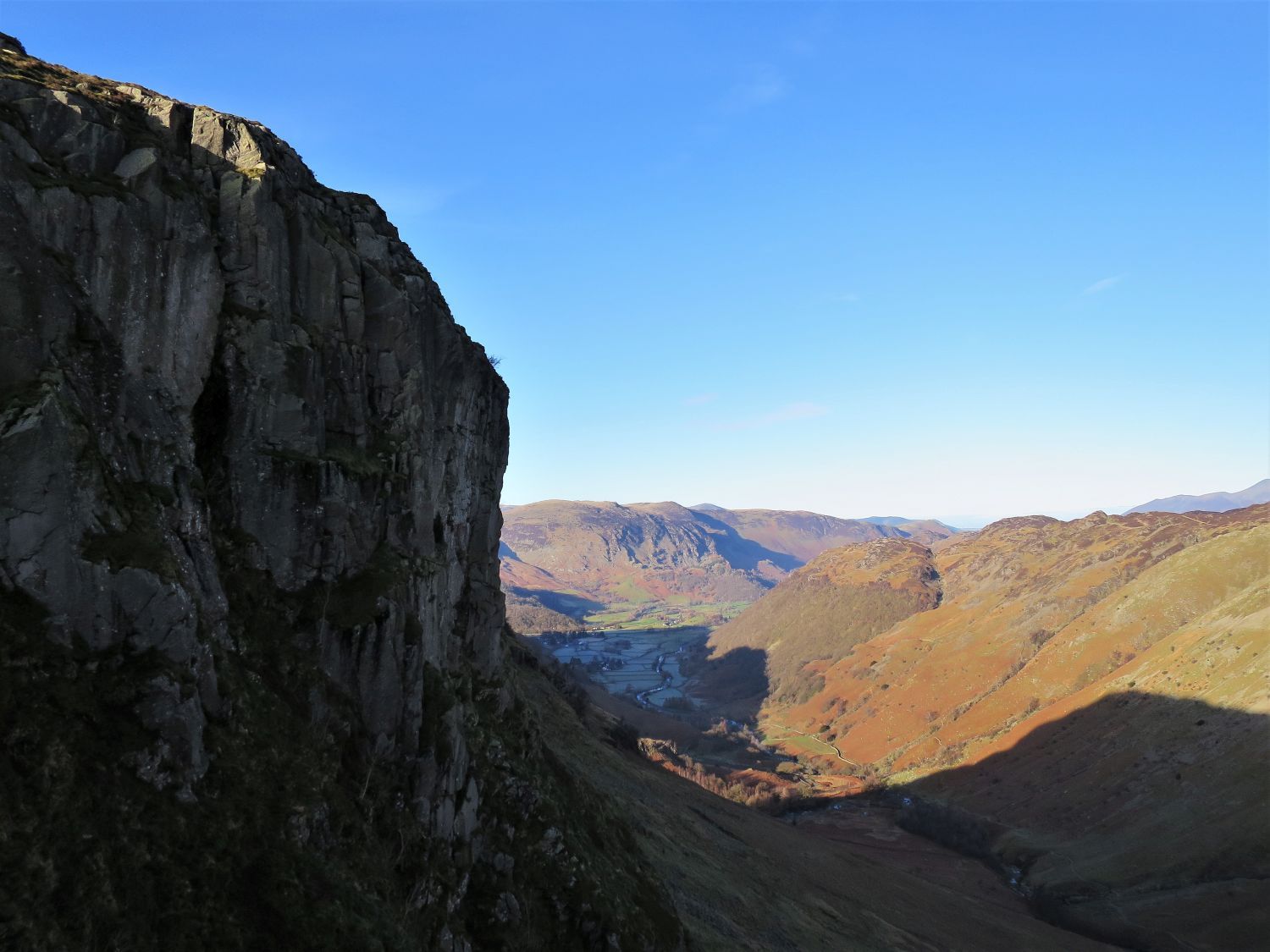
I was frustrated, but instead of giving up and taking the easy and usual route down to Greenup Gill, I decided to traverse below Pounsey Crag and the main buttress of Eagle Crag — you never know, the plaque may have been thrown off by a terrified climber.
Yet again, I found nothing, and it was getting late in the day — I certainly didn’t want to witness a lycanthrope’s carnivorous lunar activities!
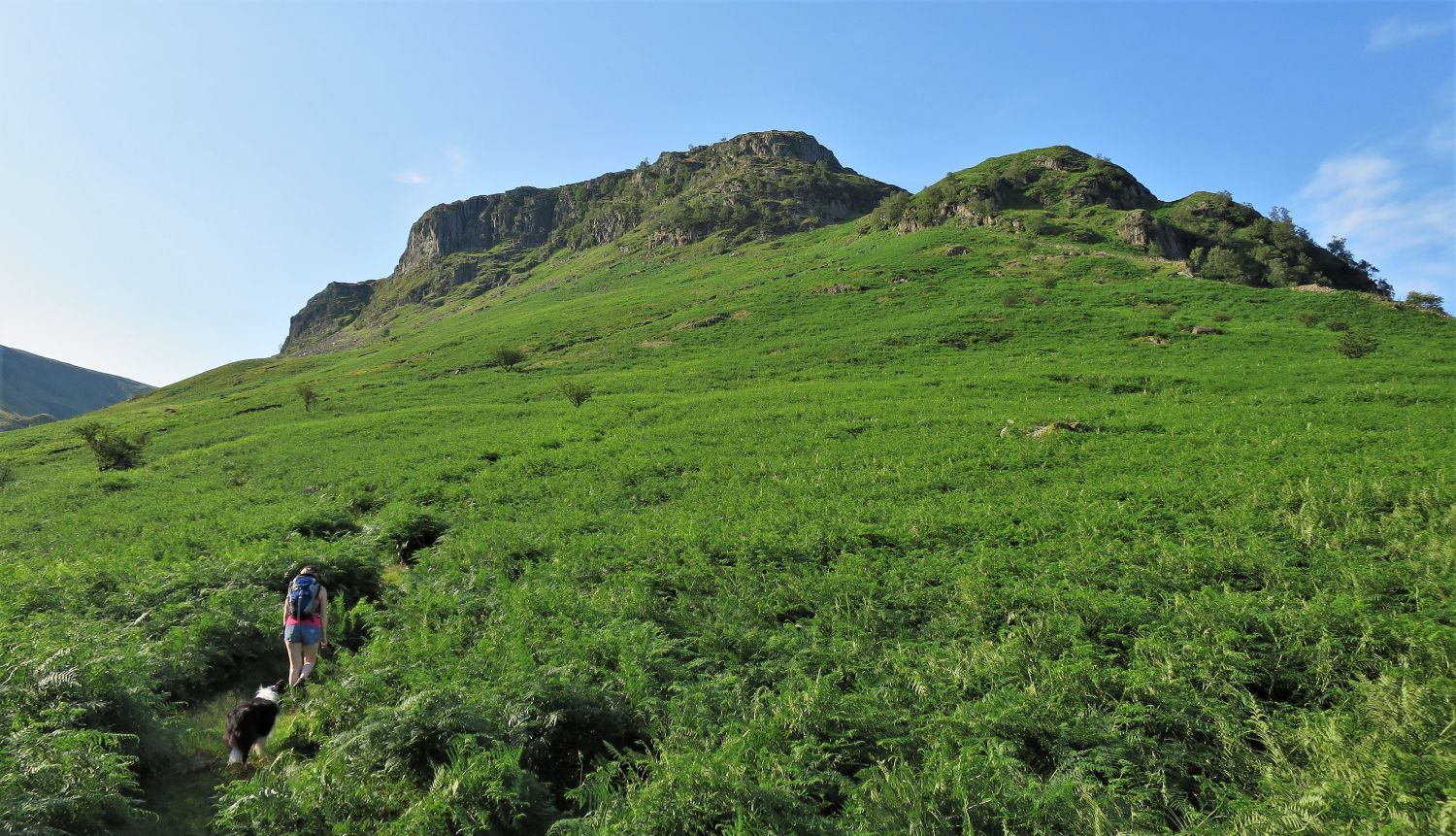
On Thursday 25th July 2019, Britain experienced its hottest day ever recorded, as the mercury hit 38.7°C; that was the day Jaclyn and I decided to climb through the bracken on the ascent of Eagle Crag! We weren’t put off, though; we were on a mission to find the ‘other’ Wolfman Plaque. Seven months had gone by since my failed attempt in November 2018 — I had other stories to research which were a priority at the time. On this occasion, though, I wanted to search the ‘north terraces’, which I had missed on my last search due to lack of daylight.
So, did we find it?
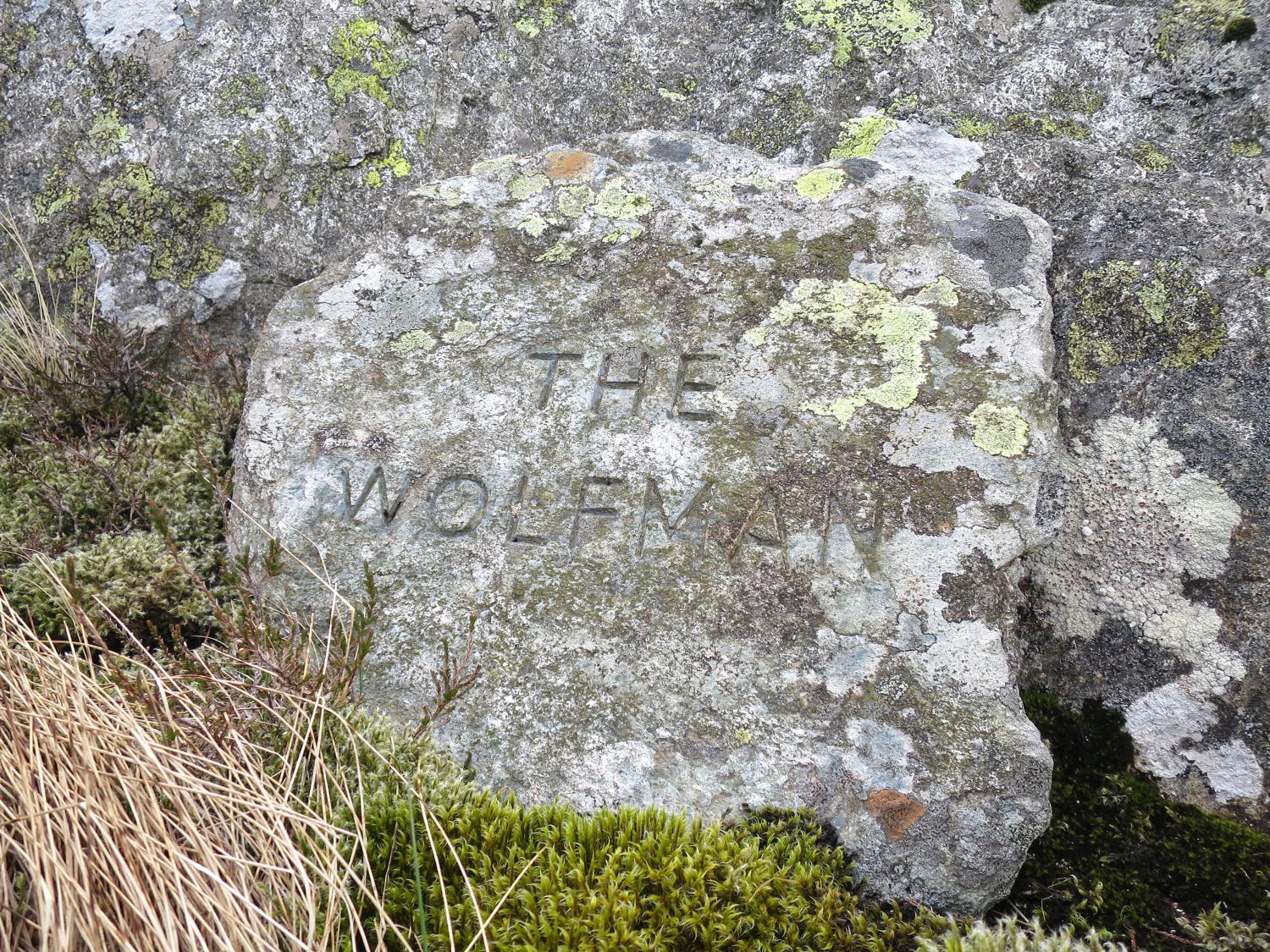
I’ve chosen not to provide the location due to the fear of it being moved or damaged.
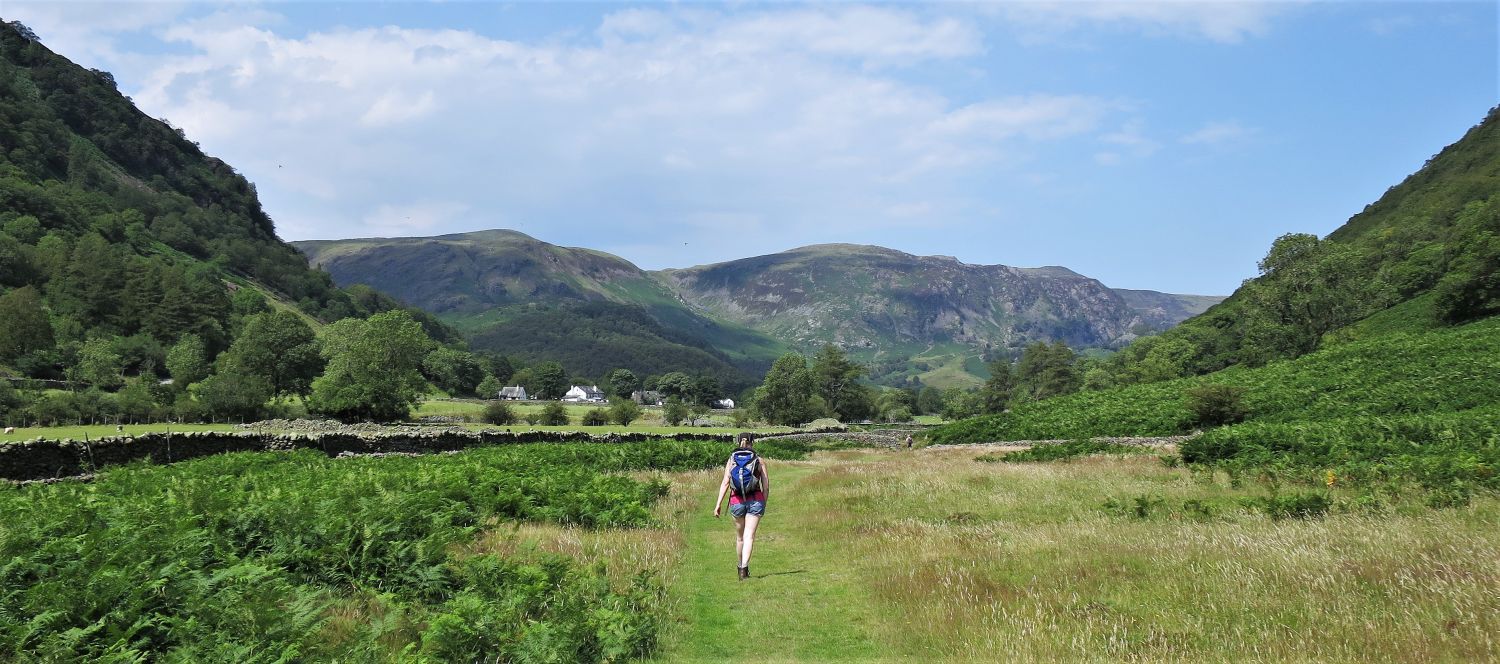
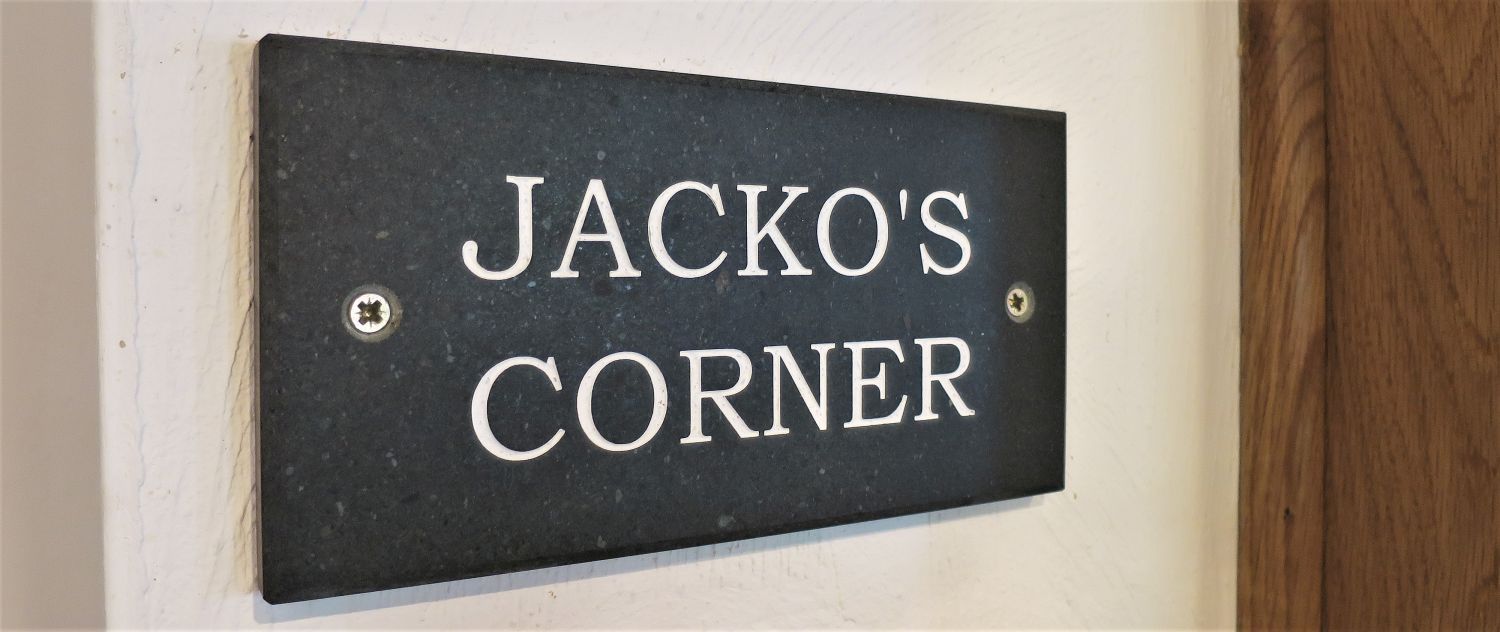
A well-earned drink in the local pub after a very hot day on the fells. Maybe the Langstrath Inn should change its name to “The Slaughtered Lamb”, as in the film An American Werewolf in London? Maybe I should keep off the crags and “stick to the roads”? Is Jacko “walking the earth in limbo until the werewolf’s curse is lifted”?
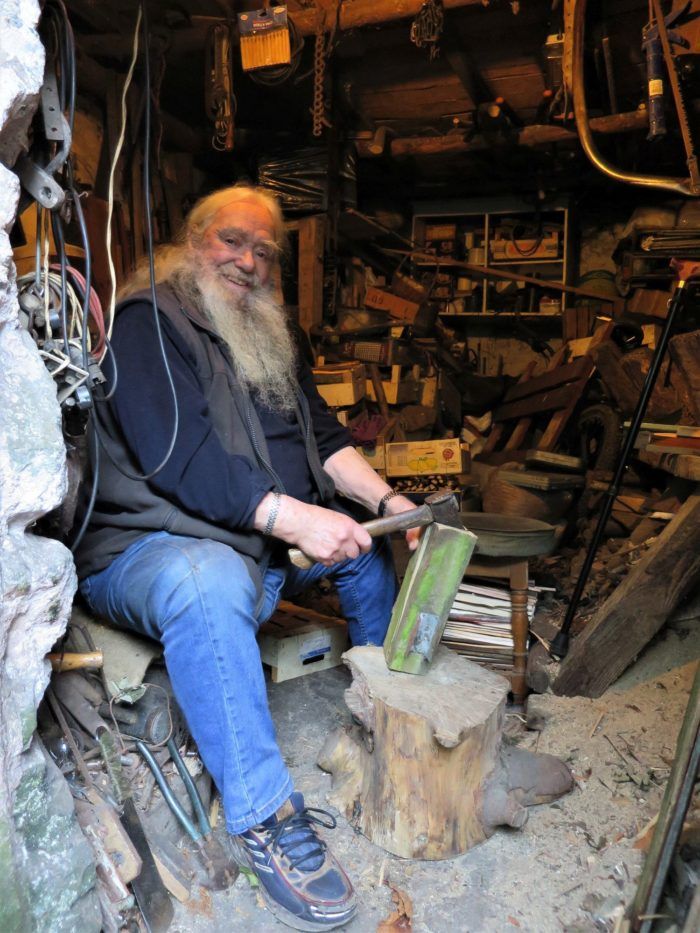
Jacko ‘Wolfman’ Jackson is now 85 (2019). He is no longer splitting Westmorland green slate, but while passing his little cottage early one morning, you may hear him splitting green wood to stock up for those cold winter months in a remote side valley of Borrowdale.
Peter Wilson
Eight months since I published this story, on 14th April 2020, I received the following information via an email from Peter Wilson:
“Dear Richard,
Regarding the story of the Wolf Man of Eagle Crag plaque — I am the Peter Wilson who had a short letter published in Cumbria magazine in May 1977, asking about the origin of the plaque that appeared on the summit of Eagle Crag. While searching for information about rain gauges, your story about the Wolfman Plaque appeared because you include a section about the rain gauge at Seathwaite, so I thought I would get in touch.
I was a student at the time and the student village in which I lived in Salford was called Castle Irwell – I tell you this in case you think that I lived in a castle and am a member of the nobility – no such luck. I was employed as a walking guide by Countrywide Holidays Association (CHA) at their Glaramara centre, Seatoller. CHA no longer exists and Glaramara is now run as an outdoor centre by another company.
I came across the plaque on Tuesday 28th September 1976. It was fixed to the tilted summit slab shown in Wainwright’s sketch on page ‘Eagle Crag 5’. On that day, my group ascended Eagle Crag via Wainwright’s ‘Route A’, and then continued on to Sergeant’s Crag, High Raise, Sergeant Man, Thunacar Knott, Pavey Ark, Harrison Stickle, Loft Crag and Pike o’ Stickle. Then across to Stake Pass and down into Langstrath for the long valley walk back to Stonethwaite, and on to Seatoller. We were obviously bagging Wainwright’s that day! My diary also notes that it was a day of low cloud with clearances, and it remained dry.
I cannot now recall why I did not write the letter to Cumbria magazine immediately after seeing the plaque. It must have been in March or April of 1977 that I wrote it – given that it was published in the May issue of that year.
Best wishes,
Peter”
The Vikings
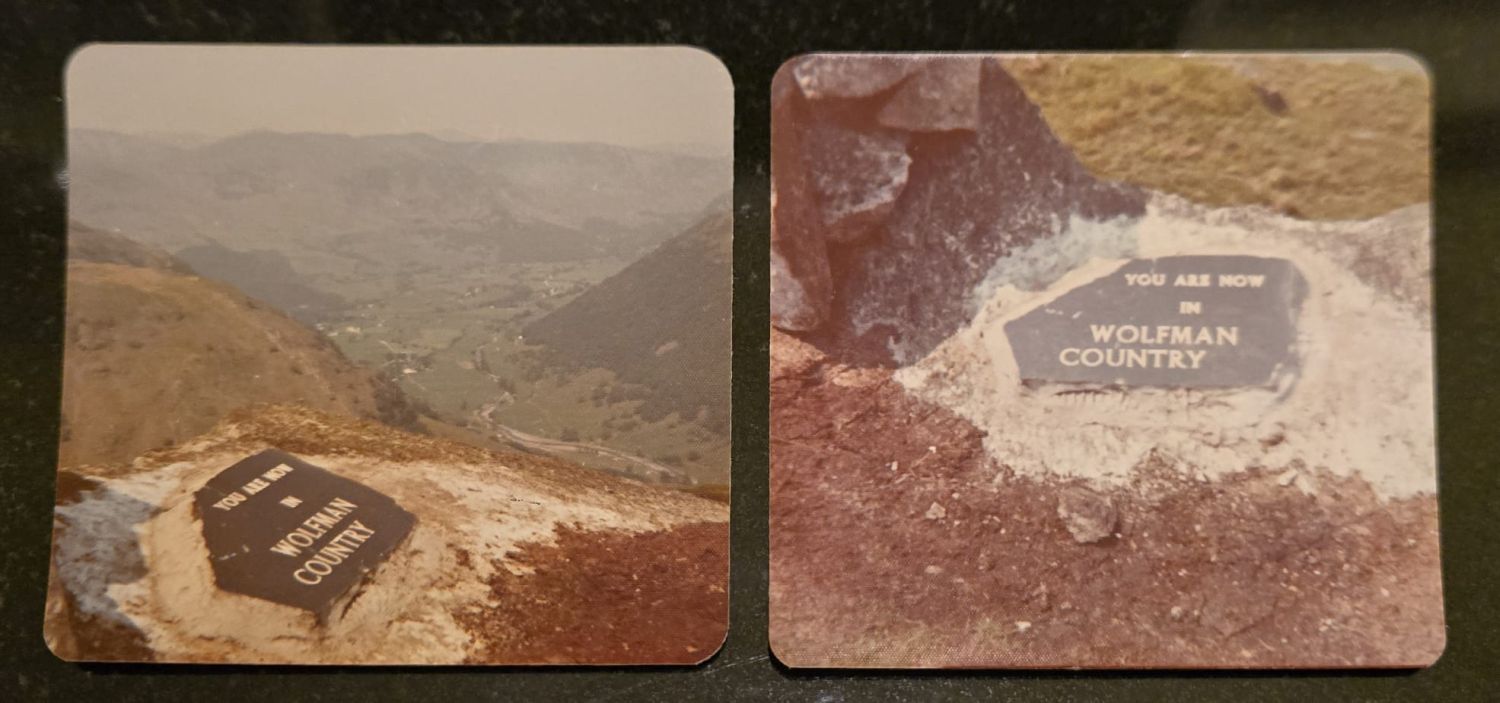
Seven years have gone by since I published this story, and out of the blue, in July 2026, I received an email from a couple living in Australia. Simon and Barbara kindly shared with me not only some very special information about their friendship with Jacko and his family, but also photos of the original plaque that was placed on the summit of Eagle Crag.
Because the plaque was affixed to the summit for only a few months, I’m sure you’ll appreciate how lucky I am to have acquired these images. I have to give sincere thanks to Simon and Barbara.
“Hi Richard,
My wife and I recently discovered your article about John Jackson.
The reason I am contacting you is that your article talked about the Wolfman plaque up on Eagle Crag. I thought you might like to see photos of the plaque in place on Eagle Crag before it was removed.
John and Ann have been friends of my wife for the last 50 years, and even though we now live in Australia, when we return to the Lakes once a year we spend as much time with them as we can.
Barbara has written below how she came to know John and Ann:
My first husband met John in the summer of 1973, during a time when he frequently chatted to him in his free time whilst working at the Scafell Hotel in Rosthwaite, Borrowdale. They spent a lot of time in the Riverside Bar at the back of the Scafell Hotel. The following summer, in 1974, I visited Borrowdale for a couple of holiday trips and met John, who made an impression upon me as being a forthright, well-known local who chatted to anyone who cared to have a conversation with him. He is a born-and-bred Borrowdale man who has a certain charisma and a gift for remembering folk and telling tales of the past in his distinct local accent. He had worked in the Honister slate quarry for many years as a ‘river’, hand-splitting quarried slate.
My husband and I were married in 1975 and we invited John to ‘come down south’ to our wedding. We saw him in Borrowdale when we revisited the valley a couple more times that year. Since then, it has been a regular occurrence for us to visit Borrowdale, and he occasionally visited us in South London over the years.
In 1976, during one of our regular visits to Borrowdale, we met some drinkers in the Riverside Bar who were very loudly reciting some of Monty Python’s sketches and joking around. We got to know some of these guys, who were dubbed the “Vikings”. A couple of them had lived on the Isle of Man and took part in the Peel Day re-enactments and festival Viking beach battle. One “Viking” called Steve was a monumental mason and created a plaque of Lakeland slate depicting the words “You are now in Wolfman Country”, which was subsequently carried to the summit of Eagle Crag and set in concrete!
We had a grand time hanging out with a group of East Londoners who had come up to Borrowdale with Steve.
Shortly after this time, we met Ann on another visit to Borrowdale. She was working at a guesthouse/farmhouse in Rosthwaite. We got chatting to her and she would often be alongside John in the evenings in the Riverside Bar. She became a good friend and subsequently came to visit us “down south” on occasion. On one such visit, after she had returned from a trip to Australia, John was waiting for her whilst staying at our house and asked her to marry him. After their marriage, they lived in their cottage in Stonethwaite and we would often visit and stay with John, Ann and their son Daniel, as well as camping on either Weir’s farm or at Stonethwaite Farm.
Our visits to Borrowdale continued, and in due course we visited the valley with our two children, occasionally coinciding with arrangements to meet “Viking” Steve, his wife and their children.
My first husband passed away in 2000. I still came to Borrowdale several times a year with my daughter. I met and then married Simon, and since 2004 we have visited Borrowdale often, and Ann and Daniel came to our wedding in 2010. Simon has known Ann and John since 2004, and although we now live in Australia, we still chat and visit them regularly.
And thank you for writing that article — it was great to see this history of our friend immortalised on the internet. I’ve attached the photos of the Wolfman plaque.
Cheers,
Simon and Barbara”
<<>>
Thanks, sources and further reading:
British Pteridological Society
Chris Butterfield at Alfred Wainwright
Ian Tyler, author of ‘Honister Slate: The History of a Lakeland Slate Mine’
John and Ann Jackson of Stonethwaite
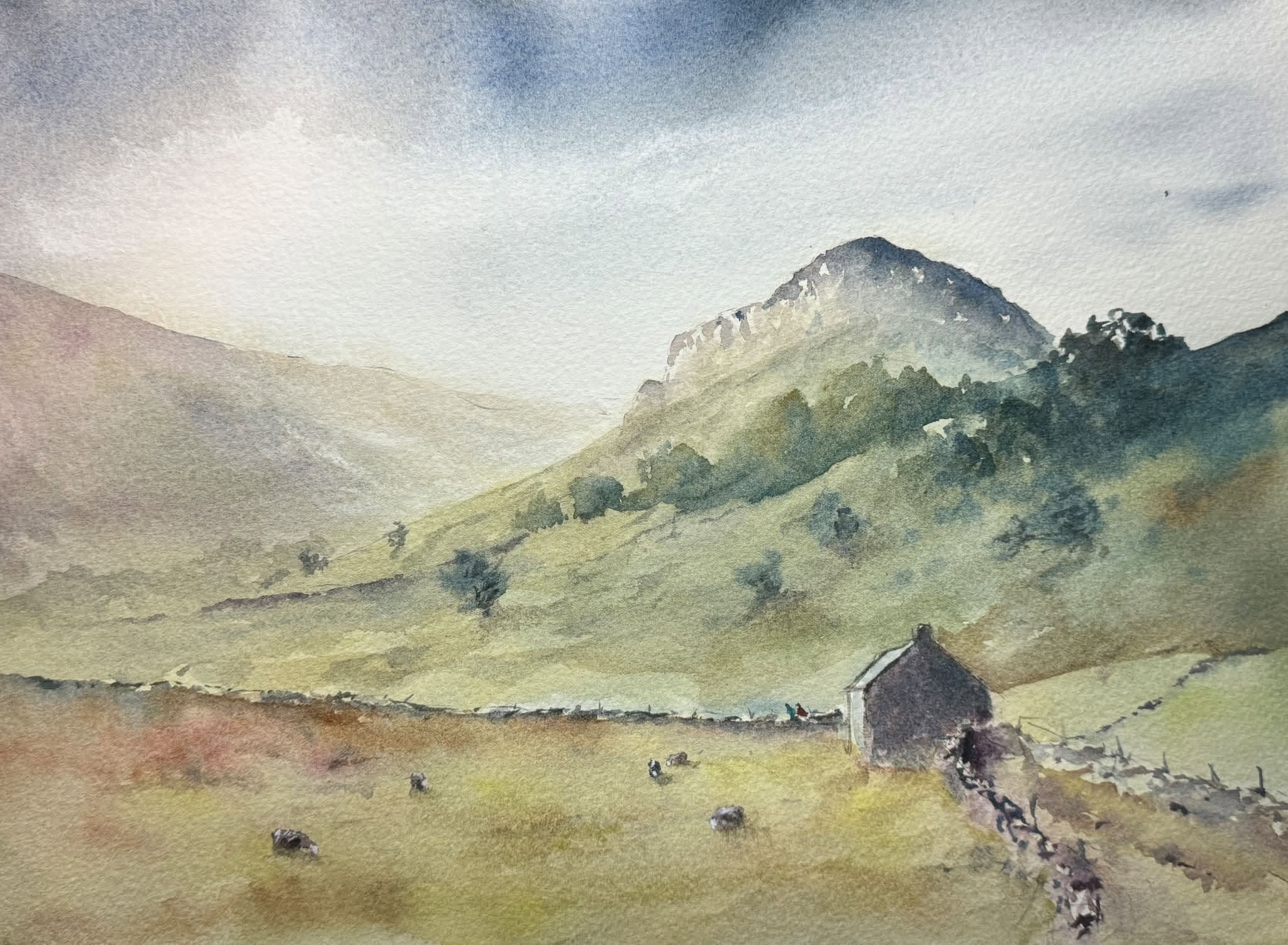
Lee Maddison at Lee Maddison Fine Art
Peter Wilson, Ulster University, Northern Ireland
Rob and Ann Jackson of Knotts View, Stonethwaite
‘Seathwaite’s Jubilee, 1845-94’ by G. J. Symmons
Simon and Barbara, Australia
UKClimbing Limited